

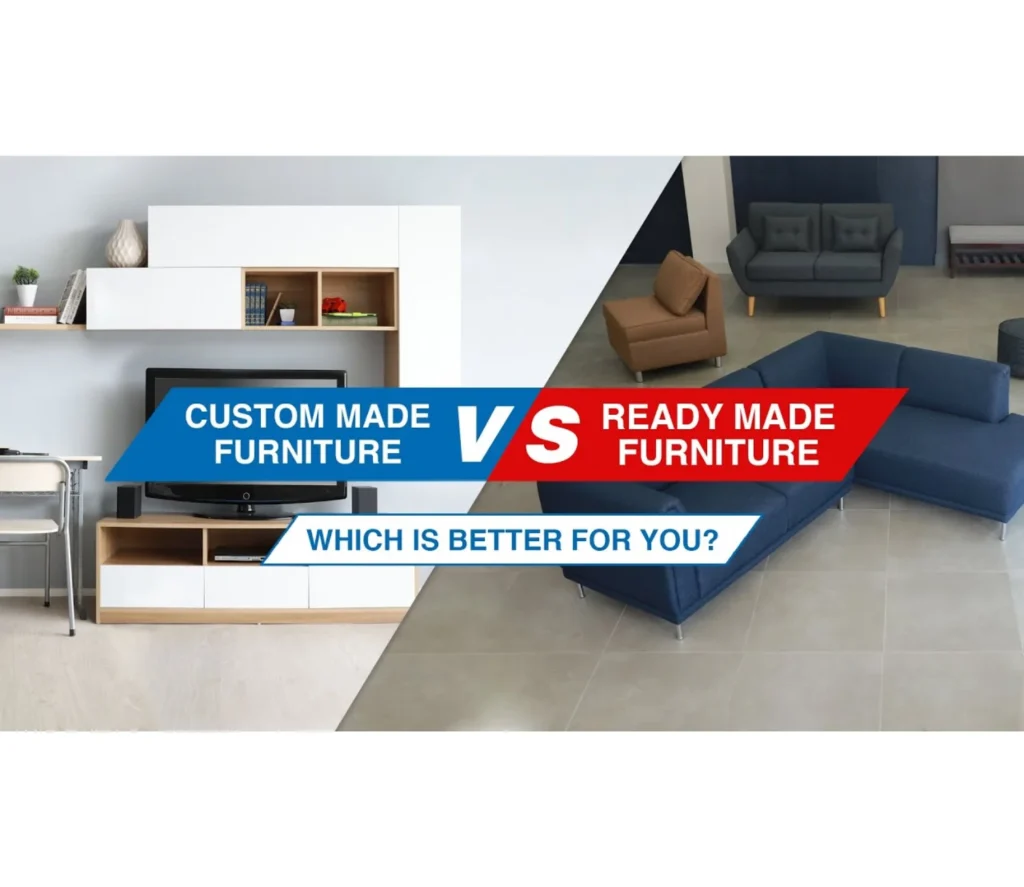
In Pakistan, custom furniture is worth it if you want personalized designs, exact sizing, premium materials, and long-term durability, making it ideal for homeowners with specific style or space requirements. Ready-made furniture is a better choice if you need an affordable, quick, and convenient solution, as it is readily available and usually costs less. If your budget allows and you value quality, customization, and lasting investment, custom furniture offers better long-term value, while ready-made furniture is best for those prioritizing lower prices and immediate availability.
Why standard sizes rarely fit Pakistani homes
The mismatch problem in most showrooms
Most ready-made furniture is designed around standardised international dimensions. Pakistani homes, particularly in housing societies like DHA and Bahria Town, frequently have irregular room proportions, low ceiling heights, or awkward alcoves that standard pieces cannot fill cleanly. The result is familiar to many homeowners: a wardrobe noticeably shorter than the ceiling, a sofa that crowds the room, or a dining set that only works if the chairs are tucked in permanently.
This is not a minor aesthetic inconvenience. Wasted space in a bedroom, or a dining room too cramped to seat the full family, changes how a room functions every single day. Showrooms are designed to make furniture look good in neutral, well-proportioned display spaces. Your home is almost certainly neither neutral nor perfectly proportioned.
How made-to-order furniture is designed around your actual room, and why it matters
With custom-made furniture in Pakistan, measurements are taken on-site before production begins. A wardrobe can be built floor to ceiling, using every centimetre of vertical space that a standard piece would leave empty. A sofa can follow the exact footprint of your lounge without pushing into traffic flow. A dining set can be scaled for a family of eight without dominating a medium-sized room.
This precision is especially critical in kitchen and wardrobe design, two areas where the benefits of custom furniture vs ready-made in Pakistan become most obvious. Even small depth discrepancies of several centimetres can cause functional problems that no amount of styling can fix: drawers that cannot open fully, countertop overhangs that catch on passing traffic, and storage that looks full but wastes the wall behind it. Fit is a functional issue, not a luxury one.
The material gap you cannot see from the showroom floor
What goes into most ready-made pieces
The majority of ready-made furniture sold across Pakistan is built on MDF, particle board, or low-grade plywood. These materials look entirely acceptable under lacquer or a laminate veneer, which is precisely the problem. You are buying based on surface finish, not structure. Standard MDF can experience permanent thickness swelling of 1, 3 mm in humidity above 80 per cent, which is exactly the condition your furniture faces during Lahore’s monsoon months from July through September.
Particle board joints loosen, surfaces bubble, and drawer runners jam within a few seasons. In our experience across hundreds of Lahore homes, MDFfurniture typically shows structural deterioration within three to seven years, visible and unfixable. By that point, the furniture that looked like a sensible purchase has already begun to fail.
Why material choice is the single biggest advantage of going custom
Custom furniture lets you specify the corematerial before production starts. Sheesham, Pakistan’s most durable native hardwood, has a natural density that resists termites, warping, and moisture. In Pakistan’s climate, a well-built Sheesham piece regularly lasts 20 to 30 years. Walnut, solid oak, and full-grain leather are premium alternatives for homeowners who want both longevity and a specific aesthetic character.
This is where transparency becomes a genuine advantage. At Gourmet Furnishers, customers physically inspect the Sheesham planks, walnut veneers, and brass hardware before the build begins. You can see the grain, feel the weight, and confirm the species before production starts. That level of material transparency simply does not exist when you are buying from a showroom floor model with a laminate finish and no visible interior.
Which one holds up in Pakistan’s climate, custom furniture vs ready-made compared

How ready-made furniture ages here
Ready-made pieces built on MDF or particle board typically show structural deterioration within three to seven years in Pakistan’s climate, with the monsoon season accelerating joint failure and surface damage. After five years, most mass-produced sofas, wardrobes, and dining sets exhibit wear that is structural rather than merely cosmetic: drawers that no longer close properly, panels that have swollen and separated at the edges, and frames that flex under load.
Resale value reflects this reality. In the Pakistani second-hand market, mass-produced furniture typically fetches 10 to 20 per cent of its original purchase price after five years of use. Much of that depreciation is not down to aesthetic preference, it is visible structural deterioration that any buyer can spot on inspection.
Durability of solid wood with quality joinery
Custom furniture built from solid Sheesham or walnut, joined with mortise-and-tenon or dovetail techniques, regularly lasts 20 to 30 years. The joinery method matters as much as the wood species. Mechanical joints hold under sustained load and monsoon humidity where glue and screws eventually give way. A mortise-and-tenon joint in Sheesham does not loosen when the air turns damp in August. A particle board joint held together with adhesive often does.
Custom pieces also carry more meaningful warranties. Gourmet Furnishers backs all furniture with a two-yearmanufacturer’swarranty covering structural defects and craftsmanship, whereas most local ready-made retailers offer six months on wooden pieces, with significant exclusions for anything humidity-related. That gap in warranty commitment reflects a real gap in build confidence.
The real cost when you run the numbers
Upfront savings vs replacement cycles
Ready-made furniture costs less on day one. A standard wooden bed from a Lahore showroom might run PKR 60,000 to 90,000, while a comparable custom piece in solid Sheesham starts around PKR 120,000 to 180,000. That gap is real, and it matters for homeowners working within a defined budget.
The comparison shifts when you factor in replacementcycles. If a ready-made piece needs replacing every five to seven years, the ten-year cost of ownership for two ready-made purchases often exceeds the cost of one well-built custom piece. For a complete three-bedroom home, ready-made furnishing in Lahore typically runs PKR 1.2 million to 2.5 million; custom runs PKR 2.8 million to 5.5 million. Over a decade with one ready-made replacement cycle factored in, the gap narrows considerably. Meanwhile, the custom piece is still standing.
Where custom furniture earns its price back
Custom pieces retain their value because they are builttolast and built to fit. A well-constructed Sheesham wardrobe holds its structure for decades and fits the room it was made for. Market observations suggest that solid wood custom furniture often commands better prices in second-hand markets than mass-produced equivalents, because buyers can assess the difference in quality when they inspect the piece in person, though platform-specific data remain limited.
For homeowners furnishing a new house in a premium housing society, custom furniture can also contribute to the perceived value of the property itself. A kitchen fitted with quality custom cabinetry, solid joinery, and durable hardware is a genuine asset. Lower-quality particle board cabinetry from a showroom is considerably less likely to add comparable value.
Lead times, warranties, and what to plan for
Delivery timelines for each option
Ready-made furniture can be delivered within days, sometimes the same week. That speed is a genuine advantage when you need to move into a home quickly or furnish a room in a hurry. Custom wardrobes, kitchens, and bedroom suites in Pakistan require patience: standard orders take three to six weeks, complex or carved pieces take eight weeks or more, and premium handmade work occasionally runs to three months. This is the most legitimate reason to choose ready-made, and it deserves an honest acknowledgement.
How to plan around a custom build
The lead time concern is manageable with forward planning. New homeowners and couples setting up their first home typically have a move-in date several months out, enough runway for a full custom order. The key is to initiate measurements and material selections early, ideally as soon as a possession date is confirmed. Reputable manufacturers will provide a specific production timeline on order confirmation; always request this in writing before production begins.
The co-design visit also helps accelerate the process. When design decisions are resolved upfront during a factory consultation, mid-build changes become rare. Gourmet Furnishers schedules factory visits before any production begins, which means customers leave the session with confirmed dimensions, selected materials, and a fixed timeline. Appointments can be arranged via WhatsApp, and many manufacturers can complete an initial consultation in a single afternoon depending on how prepared you are with your measurements and preferences.
What are the benefits of custom furniture vs ready-made in Pakistan, how to decide
When ready-made is the sensible choice
Ready-made furniture makes sense for rooms with standard dimensions, for temporary living situations, for budget-constrained phases of furnishing, or when a piece is functionally simple: a side table, a basic bookshelf, or a utility item that does not define how a room feels. Not every room in a home needs a custom build, and not every budget can support one. Ready-to-assemble furniture in Pakistan has improved considerably in recent years, and for lower-use spaces it remains a rational choice.
When custom is the smarter investment
Custom furniture earns its premium in rooms that define how a home feels: the master bedroom, the main living area, the kitchen, and the primary wardrobe. These are high-use, high-visibility spaces where fit, material quality, and longevity matter most. If you plan to live in a home for more than five years, custom furniture in these rooms is a straightforward financial and aesthetic decision. The numbers support it, and so does the lived experience of not replacing your kitchen cabinetry or bedroom suite in year six.
The clearest practical step, and one that many homeowners overlook, is visiting the manufacturer before placing an order. At Gourmet Furnishers, customers walk the Lahore factory, review material samples in hand, and co-design each piece with the production team before anything is built. That process eliminates guesswork, confirms fit, and builds the kind of purchase confidence that no showroom visit can replicate. If you are furnishing a home in Pakistan and want furniture built around your space and built to last, a factory visit is worth your afternoon before any decision is made.
The short version of a long decision
So what are the benefits of custom furniture vs ready-made in Pakistan? Custom wins on fit, materials, longevity, and ten-year cost of ownership. Ready-made wins on speed and entry-level price. The decision hinges on how long you plan to stay in a home and which rooms matter most to how you live in it.
For rooms that define your home, the case for custom-made furniture in Pakistan is clear and the numbers back it. For secondary pieces in lower-use spaces, ready-made is a perfectly rational choice. Most homes are served well by a combination of both, with custom reserved for the spaces that carry the most daily weight.
If you are currently furnishing or renovating and want to see what made-to-order furniture actually looks like in practice, Gourmet Furnishers’ Lahore factory is open to customers by appointment. Bring your room measurements and your questions. The difference between the two options becomes obvious the moment you handle the timber.
FAQs
Is custom furniture better than ready-made furniture in Pakistan?
Custom furniture is generally better for quality, personalization, and long-term durability, while ready-made furniture is more affordable and readily available.
Is custom furniture more expensive than ready-made furniture?
Yes, custom furniture usually costs more because it is made to your specifications using selected materials and craftsmanship.
How long does custom furniture take to make in Pakistan?
Most custom furniture takes between 2 to 8 weeks, depending on the design, materials, and complexity of the project.
Who should buy ready-made furniture?
Ready-made furniture is ideal for people who need furniture quickly, have a limited budget, or prefer standard designs.
Which option offers better value for money?
Custom furniture offers better long-term value through superior quality and durability, while ready-made furniture provides better short-term value due to its lower upfront cost.