When moving into a new home in Pakistan, start by buying the most essential furniture that supports your daily needs and comfort. A durable bed and mattress should be your first priority, followed by a wardrobe for storage, a comfortable sofa set for the living room, and a dining table if space allows. Next, add practical items like a center table, TV unit, study desk, or office chair based on your lifestyle. Choose high-quality wooden furniture that is durable, easy to maintain, and suits your home’s size and interior style. Instead of purchasing everything at once, invest in essential pieces first and gradually add decorative or luxury furniture as your budget allows, ensuring your new home remains both functional and welcoming.
The bedroom is where you start, full stop
You need a functional place to sleep from the very first night in your new home. That alone makes the bedroom your non-negotiable priority. Beyond basic comfort, the bed set defines the scale and proportion of the master bedroom before anything else goes in. Place the bed first, and every other decision in the room follows logically: wardrobe position, side table placement, dresser or dressing table position. Skip it, and you’re arranging furniture around an invisible centrepiece.
In many Pakistani homes, the master bedroom carries more social weight than people typically account for. It can double as a private sitting area, a nursing room, or a children’s study corner, especially during family gatherings when space is at a premium. This is not just a sleeping space. Getting it right early pays dividends every single day.
Bedroom first: what furniture to buy for a new house in Pakistan
Why the bed set is the anchor piece, not just a starting point
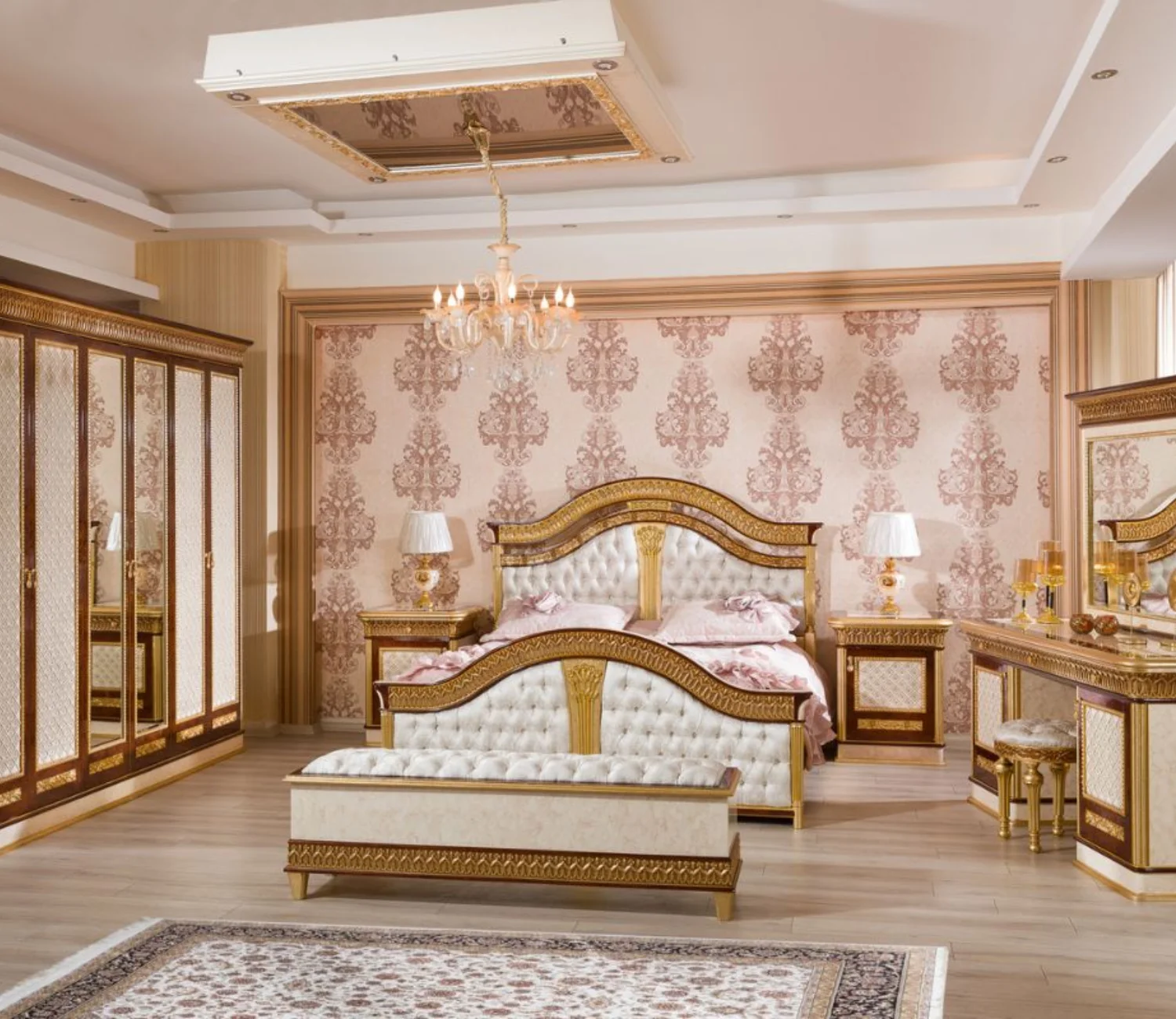
A bed set, frame, headboard, and side tables together, functions as both a visual and spatial anchor for the entire room. Once the bed is placed against the right wall, every other piece arranges itself around it naturally. The wardrobe goes here, the dressing table goes there, the lighting follows. Without the bed as a reference point, you’re making spatial guesses that often result in a room that never quite settles.
For a standard master bedroom in a housing society like DHA or Bahria Town, a king-size frame works well in most room configurations, though room sizes do vary by sector, so measure before you commit. A queen-size works well in tighter rooms without sacrificing too much floor space. Either way, decide on the bed before you buy anything else in the room.
Wardrobe and storage: don’t underestimate these on day one
The wardrobe is the second purchase in the bedroom, not something to defer until later. Without proper storage, clothing and belongings pile up immediately, and the room never achieves the settled, organised feel you’re aiming for. A room with a beautiful bed and no wardrobe still looks unfinished and functions poorly.
For smaller bedrooms in apartments, floor-to-ceiling wardrobes that use vertical space are significantly more effective than standard units. A three-door built-in wardrobe with internal shelving, hanging rails, and a drawer section handles most families’ storage needs without consuming excessive floor area. If your bedroom has an alcove or a non-standard wall configuration, this is precisely where custom becomes worth considering over ready-made.
Materials that actually hold up in Pakistan’s climate
Pakistan’s heat-and-humidity cycle, particularly during monsoon season, is genuinely harsh on furniture. Solid sheesham remains the best choice for longevity because it expands and contracts naturally without permanent warping or swelling. Properly seasoned and finished with a polyurethane coating, a sheesham bed frame will outlast multiple house moves.
MDF is the material to avoid for structural pieces. It absorbs monsoon humidity, swells permanently, and fails within three to five years under heavy use. For mid-range budgets where solid wood is out of reach, marine-grade plywood with sealed edges and a polyurethane finish is a viable and durable alternative. Whatever you choose, ask specifically about the material before you commit.
What furniture should I buy first, lounge and dining priorities
The lounge comes next, and the sofa does most of the work
The lounge is the primary gathering and guest-reception space in Pakistani households. It carries significant social weight, which means the sofa is not simply a seating choice. It anchors the entire room’s layout, sets the colour direction, and communicates the overall style register of your home to every guest who walks through the door. Get the sofa right early, and every other lounge piece, from the coffee table and side tables to rugs and curtains, can be chosen in relation to it rather than in conflict with it.
Why the sofa is a structural decision, not just a style one
The size and placement of the sofa determines traffic flow, conversation distances, and how much wall space remains available for other furniture or décor. A sofa that’s too large for the room closes it off entirely; one that’s too small looks lost and inadequate for guests. Before you fall in love with a particular design, measure your lounge and work out the maximum sofa dimensions that allow comfortable movement around it.
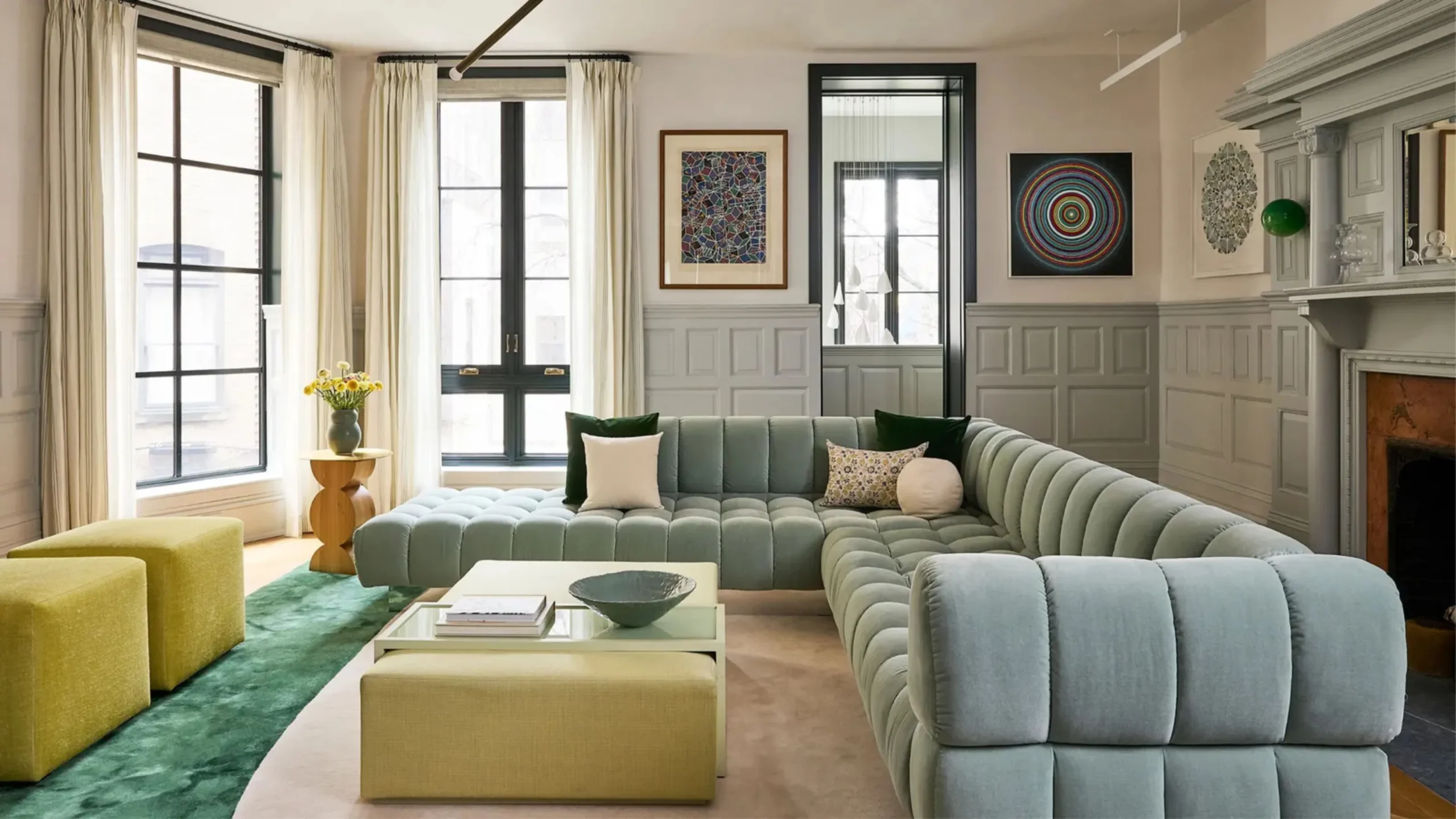
In most standard Pakistani drawing rooms, a three-to-four seater sofa paired with a complementary side chair is the functional baseline. This arrangement comfortably seats four to six people depending on chair choice, allows for conversation across the room, and leaves enough open floor space that the room doesn’t feel crowded. A corner sectional works well in L-shaped lounges but can feel overwhelming in a square room.
Coffee table and side storage: the room isn’t finished without them
A sofa without a coffee table feels incomplete and impractical from day one. It anchors the seating arrangement and serves as the primary surface for everyday use: cups of chai, remote controls, books, and the inevitable pile of things that accumulate in a lived-in lounge. For smaller lounges, a lift-top coffee table with internal storage solves two problems at once.
Storage ottomans are an equally practical alternative. They provide flexible extra seating when guests arrive, work as a footrest during everyday use, and store blankets, magazines, or children’s toys out of sight. In a compact lounge, an ottoman can provide greater versatility and storage density than a traditional coffee table, particularly useful given how many new homes in Pakistan lean towards the space-saving end of the spectrum.
The dining area gets put off too often, and it’s a mistake
Many first-time buyers treat the dining area as a third-tier priority and end up eating from the lounge sofa for months. The practical friction this creates accumulates quickly, particularly in Pakistani households where communal meals are a core daily rhythm and family gatherings happen regularly. The dining table is also the homework surface, the workspace, and the centrepiece of Eid lunches. It earns its place early.
Choosing the right table size before you fall in love with a design
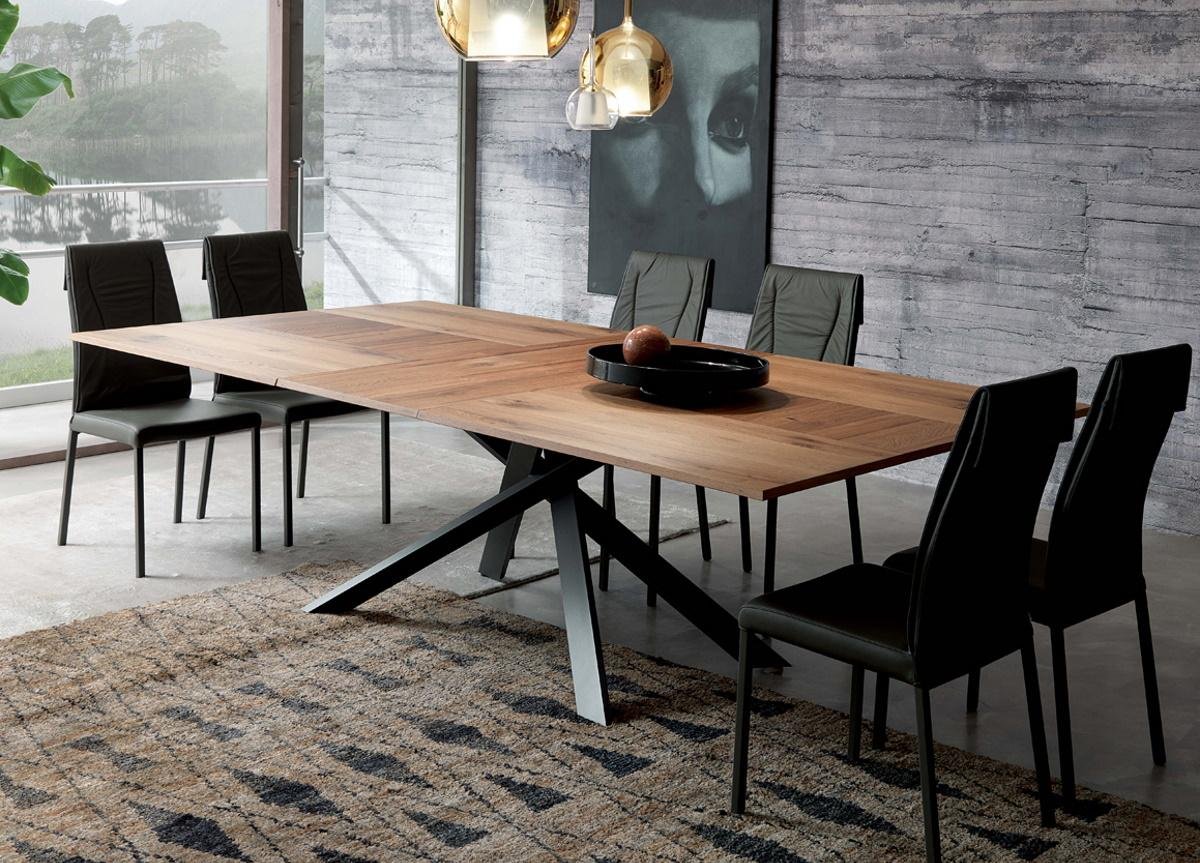
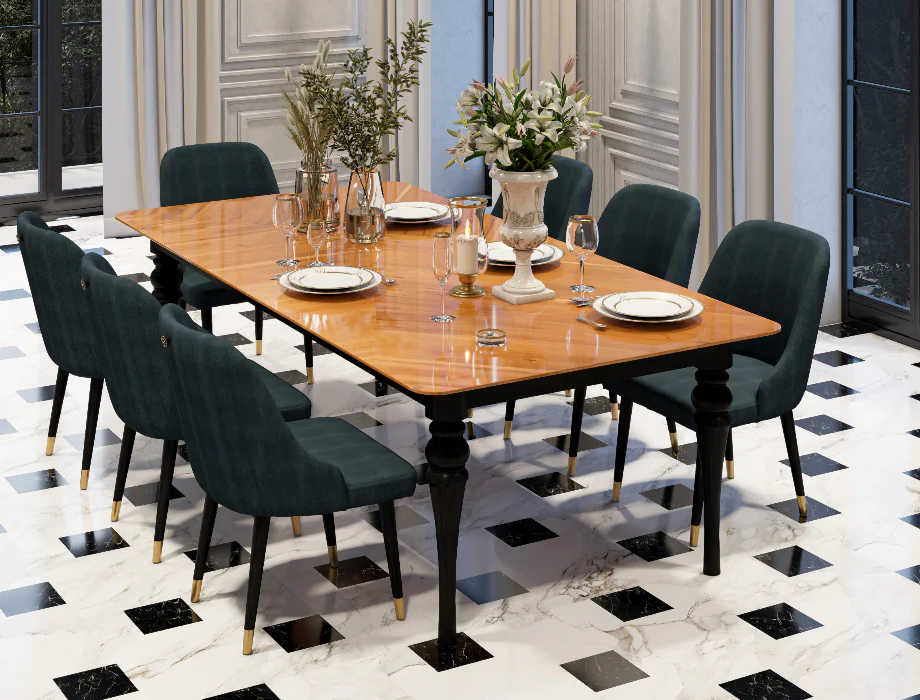
The most common dining room mistake is choosing a table based on aesthetics without first matching it to actual family size and room dimensions. A six-seater table placed in a tight dining alcove leaves no room to pull chairs out comfortably, which makes every meal feel cramped. Measure the room, account for at least 90 centimetres of clearance on all sides, then select a table size.
The practical guide is straightforward: a four-seater works for couples and small families in compact spaces; a six-seater is the Pakistani household standard and fits most medium dining rooms comfortably; an eight-seater is only appropriate if the dining room is genuinely large. For a family of six, the recommended table length is between 160 and 180 centimetres, with a width of 90 to 100 centimetres.
Chairs vs benches: what suits your space and how you actually eat
Dining chairs take up more floor space when pulled out, which matters in tighter rooms. Benches tuck neatly under the table when not in use and can seat multiple people without the footprint of individual chairs. For families with young children, or homes where the dining area doubles as a study or craft space, a bench along one side of the table offers flexibility without sacrificing seating capacity.
This is a practical decision that first-time homeowners rarely think about until they’ve already assembled furniture in the room. Consider how you actually use the space daily, not just how it will look for guests.
Ready-made or custom: a practical call, not just a budget one
The common assumption is that ready-made furniture is always faster and cheaper, and custom is a luxury for later. The reality is more nuanced. The right answer depends on timing, room dimensions, and how long you intend to stay in the home.
Ready-made makes complete sense when you need to be functional within a week. If you’re moving in on a Saturday and need a sofa and dining set by Sunday, ready-made is your only realistic option. Ready-made pieces are also sensible for secondary bedrooms, children’s rooms, or spaces that will change as the family grows. The trade-off is standard sizing, standard materials, and lower long-term durability.
The calculus shifts when the room has non-standard dimensions or you’re buying for the long term. Custom furniture is worth the wait for the master bedroom wardrobe in a non-standard alcove, a dining table that must fit a specific room configuration, or any piece where exact dimensions and premium materials matter. Lead times in Lahore typically run three to eight weeks for most custom residential pieces, worth factoring into your moving timeline. The cost premium of roughly twenty to fifty percent over ready-made equivalents is offset by better material quality, exact fit, and a significantly longer lifespan. For homeowners who plan to stay put for ten or more years, custom furniture in the key rooms is often the more economical decision over time.
How to furnish every room without the back-and-forth
Sourcing bedroom furniture from one supplier, lounge furniture from another, and dining furniture from a third creates a coherence problem that’s easy to underestimate. Finishes don’t quite match, proportions feel slightly off, and the overall look of the home never fully comes together. Achieving a cohesive interior when every room comes from a different source requires time, coordination, and a level of design expertise most people furnishing their first home don’t have yet.
When one brand carries the full range, from bed sets and wardrobes to sofas, dining tables, and home décor accessories, the finish tones and design language stay consistent throughout the home. This is a design principle worth taking seriously. A home where every room speaks the same visual language feels deliberate and considered, even before a single piece of art goes on the wall.
Gourmet Furnishers is a Lahore-based luxury furniture manufacturer whose range covers bed sets, wardrobes, sofa sets, dining tables, and kitchen fittings. Their pieces are manufactured in-house using materials that include solid sheesham, walnut, marble, and full-grain leather. You can visit the factory in Lahore before delivery to inspect pieces directly, a level of transparency worth asking about when comparing suppliers. The brand offers a two-year warranty on structural defects and craftsmanship, alongside a thirty-day return policy. For further details on specific products and current terms, it’s worth reaching out to them directly.
For new homeowners in DHA, Bahria Town, or Gulberg who want quality furniture without the coordination overhead, working with a single full-range supplier is the most straightforward route from an empty house to a fully furnished home.
Start with a sequence, not a shopping list
So, what furniture should you buy first for a new house in Pakistan? The priority logic is simple once you see it clearly. Bedroom first, because you live there from day one and the bed set shapes every subsequent decision in the room. Lounge second, because it sets the social register of your home and the sofa is the structural starting point for the entire space. Dining area third, because family rhythm and daily life depend on it more than most first-time buyers realise until the sofa has doubled as their dining table for four weeks running.
Settle your material and budget decisions before you walk into any showroom. Know whether you’re choosing solid wood or marine-grade plywood, know your maximum dimensions for each room, and know which pieces are worth the wait for custom and which can be ready-made without compromise. That preparation alone will save you from the two most common mistakes: buying the wrong thing quickly, or buying nothing because the decisions feel too large.
If you want to skip the back-and-forth entirely, Gourmet Furnishers’ housewarming bundles are designed for exactly this moment. You can browse their range online, book a factory visit, or simply reach out via WhatsApp with your room dimensions and budget, they’ll take it from there.