
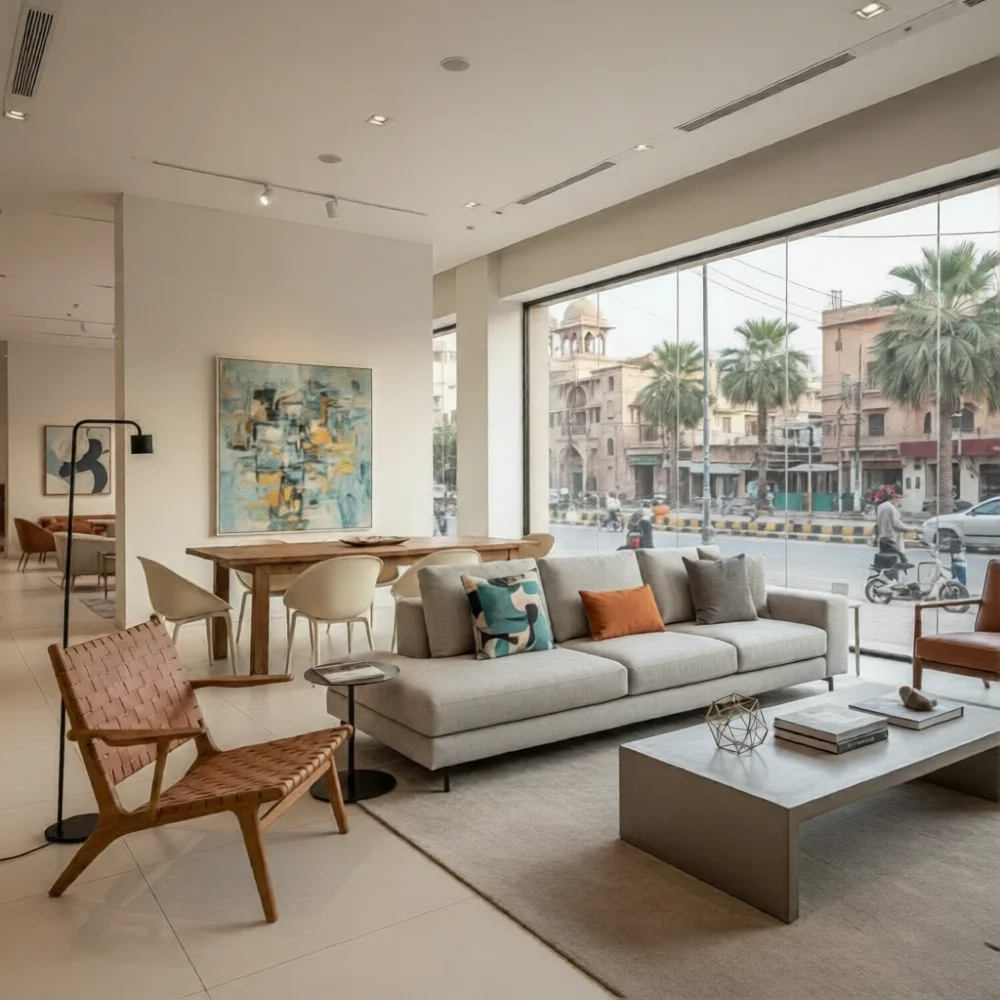
A visit to a furniture factory in Lahore gives you a firsthand look at how quality furniture is designed, crafted, and finished. You can expect to see every stage of the manufacturing process, from selecting premium wood and cutting materials to assembling, carving, polishing, upholstery, and final quality inspection. Many factories also showcase their skilled craftsmanship, modern machinery, and customization options, allowing you to choose designs, sizes, finishes, and fabrics that suit your preferences. Visiting a furniture factory helps you understand the quality of materials, compare different furniture styles, discuss custom requirements with experts, and gain confidence that you are investing in durable, well-crafted furniture for your home or office.
Why a furniture factory visit in Lahore matters
A showroom sample has lived a privileged life. It has never been sat on by a house full of guests, left in the sun near a window, or subjected to the humidity swings that Lahore delivers reliably every monsoon season. The piece sitting in a workshop waiting to go into a production batch has not received that same care. Factory visits collapse the distance between those two realities by letting you inspect actual production materials, see real joinery under workshop lighting, and observe how the team handles pieces that are not destined for the display floor.
Think of a factory visit as risk management for a high-value purchase. Furniture is not a returnable grocery item, especially custom or bespoke pieces. A buyer who has walked the floor, inspected the timber, and asked pointed questions about foam density and joinery technique has something most buyers lack: leverage. You understand what should go into the piece, so inflated quality claims become easy to challenge. More importantly, if a dispute arises after delivery, you have a factual baseline to work from rather than vague recollections of what the salesperson promised. Manufacturers who have nothing to hide are the ones who invite you in. Treat reluctance to show you the production area as information worth acting on.
How to arrange a furniture factory visit in Lahore
Lahore’s furniture production is concentrated in five main clusters. Ferozepur Road is home to large exporters and flagship showrooms, including established names with attached manufacturing units. Fortress Stadium houses high-end showrooms, many with workshop access. Gulberg is where boutique makers and premium brands operate, including Gourmet Furnishers. Multan Road offers a dense concentration of dealers and mid-range workshops. Allama Iqbal Town has smaller, custom cottage workshops that handle bespoke and one-off commissions. Each cluster serves a different buyer profile, so use location as a filter from the start. If you are also exploring furniture factory outlets in Lahore or looking for wholesale pricing, Multan Road and Ferozepur Road tend to offer the widest range of options at that level.
It is worth knowing that Lahore’s clusters function primarily as finishing and retail hubs. Much of the raw production for mass-market furniture originates in Chiniot and Gujrat, with Lahore workshops handling upholstery, lacquering, and assembly. Premium manufacturers with in-house production, such as Gourmet Furnishers, are a distinct category: they control the full process from material sourcing to finished delivery, which is why a factory visit here is a different exercise from a showroom tour.
For the actual visit, call ahead. State clearly that you are considering a custom or large order and that you would like to see the production area before committing. Bring identification, plan to arrive during weekday working hours, and expect to be escorted throughout. Reputable manufacturers run scheduled visits as part of their customer experience, not as a reluctant concession to an awkward buyer. If a factory treats your request as an imposition, walk away.
What to inspect once you are on the factory floor
Start with the frame. This is the structural skeleton of every piece of furniture and the hardest thing to fix after delivery. Look for mortise-and-tenon or dovetail joints on wooden frames, widely regarded as the gold standard in furniture construction, rather than nail-and-glue construction. Pull lightly on corner joints to feel for give: a quality joint will not move. On upholstered sofa frames, check that corner blocks are glued and screwed, not just stapled. Proper joinery is far more resistant to humidity-related failure than staple-and-glue construction; the latter is far more likely to fail earlier under regular use, particularly through Lahore’s demanding monsoon cycles.
Next, ask to see the raw timber before it has been milled or finished. Solid oak and walnut feel noticeably heavier than engineered wood or low-grade pine, and a reputable manufacturer will welcome the comparison. For upholstery, request the foam density documentation. For everyday residential seating, look for a density of at least 28, 30 kg/m³ as a baseline minimum; for premium or heavy-use pieces, 40, 56 kg/m³ is the appropriate range, alongside an ILD rating your manufacturer can explain clearly. Fabric should show a Martindale rub count of at least 15,000, 20,000 for light residential use; pieces in daily use should meet 35,000 and above, while heavy residential applications warrant 50,000 or more. These are
not obscure technical demands. Any manufacturer worth your money will have this documentation ready without hesitation.
Surface finishes and hardware deserve equal attention. Run your hand across lacquered and painted surfaces; roughness, bubbling, or uneven sheen signals a quality control failure at the finishing stage. Open and close every drawer and cabinet door at least 50 times: the hardware should operate without resistance or wobble, and asking for the factory’s own QC test reports on hardware cycles is entirely reasonable. Check that hinges and drawer slides are metal, not plastic, particularly on pieces that bear weight regularly. Finally, take note of the timber moisture content if you can ask for it: the ideal range for furniture produced in Pakistan’s climate is 8% to 12%, with 10% being the practical target for most of the country’s varying humidity conditions.
The right questions to ask during your tour
Good questions protect you before the order is placed, not after the furniture arrives. On materials, ask where the timber comes from and what the moisture content is at the time of production. Ask whether foam is domestically sourced or imported, and request the density specification in writing. For fabric and leather, enquire whether flame-retardancy or abrasion-resistance test reports are available, and whether those reports come from an accredited third-party lab or are self-certified. The answers will tell you quickly whether you are dealing with a manufacturer who controls their supply chain or one who is reassembling components from wherever is cheapest that month.
On lead times, ask for a realistic timeline, not an optimistic one. Custom-made pieces from Lahore manufacturers typically take 4 to 16 weeks depending on complexity and material sourcing. Make sure the quoted timeline covers finishing, quality inspection, and packaging, not just production. If a manufacturer promises a fully custom wardrobe in two weeks, push back. Ask what the delivery scope includes: does the team handle installation and packaging removal, or does the furniture arrive in crates at your gate and become your problem from there?
After-sales protection is where you separate serious manufacturers from the rest. Ask specifically:
- What does the warranty cover: structural defects only, or craftsmanship issues too?
- What is the return or exchange process if a defect is discovered after delivery?
- Is the warranty backed by a written document, or is it a verbal assurance from the sales team?
Verbal assurances made on a factory floor carry no weight in a dispute. Get every commitment in writing before a single rupee changes hands.
Lead times, pricing, and how the visit gives you negotiation leverage
Understanding what goes into a piece of furniture changes how you negotiate for it. A buyer who has watched the joinery being cut and held the raw timber knows exactly what justifies the price, and what does not. Manufacturers recognise this: buyers who visit are demonstrably more serious than those who browse online and send a WhatsApp message asking for the lowest price. That demonstrated seriousness gives you room to negotiate lead times, request material upgrades, or bundle delivery costs into a larger order.
For realistic planning, custom furniture from Lahore’s manufacturers generally takes 4 to 16 weeks depending on complexity and material requirements, build a buffer of two to four weeks into any quoted timeline to account for material delays or finishing adjustments. In-stock pieces typically arrive within 2 to 7 days. If you are furnishing multiple rooms at once, ask specifically about volume pricing during the visit: a manufacturer who wants your whole house is more flexible than one quoting a single sofa set.
Why Gourmet Furnishers is worth a factory visit before you buy
Most furniture manufacturers in Lahore treat the production area as a back-of-house operation, deliberately separate from the customer experience. The showroom is polished; the factory is not your concern. Gourmet Furnishers takes a different position. According to the company, customers are actively invited to visit the Gulberg facility before delivery, inspect materials in production, and see the specific joinery techniques being used in their order. If you are considering a purchase, contact the team directly to confirm visit arrangements and verify what the access covers, but this kind of openness, where it is genuinely offered, is rare among local manufacturers and worth seeking out.
During a visit, buyers can inspect solid oak, walnut, and other premium hardwoods alongside full-grain leather, brass hardware, marble tops, and tempered glass in various stages of production. Bespoke and custom orders are handled in the same facility, so if you have specific dimensions, a particular finish in mind, or a layout that does not match anything in the standard catalogue, the factory visit is the right moment to work through those details directly with the production team. You are not talking to a salesperson relaying your requirements through a phone call. You are standing at the bench where the piece will be made.
Gourmet Furnishers says every piece leaves the facility backed by a 2-year manufacturer’s warranty covering structural defects and craftsmanship issues, alongside a 30-day return policy, confirm the full terms in writing before you place your order. The company says appointments can be arranged directly, which makes the process straightforward for buyers in Lahore as well as those travelling from Karachi or Islamabad; overseas Pakistanis furnishing homes in Pakistan should enquire about remote coordination options when they are next in the city. Premium furniture is a significant investment, and this level of access, combined with solid after-sales cover, removes the biggest risk in the purchase: ending up with something you cannot stand behind once it is in your home.
Make your furniture factory visit in Lahore count
A furniture factory visit in Lahore is not an extra step reserved for the unusually cautious buyer. It is the step that separates buyers who receive exactly what they paid for from those who spend months chasing a resolution that never fully arrives. The showroom experience is designed to sell; the factory floor is where the truth lives.
Use the practical framework in this guide: identify the cluster that matches your needs, book your appointment in advance, inspect joinery and raw materials with purpose, ask pointed questions about lead times and after-sales cover, and leave with written confirmation of everything that was agreed.
Whether you arrange a furniture factory tour in Lahore through Gourmet Furnishers or another manufacturer, the principle holds: any maker who opens their doors before you sign anything is making a statement about their confidence in what they produce. That kind of transparency is what every serious buyer in Lahore deserves to expect.
FAQs
Why should I visit a furniture factory in Lahore?
Visiting a furniture factory allows you to see how furniture is made, inspect material quality, understand the manufacturing process, and discuss custom designs directly with experts.
What can I see during a furniture factory tour?
You can typically see wood selection, cutting, carving, assembly, polishing, upholstery, finishing, and the final quality inspection before the furniture is delivered.
Can I customize furniture during my visit?
Yes. Most furniture factories in Lahore offer customization options, including size, design, wood type, color, finish, fabric, and hardware.
How long does a furniture factory visit take?
A standard visit usually takes between 30 minutes and 2 hours, depending on the size of the factory and whether you are discussing custom furniture.
Is it possible to buy furniture directly from the factory?
Yes. Many furniture factories sell directly to customers, which can provide better pricing and more customization options than retail stores.