
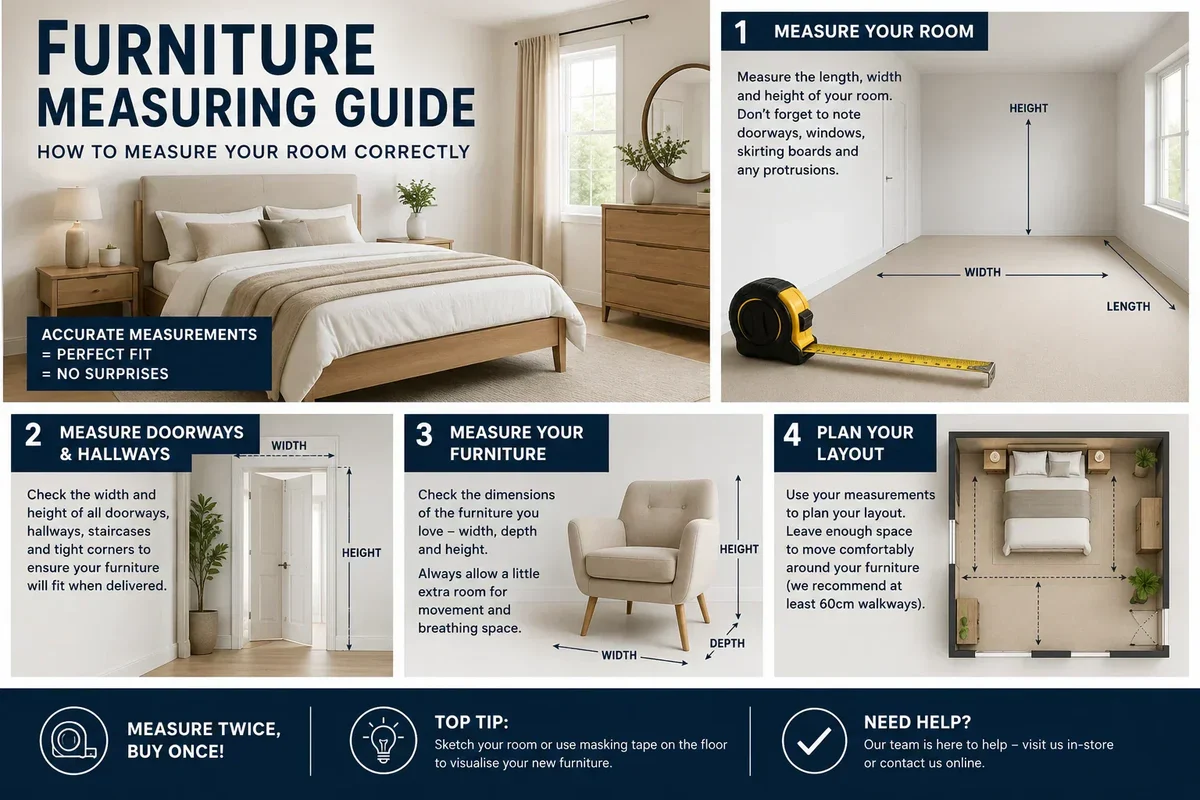
Before ordering furniture online, measure your room’s length, width, and height, then measure the exact space where the furniture will be placed, including enough clearance for walking, opening doors, drawers, and chairs. You should also measure all doorways, hallways, staircases, lifts, and tight corners along the delivery route to make sure the furniture can physically reach the room. Finally, compare these measurements with the product’s listed width, depth, and height, and always leave a small extra margin instead of choosing a piece that fits too tightly.
How Do You Measure a Room for Furniture?
To measure your home before buying furniture online, record the room’s length, width, and height first. Then measure doors, hallways, stairs, lifts, windows, permanent fixtures, and the exact floor area where the furniture will sit.
Follow these seven steps:
- Measure the room’s total length and width.
- Measure ceiling height.
- Measure the space available for the furniture.
- Measure all doors and entry points.
- Check hallways, staircases, lifts, and corners.
- Allow enough clearance around the furniture.
- Compare every measurement with the online product dimensions before ordering.
Don’t rely on visual estimates. A sofa that looks perfectly proportioned in a product photograph can feel enormous inside a smaller living room.
What Measurements Do You Need Before Buying Furniture Online?
The four most important furniture measurements are width, depth, height, and clearance. You should also measure the entire delivery path because furniture may fit inside a room but still be impossible to move through a doorway or staircase.
Create a simple measurement sheet before you start shopping.
| What to Measure | Why It Matters |
|---|---|
| Room length | Determines overall furniture layout |
| Room width | Shows how much usable floor space you have |
| Ceiling height | Important for wardrobes, cabinets, mirrors, and tall furniture |
| Furniture area | Shows the maximum practical furniture size |
| Door width | Confirms furniture can enter the room |
| Door height | Important for tall furniture |
| Hallway width | Prevents delivery problems |
| Staircase width | Essential for upper-floor delivery |
| Lift dimensions | Important for apartment buildings |
| Window position | Prevents furniture from blocking light or ventilation |
| Walking clearance | Keeps the room comfortable and functional |
| Electrical sockets | Prevents large pieces from blocking access |
Write everything in both inches and centimetres if the retailer uses different measurement systems.
Step 1: Measure the Entire Room
Measure wall-to-wall length and width rather than only measuring the empty area where you think the furniture will go. Full-room measurements help you understand proportion, circulation, and alternative furniture arrangements.
Start in one corner and measure the full length of each wall.
Record:
- Length of Wall A
- Length of Wall B
- Length of Wall C
- Length of Wall D
- Ceiling height
Rooms aren’t always perfectly rectangular. Columns, fireplaces, built-in shelves, angled walls, pillars, and recessed spaces can reduce usable floor area.
Include these features in your measurements.
A basic room sketch doesn’t need to look professional. Draw the walls on paper, add your measurements, and mark doors, windows, electrical sockets, radiators, air-conditioning units, and permanent cabinets.
That simple floor plan becomes extremely useful when comparing different pieces online.
Step 2: Measure the Exact Furniture Placement Area
Measure the maximum width, depth, and height available where the furniture will actually sit. Do not assume the entire wall or floor area is usable because doors, curtains, windows, switches, and walking routes may require additional clearance.
Suppose your living-room wall measures 12 feet wide.
That doesn’t automatically mean you should buy a 12-foot-wide sofa.
You may need space for:
- Side tables
- Curtains
- Walking paths
- Floor lamps
- Electrical outlets
- Decorative pieces
- Door movement
Measure the usable space, not simply the room size.
When browsing the online furniture shop at Gourmet Furnishers, compare the dimensions of individual products against this usable area rather than relying only on product photographs.
Step 3: Measure Doors Before Ordering Large Furniture
Measure the width and height of every doorway the furniture must pass through. The smallest opening on the delivery route can determine whether your furniture can reach its final room.
For each doorway, record:
Door width: Measure the narrowest usable opening.
Door height: Measure from the floor to the lowest point of the frame.
Diagonal opening: For bulky furniture, the diagonal space can sometimes determine whether the item can be tilted through the doorway.
Also look for:
- Fixed handles
- Door closers
- Security gates
- Decorative frames
- Low ceilings
- Tight corners immediately after the door
Measure the front entrance even if the room itself has a much wider door.
Your furniture has to reach the room first.
Step 4: Measure Hallways, Corners, Stairs, and Lifts
Furniture delivery requires enough turning and lifting space, not just a wide doorway. Measure narrow hallways, staircase width and height, landings, sharp corners, and lift interiors before purchasing oversized furniture.
This step is particularly important when buying:
- Large sofas
- L-shaped sofas
- King-size beds
- Wardrobes
- Dining tables
- Cabinets
- Dressers
- Consoles
For apartment buildings, measure the lift’s:
- Door width
- Door height
- Interior width
- Interior depth
- Interior height
If the item must travel upstairs, check staircase width as well as the ceiling height above the steps.
A long sofa can sometimes pass through a doorway but become stuck when it reaches a 90-degree hallway turn.
Step 5: Check Product Width, Depth, and Height
Never order furniture based only on photographs. Compare the manufacturer’s stated width, depth, and height with both your available room space and delivery-route measurements.
Furniture measurements commonly appear as:
Width × Depth × Height
For example:
95″ × 34″ × 38″
means approximately:
- 95 inches wide
- 34 inches deep
- 38 inches high
A real example is the Fresco Sofa, whose product information lists dimensions of approximately 95 inches long, 34 inches wide, and 38 inches high.
Knowing those measurements allows you to evaluate the sofa against the room before ordering rather than trying to judge its scale from photographs.
How to Measure for a Sofa
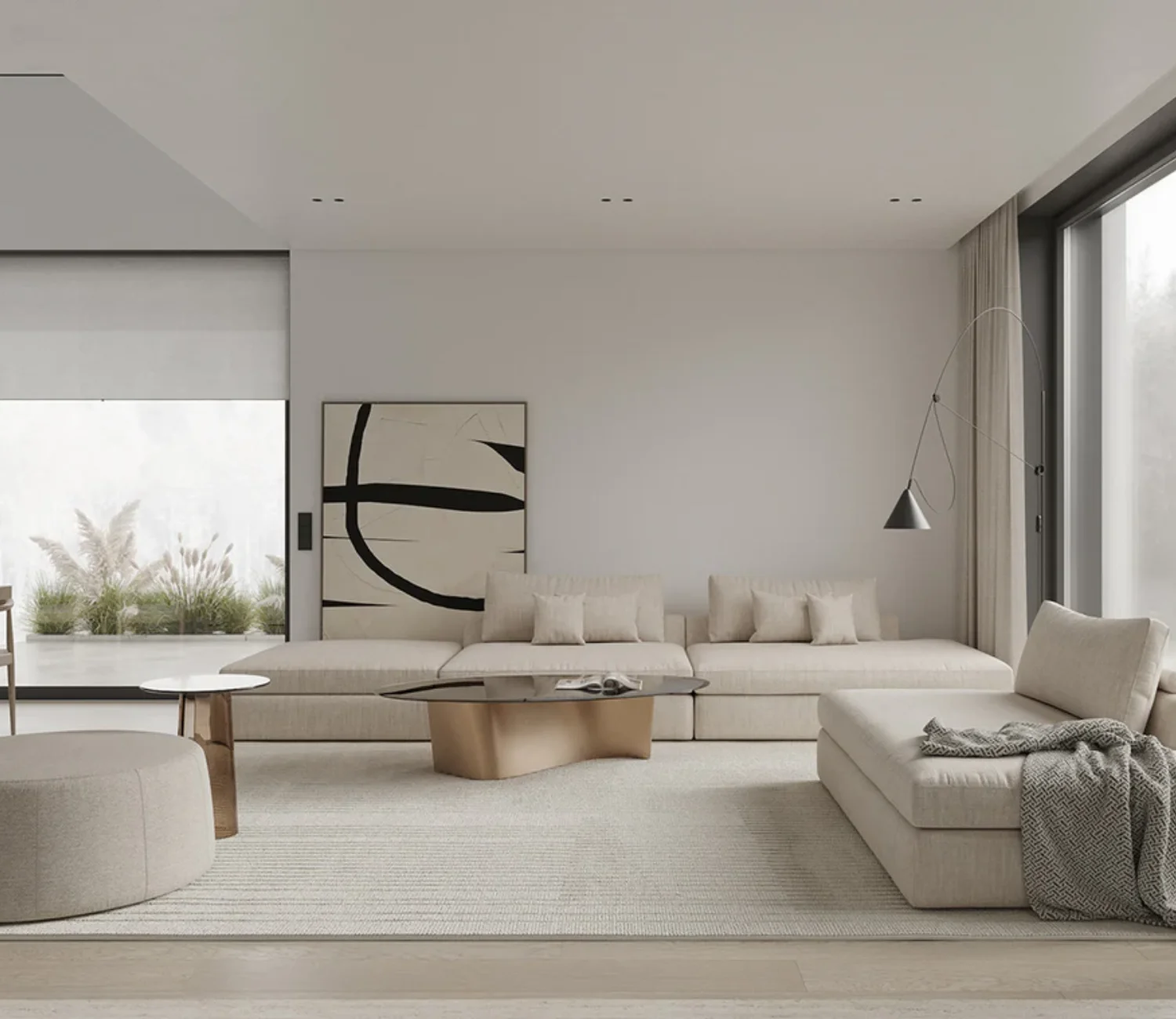
To measure for a sofa, check the available wall width, sofa depth, back height, surrounding walking space, and the complete delivery route. For sectional or L-shaped sofas, also confirm which direction the extended section will face.
Start with the wall where you want the sofa.
Measure:
- Maximum available width.
- Maximum practical depth.
- Height below windows if applicable.
- Space required around side tables.
- Walking space in front of the sofa.
You can temporarily mark the sofa’s dimensions on your floor using painter’s tape.
This provides a much better sense of scale than numbers alone.
If you’re considering a larger sectional, look at the shape as carefully as the dimensions. For example, the Soho L Shape Sofa is specifically designed around an L-shaped configuration, so room layout becomes especially important.
For traditional living areas, you can also compare options such as the Cabriole Sofa Set or explore the complete sofa-set collection.
How Much Space Should You Leave Around a Sofa?
Try to maintain a comfortable walking route through the room.
Around 30–36 inches (76–91 cm) is a useful planning range for major walking routes when space permits. Smaller secondary gaps can sometimes work with less room.
The important question isn’t simply, “Can the sofa fit?”
Ask:
Can people comfortably live around it once it is there?
How to Measure for a Bed
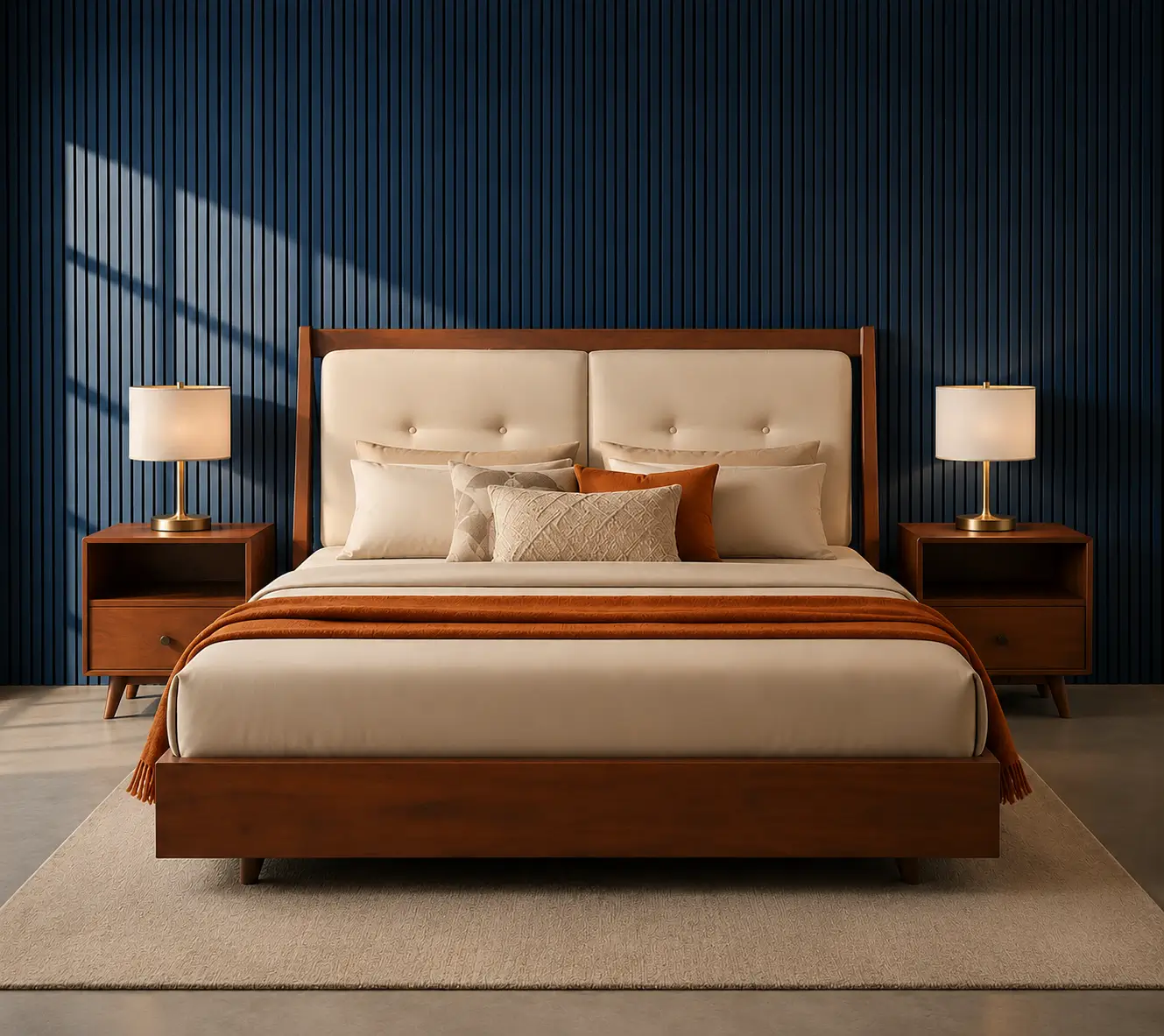
Measure the complete outer dimensions of the bed frame rather than relying on mattress size alone. Headboards, side rails, footboards, and attached side tables can make the finished bed considerably larger than the mattress.
This is one of the most common online furniture measurement mistakes.
A king-size mattress measurement does not necessarily equal the dimensions of a king-size bed frame.
Before buying, measure:
- Bed-frame width
- Full frame length
- Headboard height
- Space for side tables
- Distance between the bed and wardrobe
- Walking space at the foot of the bed
- Door-opening clearance
For example, the Hemlock Bed includes additional measurements for its headboard, side table, dresser, and mirror, demonstrating why bedroom furniture should be evaluated as a complete arrangement rather than simply by mattress size.
You can also compare different styles within the bed-set collection.
Once you know the correct dimensions, you can think about appearance. The guide to bedroom furniture colors in Pakistan can help you coordinate your selected furniture with the room’s walls, flooring, and lighting.
How to Measure for a Dining Table
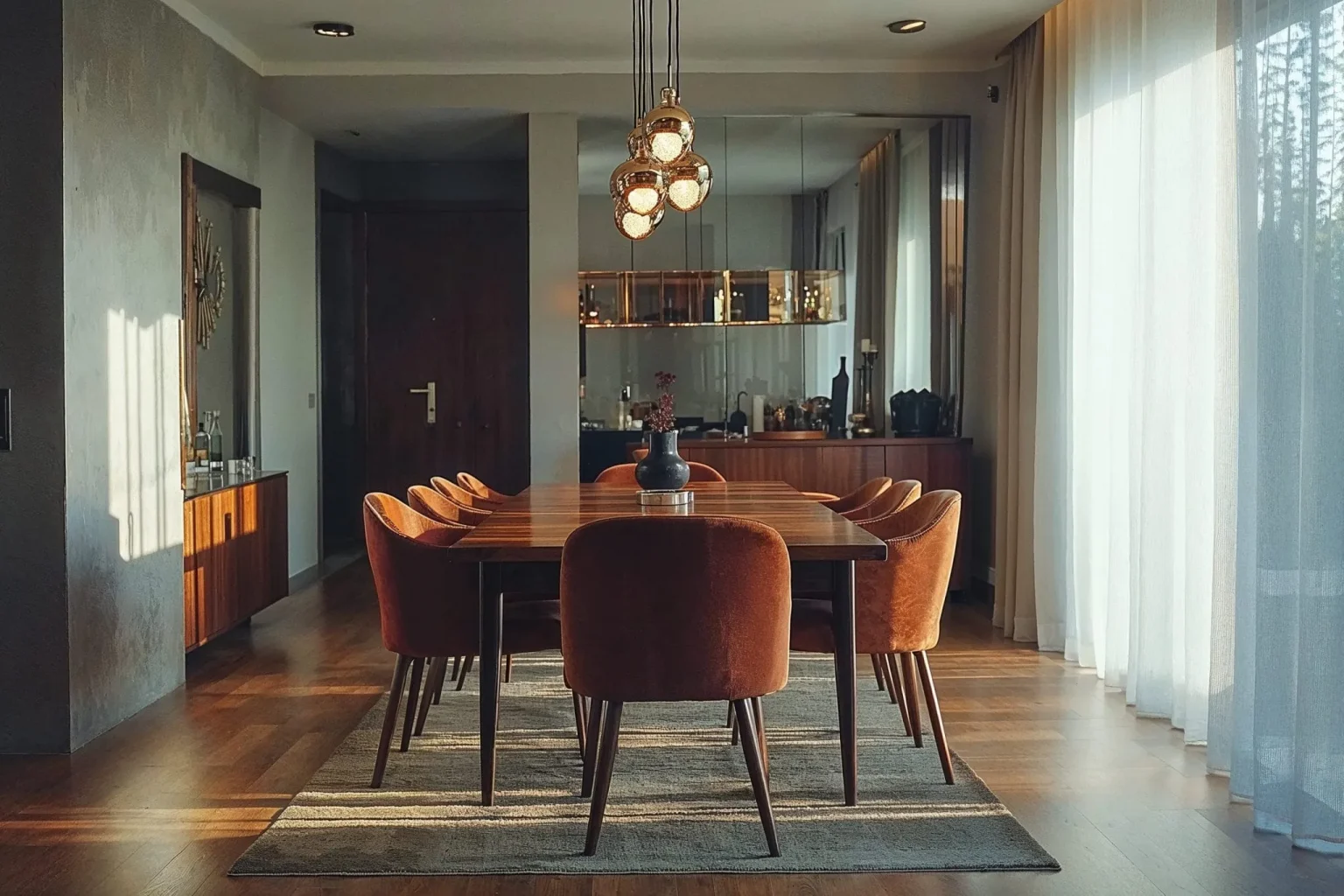
Measure both the dining table and the space required to pull chairs away from it. A table can technically fit inside a room yet still be impractical if guests cannot comfortably move their chairs.
Measure:
- Table length
- Table width
- Table height
- Chair depth
- Space behind occupied chairs
- Walking routes around the dining area
As a general planning approach, aim for around 36 inches (91 cm) between the dining-table edge and nearby walls or furniture when space permits.
If people regularly walk behind seated diners, additional clearance can make the layout more comfortable.
When evaluating a statement dining piece such as the Burl Brass Dining Table, consider both the visual size of the table and the functional area required once chairs are added.
The dining table shouldn’t simply fit.
It should remain usable.
How to Measure for a Wardrobe
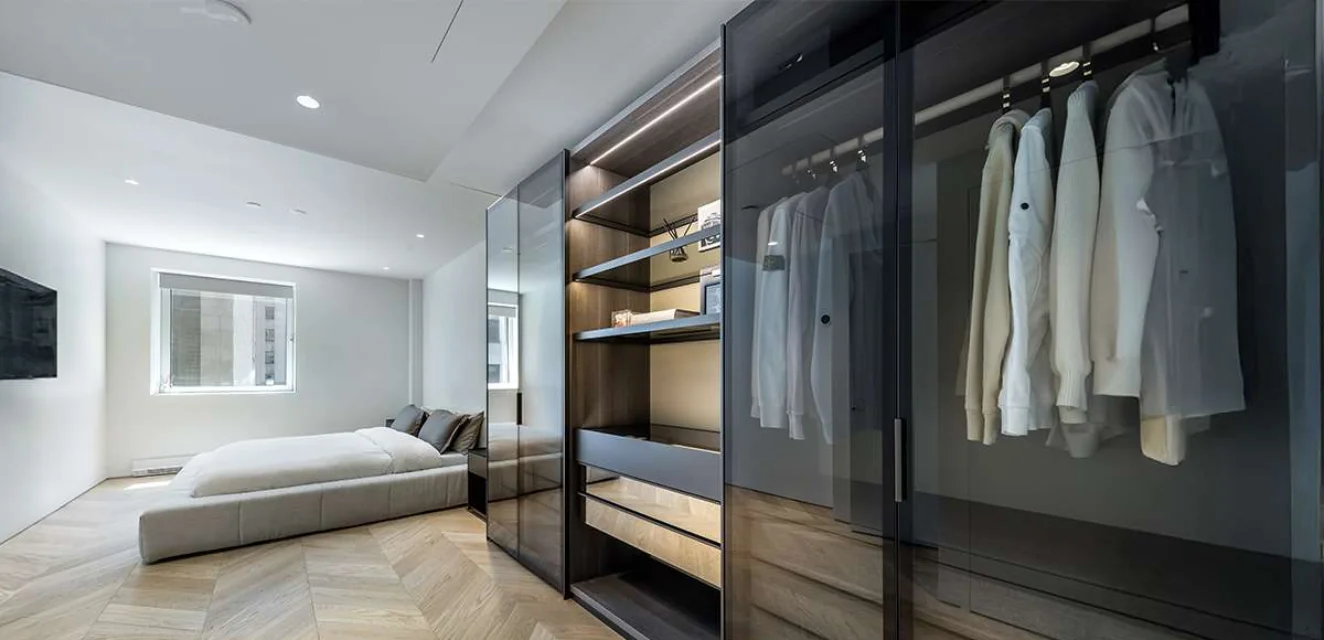
Measure wardrobe width, height, and depth, then account for the type of doors. Hinged wardrobe doors require open floor space in front, while sliding doors generally need less front clearance.
Measure from the floor to the ceiling in several places because ceilings and floors may not be perfectly level.
You should check:
- Available wall width
- Floor-to-ceiling height
- Wardrobe depth
- Skirting boards
- Electrical outlets
- Door opening
- Window position
- Air-conditioning units
If space is limited, wardrobe-door style becomes especially important.
Gourmet Furnishers’ guide comparing sliding-door wardrobes vs hinged wardrobes explains how sliding designs can reduce the amount of floor space required for door movement.
How Much Clearance Should You Leave Around Furniture?
There is no single clearance measurement for every room, but major walking routes generally need more space than decorative gaps. Always prioritize comfortable movement, opening doors and drawers, and accessing storage.
Use the following ranges as practical planning guidelines rather than rigid rules.
| Furniture Area | Practical Clearance to Consider |
|---|---|
| Main walking route | About 30–36 in / 76–91 cm |
| Around dining table | About 36 in / 91 cm where possible |
| Between sofa and coffee table | About 14–18 in / 36–46 cm |
| Beside a bed | About 24–30 in / 61–76 cm where possible |
| In front of hinged wardrobe | Enough room for the door plus comfortable standing space |
| Drawers and cabinets | Drawer depth plus standing space |
Smaller homes may require tighter layouts.
That’s fine.
The purpose of these measurements is not to force every house into the same design formula. They help you identify where reducing furniture size would make everyday movement easier.
Use Painter’s Tape to Test Furniture Size Before Ordering
One of the easiest ways to visualize furniture dimensions is to mark its footprint on the floor with removable painter’s tape. This converts abstract measurements into a visible representation of the space the furniture will occupy.
Suppose an online sofa is 95 inches wide and 34 inches deep.
Mark a 95 × 34-inch rectangle on your living-room floor.
Then walk around it.
Try opening nearby doors.
Sit where other furniture will be placed.
Check whether the route to another room feels restricted.
This simple test can immediately reveal whether a piece will dominate your room.
For tall wardrobes, cabinets, and headboards, you can use tape on the wall as well.
Don’t Forget Furniture Scale
Furniture can physically fit and still look disproportionately large or small. Compare furniture dimensions with the room, ceiling height, windows, and nearby furnishings before ordering.
Imagine placing an oversized carved sofa set in a very narrow lounge.
It might fit between the walls, but the space could feel visually crowded.
The reverse is also true.
A small two-seater sofa can look lost in an expansive formal living room.
Consider:
- Ceiling height
- Window size
- Existing furniture
- Rug dimensions
- Wall length
- Room shape
- Visual weight of the furniture
Large carved pieces often appear heavier than minimalist furniture with the same basic dimensions.
Measure Twice Before You Place the Order
Recheck critical measurements at least twice, particularly doorways, stairs, furniture placement areas, and large product dimensions. A small measurement error can become a major delivery problem with bulky furniture.
The old rule “measure twice, cut once” works just as well when buying furniture.
After completing your first measurements, repeat the most important ones on a different day or ask another person to verify them.
Double-check:
- Narrowest doorway
- Tightest hallway
- Staircase
- Lift
- Furniture area
- Ceiling height
- Product width
- Product depth
- Product height
If something is unusually close, don’t assume it will work.
Allow a reasonable margin.
Common Furniture Measurement Mistakes
The most common mistakes are measuring only the room, confusing mattress size with bed-frame size, ignoring furniture depth, forgetting delivery access, and leaving insufficient clearance around doors and drawers.
Measuring Only Wall Width
Width alone doesn’t tell you whether the furniture will overwhelm a room.
Depth matters just as much.
Forgetting the Delivery Route
A sofa may fit the lounge perfectly but fail to pass through a staircase.
Ignoring Headboards and Arms
Decorative furniture frequently extends beyond its functional core.
Confusing Mattress Size With Bed Size
Bed frames can be considerably wider and longer than mattresses.
Forgetting Chair Movement
Dining-room measurements must include the chairs when they are pulled out.
Ignoring Wardrobe Door Clearance
Hinged wardrobes need room in front of them.
Trusting Photos Instead of Specifications
Product photography is designed to show furniture attractively, not provide an accurate sense of scale.
Always read the measurements.
A Simple Furniture Measuring Checklist
Before ordering, confirm the room dimensions, furniture footprint, delivery path, clearance requirements, product dimensions, and orientation. If all six work together, you greatly reduce the risk of ordering furniture that does not fit.
Before clicking Add to Cart, check:
- Room length measured
- Room width measured
- Ceiling height measured
- Intended furniture area measured
- Windows marked
- Doors measured
- Hallways measured
- Staircases checked
- Lift measured if required
- Sharp corners checked
- Product width confirmed
- Product depth confirmed
- Product height confirmed
- Walking clearance considered
- Drawers and doors can open
- Furniture orientation confirmed
- Measurements checked twice
What Should You Check Besides Measurements Before Buying Furniture Online?
After confirming size, compare the furniture’s material, construction, finish, upholstery, customization options, delivery requirements, warranty, and total cost. Correct dimensions solve only one part of the buying decision. You should also consider whether the product works with your budget and interior style.
If you’re still planning your furniture budget, read the Gourmet Furnishers guide to average furniture costs in Pakistan in 2026. Families furnishing several rooms together may also find the guide to complete Jahez furniture set prices in Pakistan useful for understanding how bedroom, sofa, dining, and storage furniture can form part of a larger furnishing plan.
Why Measuring First Makes Online Furniture Shopping Easier
Measuring before shopping narrows your choices to furniture that can realistically fit, which saves time and makes comparing products easier. Instead of choosing purely by appearance, you can balance design, comfort, size, and functionality.
Online furniture shopping becomes much simpler once you know your maximum dimensions.
Instead of asking:
“Will this look good?”
you can ask:
“Will this look good, fit correctly, allow comfortable movement, and reach the room safely?”
That’s a much better buying question.
Gourmet Furnishers offers furniture across categories including beds, sofas, dining sets, chairs, tables, wardrobes, consoles, cabinets, ottomans, and other home furnishings.
You can begin by browsing Gourmet Furnishers and then compare each product’s dimensions with your measurement sheet before making a final selection.
Final Thoughts
Measuring your home before ordering furniture online takes only a little extra effort, but it can prevent expensive and inconvenient mistakes. Start with the room. Measure the exact furniture area. Check every doorway and passage. Allow room for walking, chairs, drawers, and doors. Then compare those figures with the product’s complete dimensions.
Most importantly, don’t ask only whether the furniture can fit inside the room. Ask whether it can reach the room, fit comfortably, and function properly once it is there. Once your measurements are ready, explore online furniture collection to compare beds, sofas, dining furniture, tables, cabinets, chairs, wardrobes, and other pieces for your home. A measuring tape, a simple sketch, and ten minutes of planning can make the difference between furniture that merely fits and furniture that truly belongs in your space.
FAQs
How do I measure my house for furniture?
Measure the room’s length, width, and height first. Then measure the exact furniture area, doors, hallways, stairs, lifts, and any narrow turns the furniture must pass through. Finally, compare those numbers with the product’s width, depth, and height.
Should furniture be smaller than the available space?
Usually, yes. Furniture shouldn’t occupy every available inch. Extra space allows for movement, door operation, side tables, curtains, ventilation, and visual balance.
How do I know whether a sofa will fit through my door?
Compare the sofa’s width, height, and depth with the narrowest doorway on the delivery route. Also consider whether the sofa can be rotated or tilted and whether there is enough turning space immediately before and after the doorway.
What measurements are most important when buying furniture online?
The most important product measurements are width, depth, and height. For the home, room dimensions, available furniture space, doorway width and height, hallway width, stair dimensions, and lift dimensions are equally important.
How much walking space should I leave around furniture?
Around 30–36 inches can provide a comfortable main walking route when the room allows it. Smaller homes may require tighter clearances, so treat this as a planning guideline rather than an absolute requirement.
How do I measure a bedroom before buying a bed?
Measure the room first, then mark the complete outer dimensions of the bed frame. Include the headboard, footboard, side rails, side tables, wardrobe clearance, and walking areas rather than measuring only for the mattress.
How do I measure a dining room for a table?
Measure the available room dimensions and subtract the space needed for chairs and circulation. Around 36 inches behind the table edge is a useful starting point where space permits.
Is furniture depth important?
Yes. Depth is one of the most frequently overlooked furniture measurements. A deep sofa, cabinet, or dresser can reduce walking space even when its width fits perfectly against the wall.
Should I measure doors before buying furniture online?
Yes. Measure every doorway through which the furniture will travel, including the building entrance and room entrance. The smallest opening on the route may determine whether delivery is possible.
What should I do if my measurements are very close to the furniture dimensions?
Avoid relying on an exact fit. Recheck the measurements and allow extra space for handling, frames, skirting, irregular walls, packaging, and movement during installation. If the margin is extremely small, confirm dimensions with the seller before ordering.