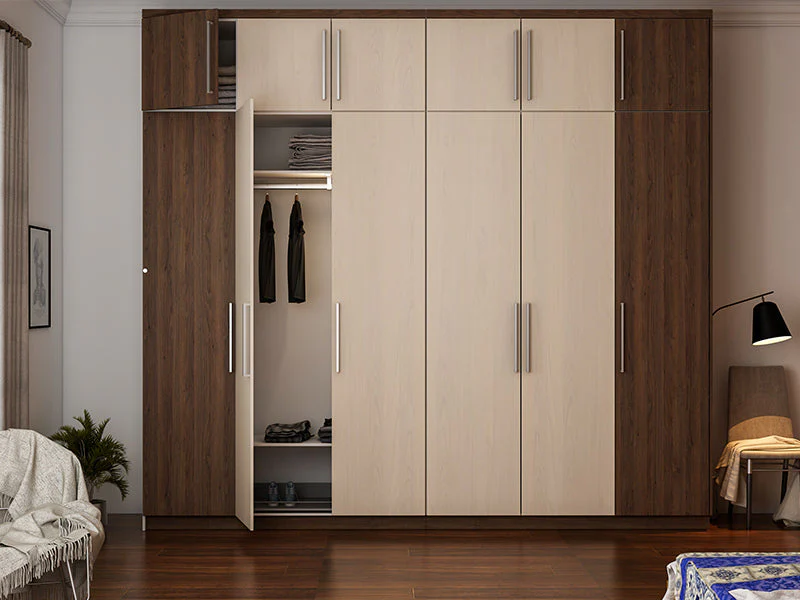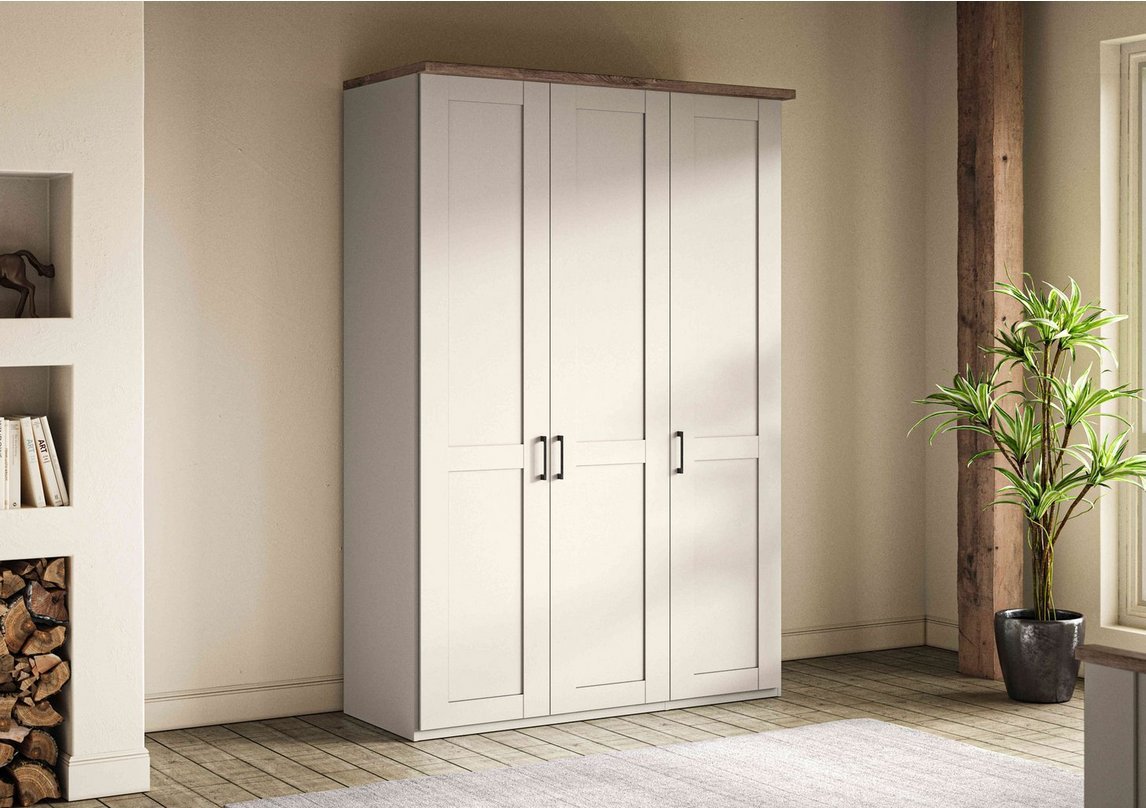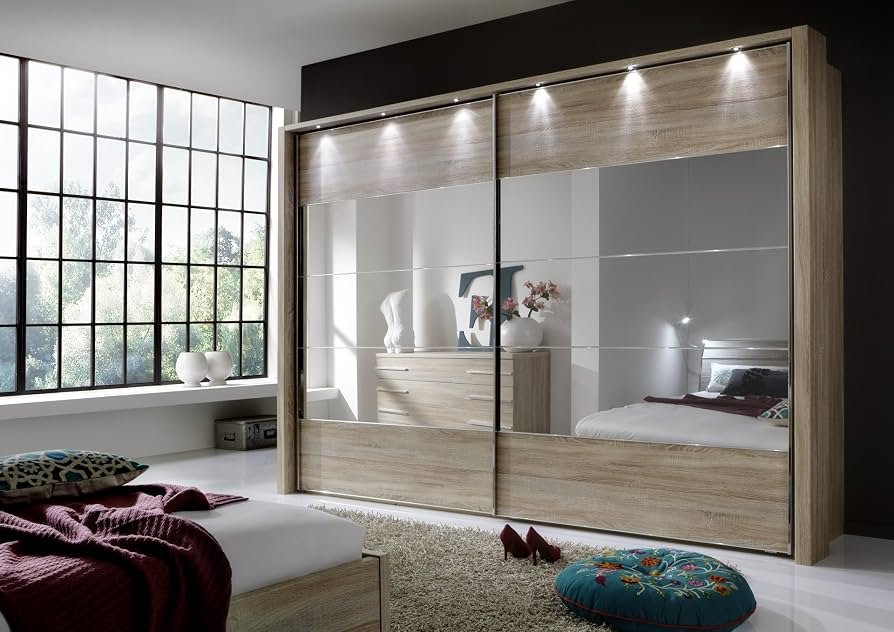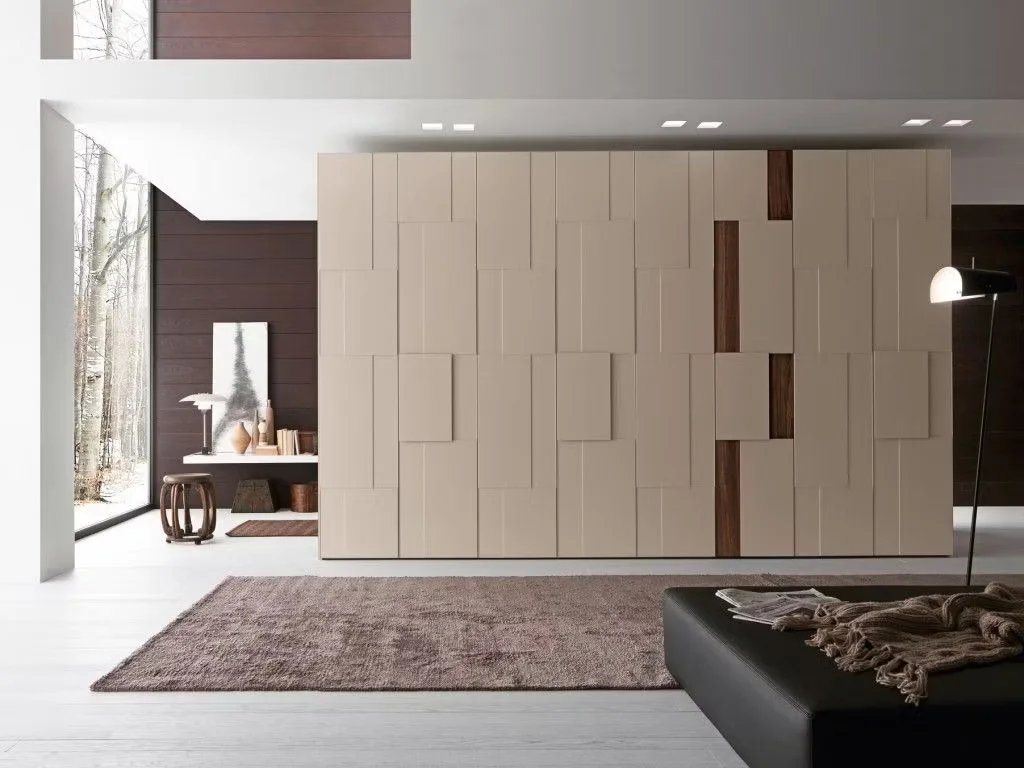
The best wardrobe esigns for Pakistani bedrooms in 2026 focus on maximizing storage, style, and space efficiency. Sliding door wardrobes are ideal for compact rooms, while hinged and walk-in wardrobes remain popular for larger homes. Wooden wardrobes made from Sheesham, MDF, or engineered wood offer durability and a premium look, and modern designs featuring mirrored doors, matte finishes, LED lighting, and custom shelving are in high demand. Choosing a wardrobe that matches your bedroom size, interior style, and storage needs ensures better organization and enhances the overall appearance and functionality of your living space.
At Gourmet Furnishers, we work through this challenge regularly. Clients come in from DHA, Bahria Town, Gulberg, and apartments across Lahore with rooms of very different dimensions, and our goal every time is a wardrobe that looks as though it was always meant to be there. That takes matching the right design to the actual room rather than guessing. This guide walks you through the full decision: styles, door types, materials, sizing, and how to organise for Pakistani clothing. By the end, you will have a clear picture of which wardrobe suits your bedroom and what to do next.
Best wardrobe designs for Pakistani bedrooms: styles that actually work
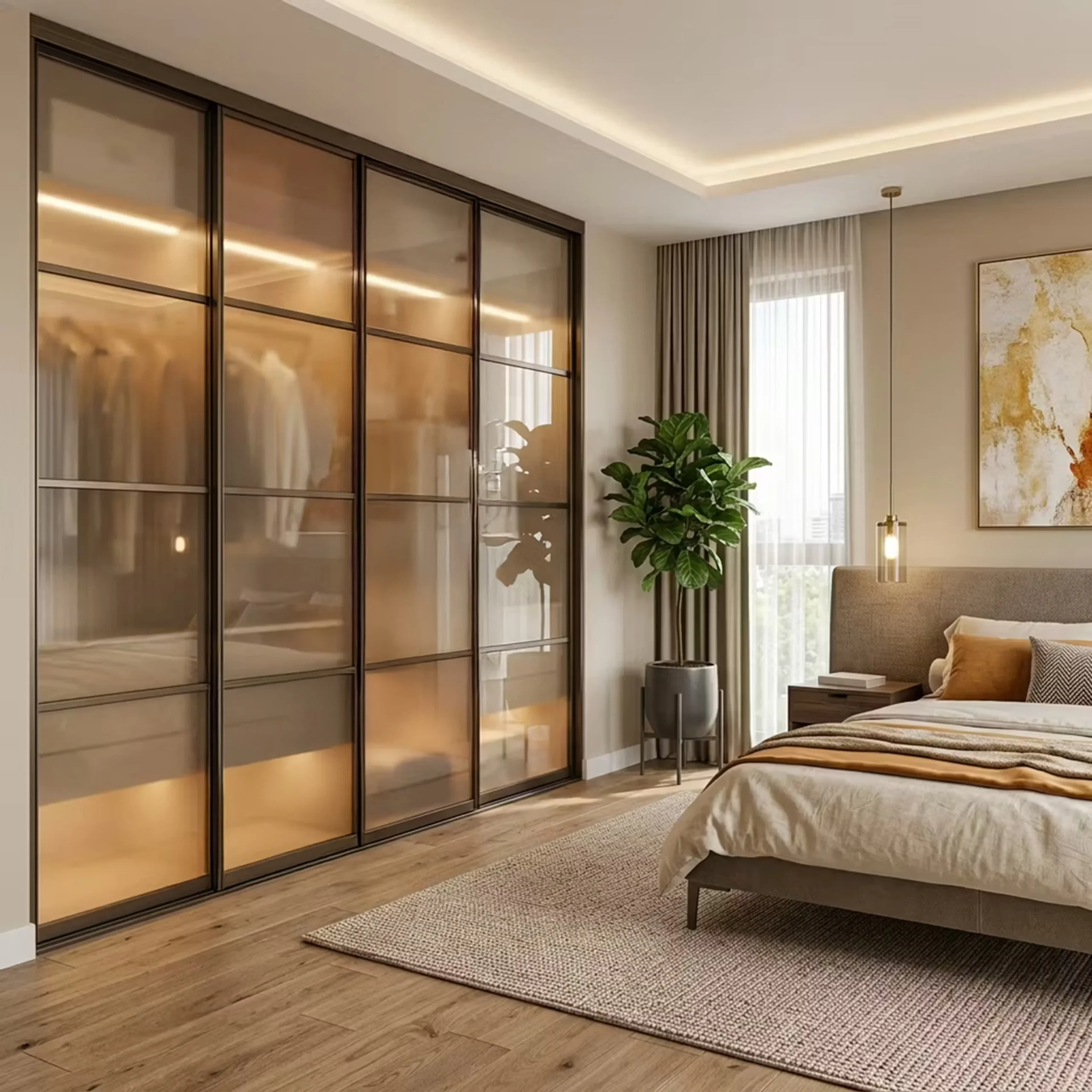
Sliding door wardrobes and built-in wall units
Sliding door wardrobes dominate compact Pakistani flats, particularly in Lahore and Karachi, for one practical reason: the doors stay within the wardrobe’s footprint. There is no swing arc to account for, no furniture that has to be repositioned every time you need fresh clothes. Add mirror panels to the sliding doors and the room also appears larger, a meaningful advantage when your bedroom is already working hard to accommodate a queen-sized bed.
Built-in wall wardrobes take the space efficiency principle further. These floor-to-ceiling units sit flush with the wall surface, eliminating the visual bulk of a freestanding almari and recovering every centimetre of vertical space. They are commonly found in newer gated-community developments where the architecture already assumes built-in storage. In 2026, both styles come with matte textures, dual-tone wood-and-white finishes, and integrated LED strips as popular upgrades that have become far more widely available and affordable.
Traditional almaris and modular wardrobes
The carved wooden almari is not going anywhere. Its enduring appeal in Pakistani homes is commonly attributed to cultural familiarity, visible craftsmanship in every panel, and the fact that it works beautifully in a traditionally furnished master bedroom without needing a designer to make it look right. A solid sheesham almari placed against the right wall can anchor an entire room’s aesthetic.
Modular wardrobes offer a flexible middle ground. These are mix-and-match units assembled to fit an irregular wall, an awkward corner, or a room where a standard wardrobe dimension simply does not work. For bedrooms with a pillar intrusion or a recessed alcove, modular units solve the problem that a single freestanding piece cannot. At the luxury end, mirrored wardrobes and walk-in closets suit larger master bedrooms well. Mirrors amplify light and perceived space, while walk-in closets convert storage from a piece of furniture into a dedicated room of its own.
How to choose the right door type for your room
When sliding doors make the most sense
The core space advantage of sliding doors is straightforward. They require only around 30 cm of front clearance, compared to the 60 to 90 cm that a hinged door needs to swing fully open. For bedrooms under 110 square feet, or any room where the gap between the bed and the opposite wall is narrow, sliding is the right call, not simply a style preference.
The trade-off is real and worth knowing before you buy. Sliding doors give you access to only 50 to 66 percent of the wardrobe interior at once, depending on the track configuration. The tracks also collect dust and need regular cleaning. For families with clothing spread across the full interior width, this partial access can be a daily frustration, so it is worth understanding before you commit.
Hinged and bi-fold doors: when full access matters more
Hinged doors cost less, approximately PKR 45,000 to 80,000 for a standard 7-foot unit versus PKR 55,000 to 100,000 for a sliding equivalent, and they give you full access to the entire wardrobe interior when open. They are also easier to repair. Local carpenters can usually adjust or replace a hinge quickly and cheaply, whereas a sliding track or roller failure is typically more complex and time-consuming to fix. For homes in cities where specialist furniture technicians are less accessible, this repairability advantage is meaningful.
Bi-fold doors are the practical option for narrow rooms where a full hinged swing is impossible but sliding access feels insufficient. They fold flat to one side, clearing most of the opening without requiring the full swing clearance of a traditional hinged door. The rule of thumb is simple: sliding for small rooms, hinged for larger rooms and villas, bi-fold for awkward or narrow spaces where the other two do not fit.
Materials that actually hold up in Pakistani homes
Solid wood versus engineered boards
Solid wood, whether sheesham, oak, or walnut, gives the best longevity and can be sanded and refinished when it shows age. Sheesham in particular handles Pakistan’s climate better than imported softwoods because of its natural density and resistance to seasonal humidity shifts. However, any solid wood carries a warping risk: if the timber has not been properly seasoned before manufacturing, Pakistan’s humid summers and dry winters create the exact conditions for cracking and bowing. Specifying well-seasoned, anti-termite-treated sheesham is essential.
Plywood is the reliable structural backbone for wardrobe carcasses. Its cross-layered construction resists warping, holds screws well, and handles moisture significantly better than MDF. For built-in wardrobes and modular units, BWP (Boiling Water Proof) plywood in the carcass is the smart call, particularly given Pakistan’s climate extremes. MDF deserves a direct assessment: it offers a smooth surface that is excellent for painted finishes and it costs less, but it swells permanently if water reaches it. It is unsuitable for wardrobes placed against bathroom-adjacent walls or in ground-floor rooms with humidity concerns. If budget is the driver, use MDF only in genuinely dry spaces with properly sealed edges.
Laminates and finishes: where durability meets design
Laminate finishes applied over a plywood base are the dominant choice for modular wardrobe builds in Pakistan, and for good reason. They offer scratch and stain resistance with no additional finishing required, and they arrive ready to install without the curing time that paint demands. The surface holds up well to the daily contact of a busy household.
The finishes gaining traction in 2026 reflect what Pakistani buyers are asking for: matte textures that resist fingerprints, dual-tone designs combining natural wood grain with white or beige panels, and handleless shutters that give a clean minimalist silhouette. The combination best suited to Pakistani conditions is a plywood carcass with a laminate finish for everyday wardrobes, and solid sheesham or walnut for statement pieces in the master bedroom where longevity and appearance carry equal weight.
Getting the size right before you buy
Recommended dimensions by bedroom type
For a small bedroom with a single or guest bed (typically 100 to 110 square feet), keep the wardrobe width between 60 and 91 cm (roughly 2 to 3 feet) and the depth at 45 to 60 cm. Go to 7 feet or higher in height, around 210 cm, to use vertical space without eating into the floor area you cannot spare. For a medium bedroom with a double or queen bed, a width of 91 to 152 cm (3 to 5 feet) at a depth of 60 cm fits comfortably. A standard two-door hinged or sliding unit in this range works well for most couples without feeling oversized.
Master bedrooms with a king bed call for a wardrobe width of 183 to 366 cm (6 to 12 feet), a depth of 60 cm, and a height of 7 to 8 feet (210 to 245 cm). Triple wardrobes or full sliding systems are the norm at this scale. If the room allows it, a floor-to-ceiling unit makes the most of the vertical height while keeping the floor plan clear.
Clearance rules most buyers overlook
The non-negotiable minimum for hanging depth is 60 cm. Anything less means clothes are crushed against the back panel rather than hanging freely, which defeats the purpose of a proper wardrobe. Shelf-only configurations can work at shallower depths, but if you are hanging kameezes and suits, 60 cm is the floor.
Maintain at least 91 cm (3 feet) of clear path between the wardrobe, the bed, and the door. This matters for comfort, yes, but it is also a basic safety requirement for easy exit from the room. The cleaner way to avoid all of these calculations is to commission a built-to-measure wardrobe, where the design is drawn around the room’s actual dimensions from the start, not retrofitted to a standard size that almost fits.
Organising your wardrobe around Pakistani clothing
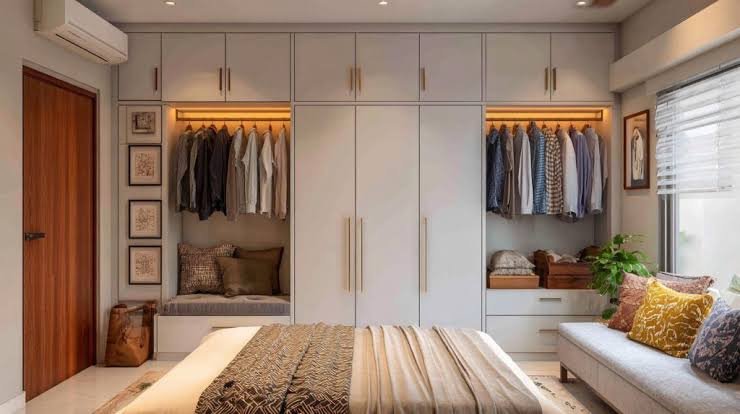
Hanging sections for kameez, dupattas, and formal wear
Lightweight kameezes should hang on good-quality hangers to stay wrinkle-free. Heavy formal kurtas need enough spacing on the rail to avoid crushing each other, which means resisting the temptation to pack the rail too tightly even when the wardrobe is full. The best solution for dupattas is dedicated scarf hangers or over-door loops that keep them visible, separated, and tangle-free.
Organise the hanging rail by frequency of use. Place everyday basics at eye level where they are easiest to reach, and move wedding and party wear to higher rails where they stay undisturbed between occasions. This single adjustment makes daily dressing faster and keeps delicate fabrics in better condition over time.
Dedicated space for bridal wear, shoes, and seasonal items
Heavy bridal outfits and sarees deserve proper storage. Clean, dry boxes on upper shelves, with cedarwood blocks or scented sachets tucked inside, protect delicate fabrics from dust and moths between events. Do not leave formal bridal wear folded loosely on a shelf where daily access to the wardrobe risks disturbing it.
Shoe storage works best when it is integrated into the wardrobe design rather than solved with a separate rack on the floor. Pull-out shoe compartments, cubbies, or a dedicated shoe section at the base of the wardrobe organise footwear by activity or colour for quick selection. For seasonal rotation, fold winter shawls and jackets into labelled boxes on high shelves during summer months, freeing the prime mid-height zones for the current season’s clothing. This habit keeps the wardrobe functional all year, particularly through the shift from monsoon season into the cooler autumn months.
Why a custom-built wardrobe is worth the investment
What bespoke design gives you that off-the-shelf cannot
A standard ready-made wardrobe assumes a standard room. Most Pakistani bedrooms are not standard. Irregular wall lengths, pillar intrusions, low beam lines at the ceiling, and recesses from structural columns are common in both older homes and newer apartment builds. A fixed-size unit simply cannot accommodate these realities; it either leaves awkward gaps or refuses to fit at all.
A custom brief unlocks an interior layout designed around how your family actually dresses: the right proportion of hanging space for kameezes, adequate shelf depth for folded shalwars, a dedicated shoe section at the correct height, and a finish that matches the existing bedroom décor, not one that works against it. Modular kits solve the size problem partially, but the internal configuration remains generic. It is built for an average wardrobe user, not for a specific household.
How Gourmet Furnishers builds wardrobes to fit your exact bedroom
Gourmet Furnishers bespoke wardrobe range addresses the sizing, material, and storage challenges covered in this guide directly. The process begins with a design brief drawn around your room’s actual dimensions and your storage requirements, not a catalogue size that approximately matches. Clients are welcome to visit the factory in Lahore to see materials firsthand, confirm finishes, and review the design before manufacturing begins, which many buyers find reassuring at this stage of the decision.
The practical trust layer matters too. According to Gourmet Furnishers, every wardrobe comes with a 2-year manufacturer’s warranty covering structural defects and craftsmanship, alongside a 30-day return policy. Commissioning a custom wardrobe feels like a significant decision, and these policies are designed to make it a well-supported investment. WhatsApp-based appointment scheduling makes it straightforward to book a factory visit without the back-and-forth of a formal inquiry process.
Choosing the wardrobe design that fits your Pakistani bedroom and your life
So, what are the best wardrobe designs for Pakistani bedrooms in 2026? The honest answer is that the best design is not the most expensive option or the most visually striking one in a showroom. It is the one that fits the room’s actual dimensions, suits the door clearance available, uses materials appropriate for the climate, and stores your clothing the way you genuinely use it every day.
Work through the decision in order: start with room size and door type, then choose the material and finish that suit the room’s conditions and your budget, then plan the interior layout around your clothing categories. Each step narrows the field considerably and leaves you with a clear choice rather than an overwhelming one.
If a standard wardrobe does not fit your room or does not serve the way you need it to, a custom-built solution is more accessible than most people expect. The cost difference between a modular unit and a bespoke wardrobe is typically 5 to 15 percent, and what you gain in fit, finish, and interior function is disproportionate to that gap. Gourmet Furnishers is a practical place to start that conversation.