
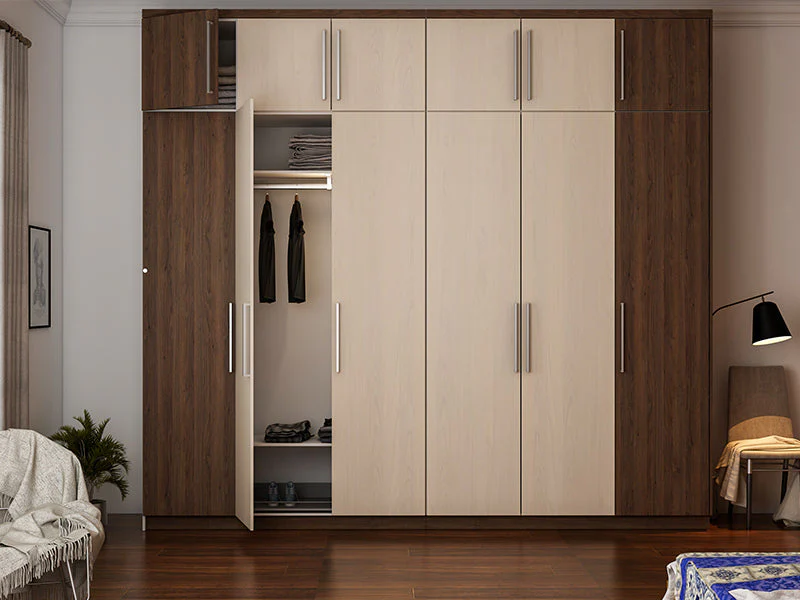
Choosing a wardrobe for a small bedroom in Pakistan starts with measuring the available space and selecting a design that maximizes storage without making the room feel crowded. Sliding door wardrobes are ideal because they do not require extra space to open, while floor-to-ceiling wardrobes provide more storage for clothes, bedding, and accessories. Choose light-colored finishes such as white, beige, or light wood to create a more spacious look, and look for features like built-in shelves, drawers, hanging sections, and mirrors for added functionality. Select durable materials such as solid wood or high-quality engineered wood that can withstand Pakistan’s climate, and pick a style that complements your bedroom décor while keeping the room organized and clutter-free.
Measure your bedroom before you do anything else
Many buyers skip this step and end up regretting it. A wardrobe that looks fine in a showroom can make a small bedroom feel impossible to move in once it’s installed. Before you browse a single option, you need three measurements and a clear-headed look at your room’s quirks.
Measure the wall width where the wardrobe will go, the floor-to-ceiling height, and, critically, the distance from the proposed wardrobe face to the opposite wall or bed edge. This last number is your walkway clearance. You need a minimum of 60 to 70 cm of clear walking space to move comfortably. If a wardrobe leaves you with less than that, it’s too deep or too wide, regardless of how well-designed it is.
Standard wardrobes are 60 cm deep. In a room where you’re already tight on floor space, a slim-depth wardrobe at 45 to 50 cm is a far smarter choice. At 45 cm you can still hang clothes without them touching the door, and you reclaim 15 cm of walking space across the full width of the unit. At 38 cm you lose the hanging rail entirely and are left with shelves only, useful for folded items, but not a full wardrobe solution.
Before you finalise anything, note the position of ceiling fans, air conditioning units, skirting boards, and any door swings that overlap your wardrobe wall. These details affect both the height clearance and whether a hinged door can open without hitting something. Sketching a rough floor plan with these marked out takes ten minutes and saves a great deal of frustration later.
How to choose a wardrobe for a small bedroom in Pakistan, type selection
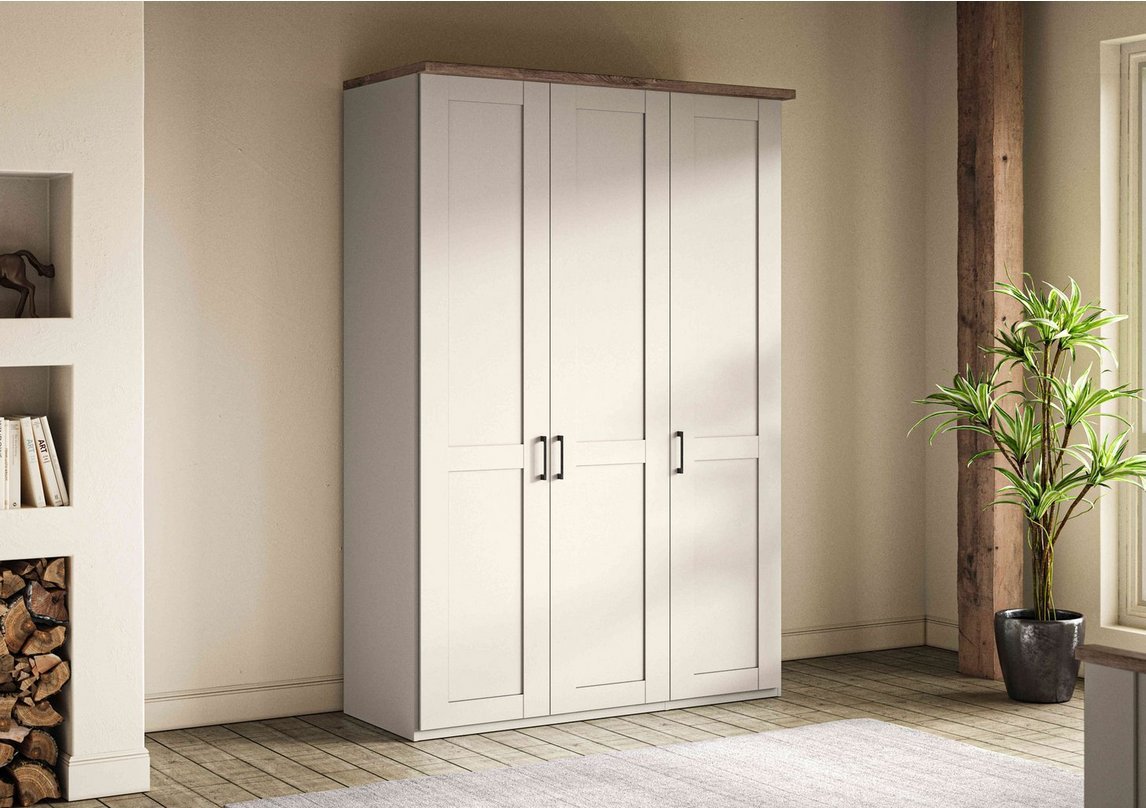
Once your measurements are in hand, the question becomes: which style of wardrobe fits how you live and how your room is laid out? Three main types are worth considering when choosing a wardrobe for a small Pakistani bedroom, and each solves a different problem.
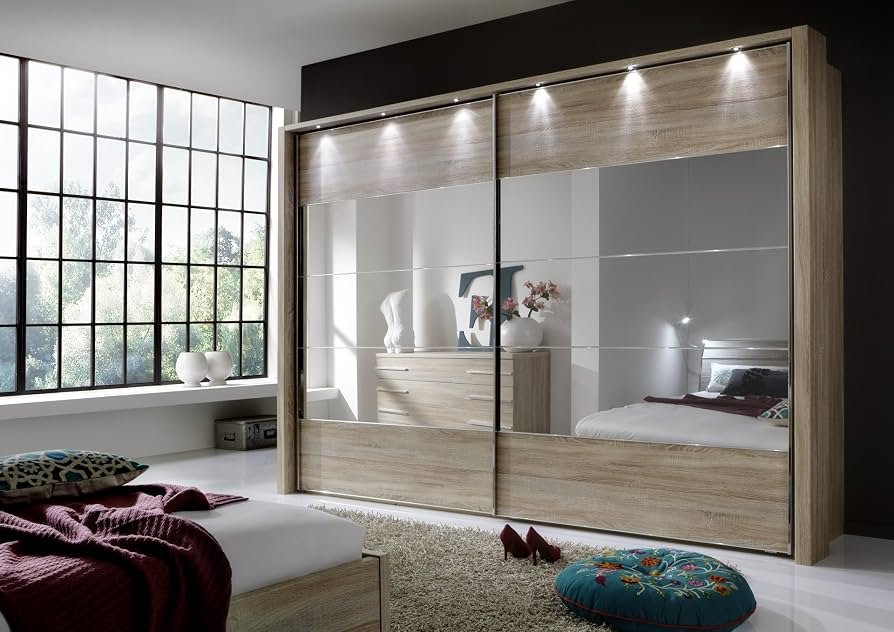
Sliding door wardrobes are the go-to for compact rooms because they require zero clearance in front. Hinged doors typically need roughly 60 to 90 cm of swing clearance depending on door size and handle projection, the same clearance you were trying to protect. Sliding doors eliminate that entirely. The trade-off is that only half the wardrobe is accessible at once, and the tracks collect dust, which is a real consideration in Pakistani homes where dry-season dust is constant. Clean the tracks regularly and the mechanism stays smooth. Many homeowners find the space savings well worth the partial-access trade-off, particularly in bedrooms under 12 square metres.
A fitted or built-in wardrobe is constructed directly into your room’s specific dimensions, running floor to ceiling and wall to wall. This approach can provide 15 to 25% more usable storage volume than a freestanding unit of the same footprint, because it eliminates the wasted gap above the wardrobe and any awkward spaces at the sides. The upfront cost is higher, and lead times from Lahore manufacturers typically run six to seven weeks for high-complexity bespoke builds. In a room you intend to live in long-term, a fitted wardrobe is significantly more efficient than any off-the-shelf alternative.
Corner wardrobes work well in L-shaped rooms or bedrooms where two walls meet at a right angle with no door nearby; they reclaim a neglected nook that otherwise collects clutter. Freestanding wardrobes, the more traditional almari format, remain practical if you’re renting, working with a limited budget, or need something installed quickly. Their main limitation is that they rarely reach the ceiling, leaving wasted vertical space above.
Getting the dimensions right for a compact bedroom wardrobe
Knowing the right wardrobe type is only half the job. The dimensions of the unit itself determine whether it feels like a storage solution or an obstacle.As covered above, 45 to 50 cm depth is the sweet spot for slim-depth wardrobes in a small Pakistani bedroom. If your walkway comfortably exceeds 70 cm, you can justify the full 60 cm depth for better hanging clearance. If your room is under 9 square metres, commit to 45 to 50 cm and don’t compromise on this number.
Always go as tall as the room allows. A wardrobe at 220 cm or ceiling height will outperform a 180 cm unit on storage every time. The space above a standard-height wardrobe is rarely used effectively. It accumulates dust and becomes a wasted void. Going floor to ceiling gives you a high bay for seasonal items (winter razais, rarely used luggage) and makes the room look taller, not more cramped. For width, an 80 to 100 cm wardrobe is manageable in very small rooms without dominating the wall. Two sliding doors on a 100 to 120 cm unit are a comfortable starting point.
Planning the inside for maximum storage capacity
The exterior dimensions decide how much space a wardrobe occupies. The interior layout decides how much of it you actually use. Ready-made wardrobes commonly lose 15 to 25% of usable volume compared with fitted solutions, largely through poor internal layout decisions.
A single long hanging rail is inefficient for most wardrobes. If you own mostly shirts, jackets, and trousers, a double-hang layout stacks two shorter rails vertically, nearly doubling the number of garments in the same column of space. Reserve a dedicated full-height section only if you genuinely own multiple formal dresses or long coats; otherwise, the double-hang layout wins by a considerable margin.
Open shelves look neat in showrooms and create chaos in everyday use. Folded items migrate, stack unevenly, and collapse when you pull one piece from the middle. Drawers keep folded clothes tidy and fully accessible without disturbing neighbouring items. Use shallow drawers (10 to 15 cm) for socks, scarves, and belts; deeper drawers (20 to 25 cm) for folded tops and trousers. Shelves work best for bulkier knitwear and shoes where items stand on their own.
The top section of a floor-to-ceiling wardrobe is ideal for items used once or twice a year: winter razais, suitcases, out-of-season clothes in storage boxes. Keep it accessible with a lightweight step stool rather than climbing on furniture. At the base, a built-in shoe rack or pull-out tray adds another layer of organisation without requiring extra floor space. Pull-out trouser racks and soft-close basket drawers are widely available through local hardware retailers and are well worth adding during a custom build.
When bespoke makes more sense than ready-made
For many small bedrooms in Pakistan, a standard wardrobe is a compromise. It’s 5 cm too deep, 10 cm short of the ceiling, or the wrong width for the wall. When choosing a wardrobe for a small bedroom in Pakistan, a bespoke unit built to your room’s exact dimensions solves every one of those problems. The premium over a comparable ready-made piece is typically 20 to 40%, depending on material and complexity.
What you gain is storage volume that uses every available centimetre, a wardrobe that looks like it was always part of the room, and a lifespan measured in decades rather than years. For a room you’re furnishing permanently, the maths almost always favours going custom.
At Gourmet Furnishers, the process starts with your exact measurements: wall width, ceiling height, obstacles, and how you want the inside organised. The team designs the wardrobe around your room, not the other way around. You choose the door style, material and finish, and internal layout split between hanging rails, drawers, and shelves. Gourmet Furnishers offers a factory visit option, allowing you to inspect materials and construction quality in person before delivery, a level of transparency that sets the experience apart. Reach out via WhatsApp to schedule a consultation or to arrange your visit.
Getting it right the first time
Choosing a wardrobe for a small bedroom in Pakistan comes down to a clear sequence: measure first, pick the right type for your room’s layout, get the depth and height dialled in, choose materials that suit the climate, and plan the inside for real-world use. Skip any of these steps and you end up with a wardrobe that either wastes space or creates it.
If your room has genuinely awkward dimensions, a low ceiling, an odd wall width, a tight walkway, a custom-built wardrobe will serve you far better than any off-the-shelf piece. Expand that to include a well-planned interior layout, and the improvement in how the room feels day to day is immediate. Your bedroom is worth getting right the first time, and the decisions you make now will shape how that room functions for the next decade or more.
FAQs
Which wardrobe is best for a small bedroom in Pakistan?
Sliding door wardrobes are the best choice because they save space and provide easy access without needing extra room for door clearance.
What size wardrobe should I buy for a small bedroom?
Choose a wardrobe that fits your wall space while leaving enough room for comfortable movement, typically 4–6 feet wide depending on the room size.
Are mirrored wardrobes good for small bedrooms?
Yes, mirrored wardrobes make a small bedroom appear larger and brighter while also serving as a practical dressing mirror.
Which material is best for wardrobes in Pakistan?
Solid wood offers excellent durability, while high-quality engineered wood is a cost-effective option with modern finishes and good performance.
How can I maximize storage in a small wardrobe?
Choose a wardrobe with multiple shelves, drawers, hanging rails, and overhead compartments to organize clothes, shoes, and accessories efficiently.
Leave a Reply
You must be logged in to post a comment.