Chat on WhatsApp

Category: blogs

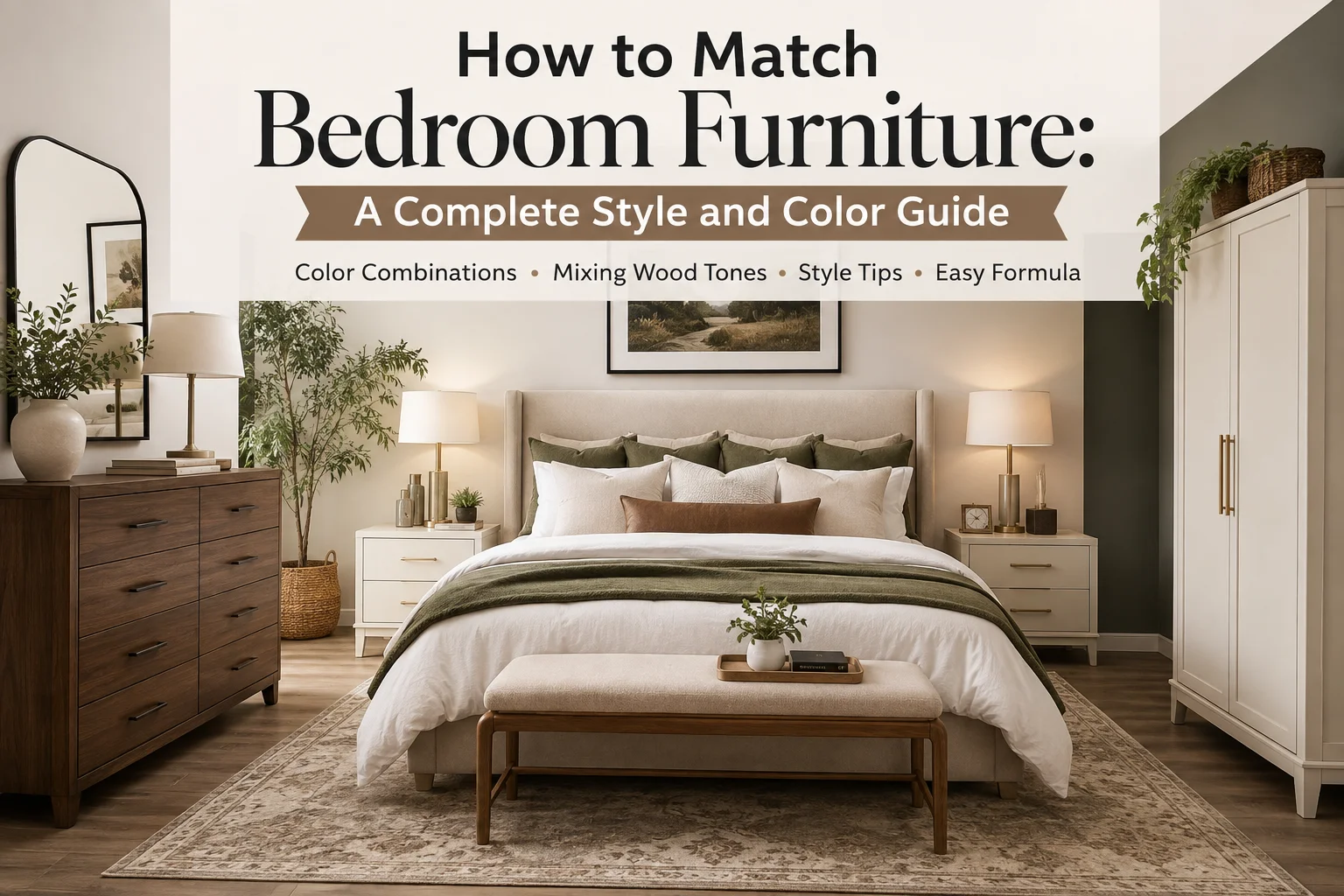
  • How to Match Bedroom Furniture: A Complete Style and Color Guide

    How to Match Bedroom Furniture: A Complete Style and Color Guide

    Matching bedroom furniture starts with choosing a consistent style, color palette, and material that creates a balanced and inviting space. Begin by selecting a main furniture style, such as modern, minimalist, traditional, or contemporary, and keep major pieces like the bed, wardrobe, bedside tables, and dresser within the same design family. For colors, choose one dominant shade, one complementary color, and a neutral tone to prevent the room from looking too busy.

    Wooden furniture in natural shades such as walnut, oak, or brown can add warmth, while white, beige, grey, and soft neutral furniture creates a clean modern appearance. You can also mix furniture finishes carefully, but keep similar undertones and avoid combining too many different wood colors. Finally, coordinate your furniture with the flooring, wall color, curtains, bedding, rugs, and lighting to create a cohesive bedroom where every element feels connected.

    How Do You Match Bedroom Furniture?

    The easiest way to match bedroom furniture is to choose one dominant style or finish then repeat two or three visual elements throughout the room. Furniture does not need to be identical as long as the colors, proportions, materials and overall design language feel connected.

    Start with the largest furniture piece in your bedroom. In most rooms, that will be the bed.

    Use its:

    • Wood tone
    • Upholstery color
    • Shape
    • Hardware
    • Design style

    as the foundation for choosing the remaining furniture.

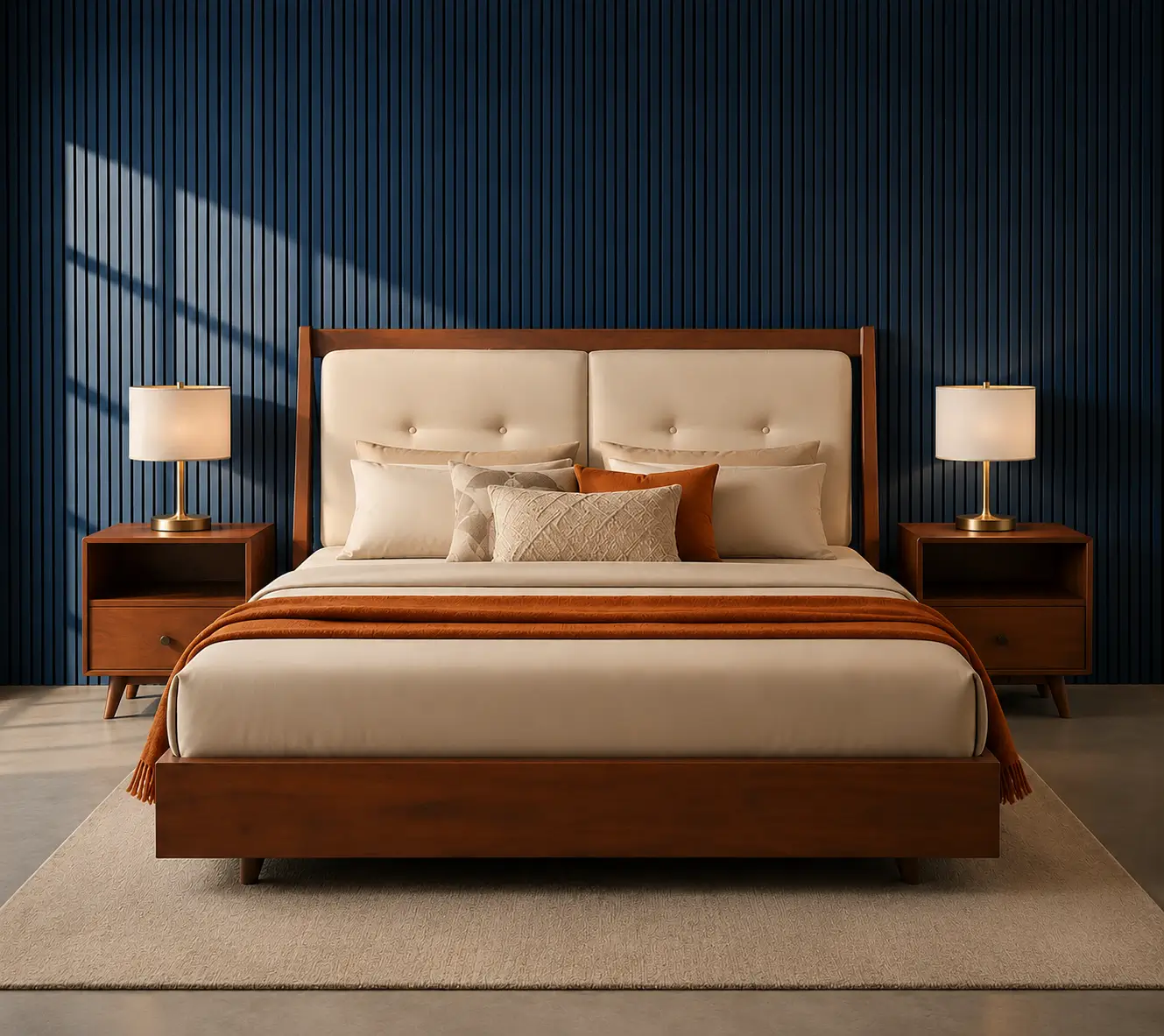
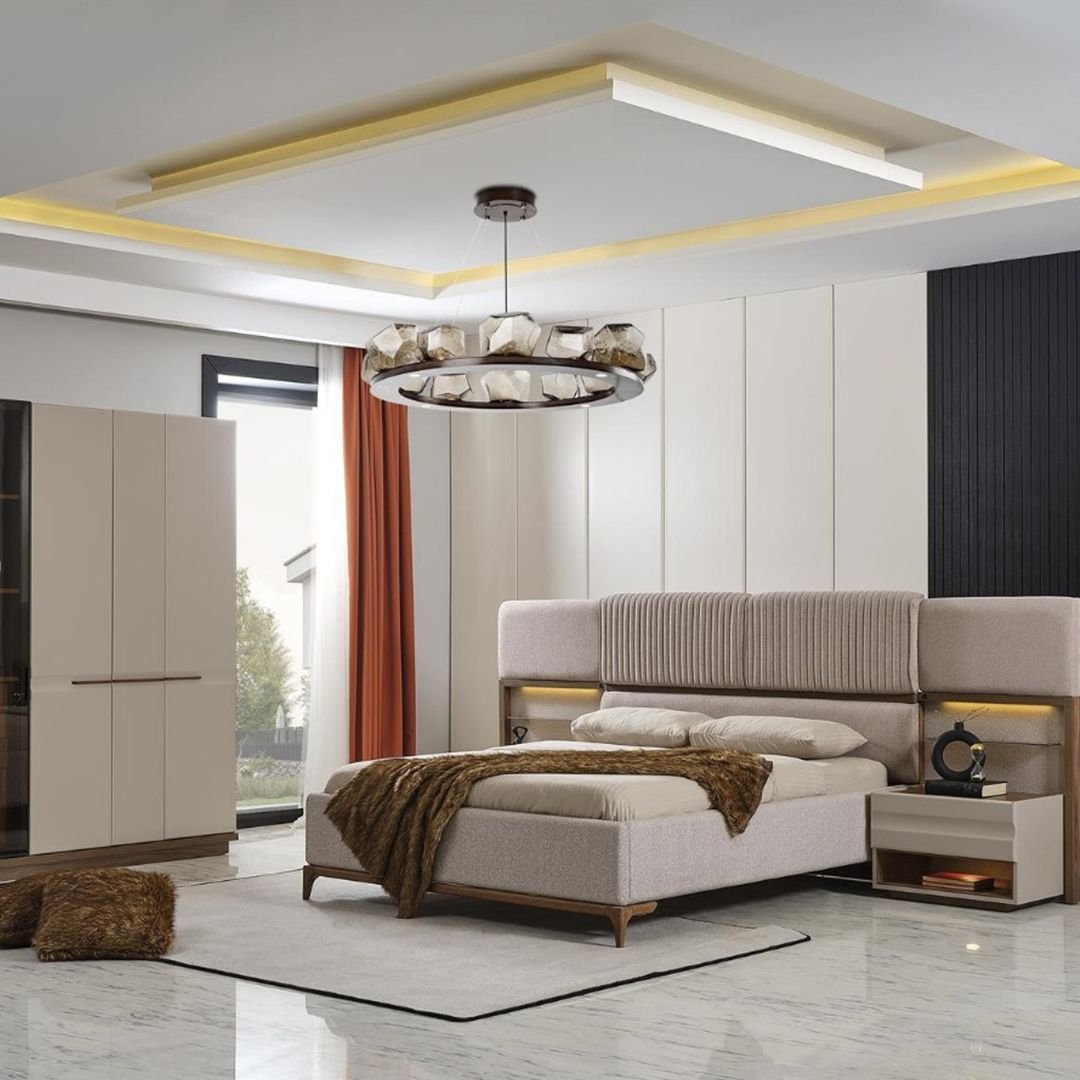
    For example, a walnut wooden bed can work beautifully with cream nightstands and a dark wood dresser if walnut tones appear again through handles, shelving or decorative accessories.

    Think coordinated rather than identical.

    Should All Bedroom Furniture Match?

    No, bedroom furniture does not have to match exactly. Mixing complementary furniture often produces a more natural and professionally designed bedroom than using an identical bed, dresser, wardrobe and nightstand set.

    Perfectly matching furniture can create a clean traditional appearance. However, using too many identical pieces can sometimes make a bedroom feel like a furniture showroom.

    A more balanced approach is to repeat certain elements.

    For example:

    Furniture PieceMain FeatureCoordinating Element
    BedWalnut woodMain wood tone
    NightstandsWarm whiteWalnut handles
    DresserWalnutMatches bed
    BenchBeige fabricMatches bedding
    WardrobeWarm whiteMatches nightstands

    Everything belongs together without every piece looking the same.

    Start With One Anchor Piece

    Choose one major piece of bedroom furniture as your visual anchor before selecting the rest. The bed usually works best because it is normally the largest and most noticeable piece in the room.

    Your anchor furniture establishes the direction of the bedroom.

    For example, if you have a modern walnut platform bed, you might build around:

    • Warm walnut tones
    • Beige or cream upholstery
    • Black metal details
    • Clean straight lines
    • Minimal decorative elements

    You now have a simple design rule for evaluating every additional furniture piece.

    Before buying something, ask:

    Does this piece share at least one or two characteristics with my anchor furniture?

    If the answer is yes, it will usually fit naturally.

    How to Match Bedroom Furniture Colors

    Bedroom furniture colors should complement rather than compete with each other. Use one dominant furniture color then introduce one secondary finish and a smaller accent color to create visual balance.

    A useful approach is the 60-30-10 principle.

    Approximately:

    • 60% of the room uses the main color
    • 30% uses a supporting color
    • 10% uses an accent

    You do not need to follow these percentages mathematically. They simply help prevent too many colors from competing for attention.

    For example:

    Main: warm oak
    Secondary: cream
    Accent: matte black

    You might use oak for the bed and dresser, cream for the wardrobe and nightstands then black for handles, lamps and frames.

    The result feels connected even though three colors are present.

    Can You Mix Different Wood Tones in a Bedroom?

    Yes, different wood tones can work together when they share similar undertones. Mixing two main wood finishes usually creates more harmony than combining several unrelated brown, red, orange and grey woods.

    First determine whether your wood has a warm, cool or neutral undertone.

    Warm Woods

    Warm wood tones often include hints of:

    • Red
    • Orange
    • Honey
    • Gold

    Examples can include honey oak, cherry and some walnut finishes.

    Cool Woods

    Cool wood tones may lean toward:

    • Grey
    • Taupe
    • Ash
    • Muted brown

    Neutral Woods

    • Some natural oak and medium walnut finishes can sit between warm and cool depending on their stain.
    • A light oak nightstand and walnut bed can work together because both can carry warm natural undertones.
    • A heavily orange bed beside a blue-grey washed dresser may be more difficult to coordinate.

    How Many Wood Tones Should You Use?

    Two main wood tones are usually enough for a bedroom while a third can be used sparingly as an accent. Repeating each important wood tone at least twice makes mixed furniture look intentional rather than accidental.

    Imagine you have:

    • Walnut bed
    • Walnut dresser
    • Cream nightstands
    • Oak dressing table

    The single oak piece may feel disconnected.

    Instead, repeat the oak tone through a mirror frame, chair, shelves or decorative tray.

    Repeating materials gives the room visual rhythm.

    Match the Furniture Style, Not Just the Color

    Furniture pieces can have different colors and materials while still matching if their overall design style is consistent. Shape, leg design, detailing and proportions often influence compatibility just as much as furniture color.

    Consider the difference between:

    • Modern
    • Contemporary
    • Traditional
    • Scandinavian
    • Mid-century modern
    • Rustic
    • Industrial
    • Luxury
    • Minimalist

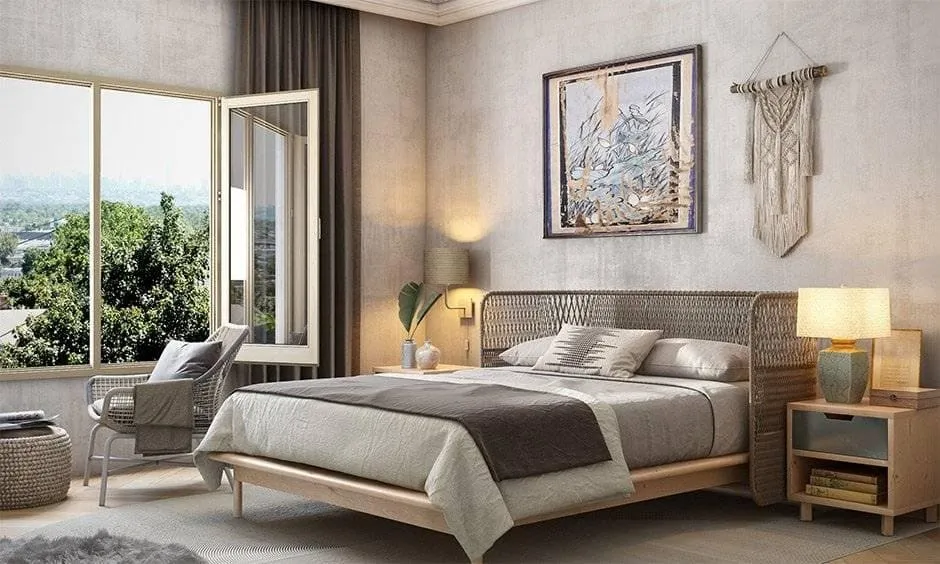
    A simple oak platform bed may pair naturally with Scandinavian nightstands.

    The same bed may feel disconnected beside a heavily carved traditional dresser with ornate gold handles.

    You can mix styles but one style should normally remain dominant.

    A simple rule is:

    80% primary style + 20% contrasting style

    That small contrast adds character without making the bedroom feel confused.

    How to Match a Bed With Nightstands

    Nightstands do not need to match the bed exactly but they should complement its height, scale, color or design details. Ideally, the top of a bedside table should sit close to the height of the mattress for comfortable everyday use.

    For a large upholstered bed, avoid extremely delicate nightstands that look visually undersized.

    Similarly, a slim minimalist bed can feel overwhelmed by oversized traditional bedside cabinets.

    Look for a connection such as:

    • Matching wood undertones
    • Similar leg shapes
    • Matching hardware
    • Similar proportions
    • Complementary colors

    For example, a beige upholstered bed with walnut legs can look excellent with walnut nightstands.

    The walnut detail visually connects the pieces.

    Do Both Nightstands Need to Match?

    Matching nightstands create symmetry but they are not required. Two different bedside tables can work when they have similar height, visual weight or a repeated color or material.

    Different nightstands are especially useful when two people have different storage requirements.

    You might use:

    • A two-drawer table on one side
    • A compact open shelf table on the other

    Keep both approximately similar in height then repeat a material such as walnut or black metal.

    This creates balance without complete symmetry.

    How to Match a Dresser With a Bed

    A dresser should coordinate with the bed through its wood tone, color, hardware or design style without necessarily being identical. Because both pieces have strong visual weight, avoid combining designs that strongly compete with each other.

    If your bed is already highly detailed, choose a simpler dresser.

    If your bed is minimal, the dresser can carry slightly more character.

    For example:

    Statement bed + simple dresser = balanced

    Simple bed + textured dresser = balanced

    Ornate bed + ornate dresser + ornate wardrobe = potentially overwhelming

    Let one or two elements become the visual stars rather than asking every piece to attract attention.

    How to Match a Wardrobe With Bedroom Furniture

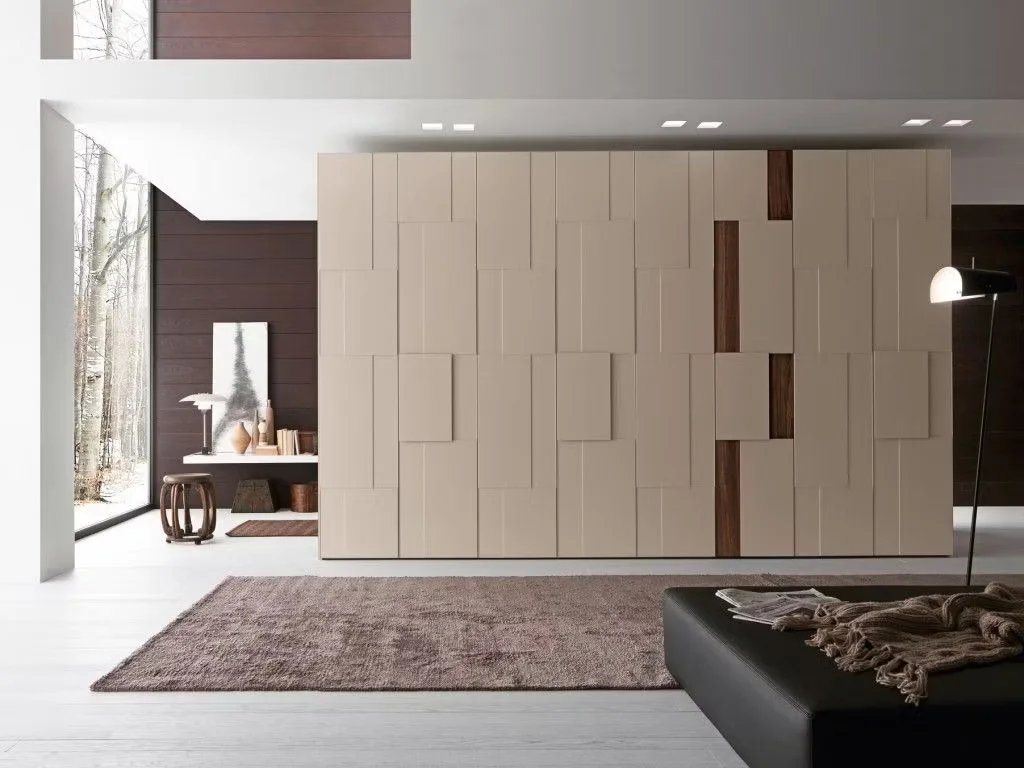
    Match a wardrobe to the room by repeating one of the bedroom’s dominant colors, wood tones or hardware finishes. Large wardrobes occupy significant visual space so neutral finishes often make them easier to integrate.

    Suppose your room contains:

    • Walnut bed
    • Cream nightstands
    • Beige upholstery
    • Brass accents

    A cream wardrobe with brass handles would connect naturally with the existing palette.

    You do not necessarily need another large walnut piece.

    In a small bedroom, using a wardrobe close to the wall color can also reduce its visual heaviness.

    Match Furniture Hardware

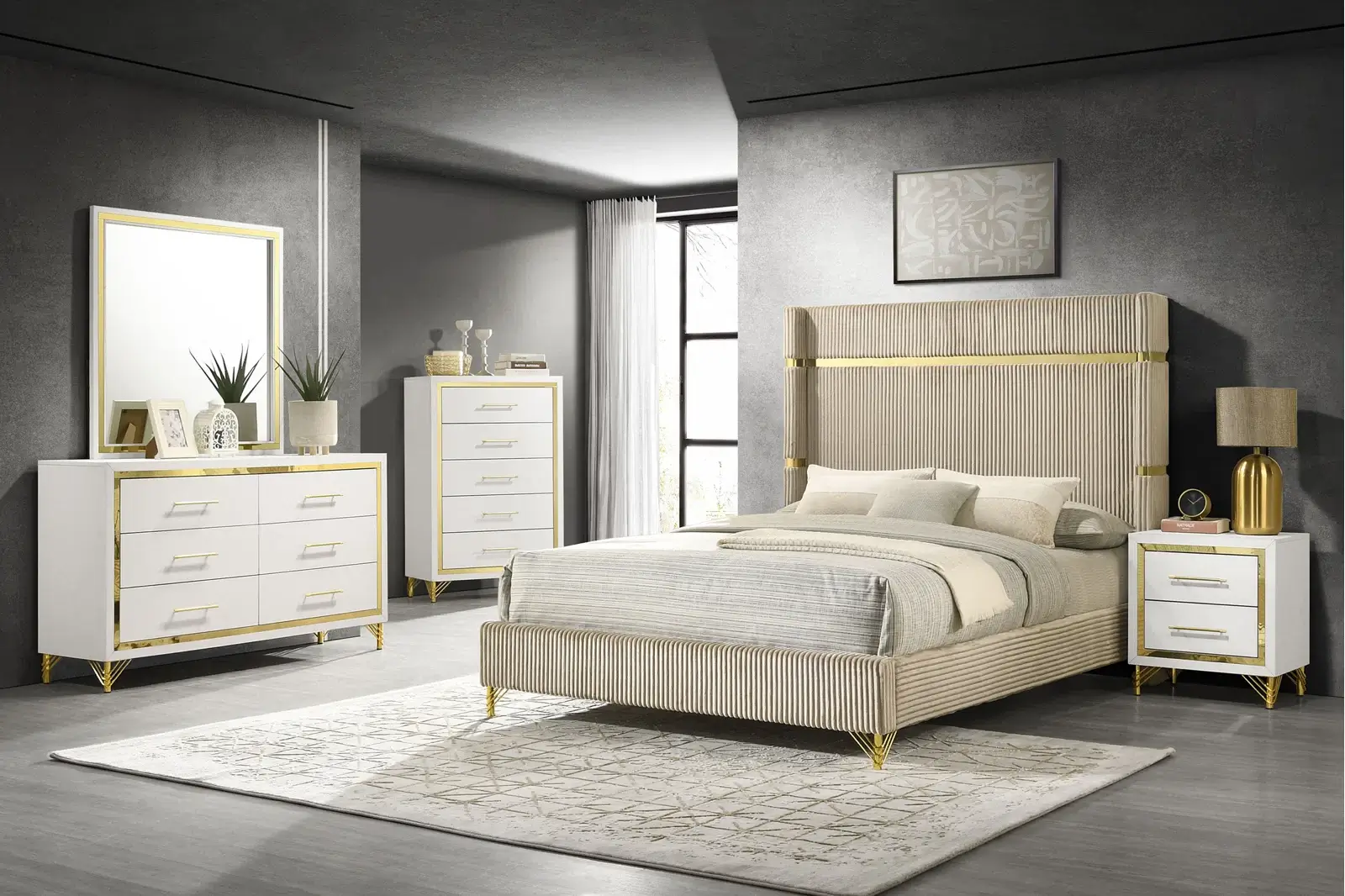
    Repeating hardware finishes is one of the easiest ways to make different bedroom furniture pieces look coordinated. Handles, knobs, legs and metal frames in similar finishes can visually connect furniture from completely different collections.

    Common finishes include:

    • Matte black
    • Brass
    • Gold
    • Chrome
    • Nickel
    • Bronze

    For example, you could have:

    • Walnut bed
    • White dresser
    • Oak nightstands

    Adding matte black handles or black lighting across the room creates a common visual thread.

    Avoid introducing several competing metal finishes unless the room has a deliberate eclectic design.

    Match Furniture With the Bedroom Floor

    Bedroom furniture should contrast slightly with the floor instead of disappearing into it. If both the furniture and flooring are wood, use different but compatible tones to create separation.

    If your floor is dark wood, consider:

    • Light oak
    • Cream
    • Beige
    • Upholstered furniture
    • Medium walnut

    If your floor is light wood, you have more freedom to introduce darker walnut, charcoal or painted furniture.

    When the furniture and floor are almost the same wood color, the room can appear flat.

    A rug can help create separation between similar finishes.

    How to Match Furniture With Bedroom Walls

    Furniture should either contrast with the wall color or use a related undertone. Light walls give greater flexibility while dark walls often work best with furniture that provides enough tonal contrast.

    White or Off-White Walls

    Work well with:

    • Walnut
    • Oak
    • Black
    • Beige
    • Grey
    • White furniture

    Beige or Cream Walls

    Pair naturally with:

    • Walnut
    • Warm oak
    • Ivory
    • Taupe
    • Brown

    Grey Walls

    Consider:

    • Ash wood
    • Black
    • White
    • Natural oak
    • Walnut for added warmth

    Dark Walls

    Balance them with:

    • Light oak
    • Cream
    • Beige upholstery
    • Natural wood

    Contrast usually makes individual furniture pieces easier to appreciate.

    Consider the Size and Scale of Every Piece

    Matching furniture is also about proportion. Pieces with similar visual weight generally look more cohesive than furniture that is dramatically different in size, height or thickness.

    A king-size upholstered bed has significant visual weight.

    Tiny bedside tables may look lost beside it.

    Instead, use nightstands wide enough to visually support the size of the bed.

    Likewise, avoid filling a small bedroom with:

    • Oversized dressers
    • Deep wardrobes
    • Large benches
    • Bulky armchairs
    • Heavy four-poster beds

    Before buying furniture, measure:

    1. Room width
    2. Room length
    3. Door openings
    4. Walking space
    5. Bed dimensions
    6. Wardrobe depth
    7. Drawer opening clearance

    A beautifully matched bedroom still fails functionally if you cannot comfortably move around it.

    Use Upholstery to Connect Different Furniture

    Upholstery can bridge different wood finishes and furniture styles by introducing a neutral material that repeats throughout the room. Beige, cream, taupe and soft grey fabrics are particularly flexible.

    Suppose your bedroom contains walnut and oak furniture.

    You could connect them using:

    • Beige upholstered headboard
    • Matching bench
    • Neutral curtains
    • Textured cushions
    • Large neutral rug

    The eye begins seeing the room as one complete composition rather than separate furniture pieces.

    Should Bedroom Furniture Match the Bedding?

    Bedroom furniture and bedding should complement each other but they do not need to share exactly the same colors. Bedding works best when it repeats one or two furniture tones then introduces softer contrasting shades.

    For example:

    Walnut furniture works beautifully with:

    • Ivory
    • Sage green
    • Beige
    • Warm white
    • Taupe
    • Muted blue

    Black furniture can be softened with:

    • Cream
    • White
    • Beige
    • Soft grey
    • Warm natural fabrics

    Because bedding is easy to change, keep expensive furniture relatively versatile then use textiles to update the bedroom’s personality.

    Best Bedroom Furniture Color Combinations

    Successful bedroom color combinations usually include a dominant neutral or natural wood finish supported by one secondary tone and a smaller accent. Limiting the palette makes mixed furniture appear more deliberate.

    Main FurnitureSecondary ColorAccentOverall Feel
    WalnutCreamBrassWarm and luxurious
    OakWhiteBlackModern and clean
    BlackNatural woodBeigeContemporary
    WhiteLight oakSageCalm and Scandinavian
    Dark walnutTaupeGoldElegant
    GreyNatural oakBlackModern
    CreamWalnutBronzeWarm and sophisticated
    BeigeOakSoft greenRelaxed and natural

    Use these combinations as starting points rather than strict rules.

    Lighting, flooring and wall colors will also affect how each finish appears.

    How to Mix Old and New Bedroom Furniture

    Old and new furniture can work together when they share a repeated color, material, shape or finish. Instead of trying to disguise the contrast, create one consistent visual element that connects both generations of furniture.

    For example, an antique wooden dresser can work beside a modern upholstered bed.

    Connect them with:

    • Similar brass hardware
    • Warm wood accessories
    • Neutral bedding
    • Traditional bedside lamps
    • Artwork with warm tones

    The older piece then becomes an intentional feature rather than an awkward mismatch.

    Common Bedroom Furniture Matching Mistakes

    The biggest bedroom furniture mistakes are using too many unrelated finishes, ignoring scale and trying to make every item a statement piece. A successful room needs repetition, contrast and visual hierarchy.

    1. Buying Every Piece in Exactly the Same Finish

    A complete matching set is not automatically wrong but too much repetition can make the room feel predictable.

    Mix one complementary finish or material for depth.

    2. Using Too Many Wood Colors

    Four or five unrelated wood finishes can quickly make a room look disorganized.

    Keep one dominant wood and one secondary wood whenever possible.

    3. Ignoring Undertones

    Two brown pieces are not automatically compatible.

    One may have red undertones while another has a cool grey finish.

    View furniture samples together before making expensive purchases.

    4. Forgetting About Scale

    Furniture can match perfectly in color while looking completely wrong in proportion.

    Always consider height, width and visual weight.

    5. Mixing Too Many Design Styles

    A minimalist bed, industrial wardrobe, ornate dresser and farmhouse nightstand may struggle to form one coherent bedroom.

    Choose one primary style then introduce smaller influences.

    6. Matching Everything Too Perfectly

    Professional-looking interiors often rely on controlled variation.

    Matching every surface removes contrast and personality.

    A Simple Formula for Matching Bedroom Furniture

    Use one dominant furniture finish, one complementary finish and one repeating accent throughout the bedroom. This simple three-part formula allows different furniture pieces to look coordinated without requiring a complete matching set.

    Try this approach:

    1 dominant material + 1 secondary finish + 1 accent

    For example:

    Walnut + cream + brass

    Use:

    • Walnut bed
    • Walnut dresser
    • Cream nightstands
    • Cream wardrobe
    • Brass handles
    • Brass lamps

    Another example:

    Oak + white + black

    Use:

    • Oak bed
    • Oak dresser
    • White wardrobe
    • White nightstands
    • Black handles
    • Black lighting

    This is one of the easiest ways to create a cohesive bedroom.

    Bedroom Furniture Matching Checklist

    Before buying bedroom furniture, check whether the new piece shares at least one or two characteristics with the furniture you already own. Color, undertone, style, scale, hardware and material are the most useful comparison points.

    Before purchasing a new piece, ask:

    1. Does the wood undertone complement my existing furniture?
    2. Does the furniture style suit the rest of the bedroom?
    3. Is the size appropriate for the room?
    4. Does the height work with nearby furniture?
    5. Does the hardware coordinate with existing metals?
    6. Does the piece complement the flooring?
    7. Does it work with the wall color?
    8. Is there another element in the room that repeats its finish?
    9. Am I introducing too many different colors?
    10. Does the room still have one clear dominant style?

    If most answers are yes, the furniture will probably integrate naturally.

    Is It Better to Buy a Bedroom Set or Mix Furniture?

    A bedroom set is best for people who want quick consistency while mixed furniture offers more personality and flexibility. Neither approach is automatically better as long as the furniture fits the room and follows a coherent palette.

    Choose a matching set when you want:

    • Simple decision-making
    • Consistent finishes
    • Traditional symmetry
    • Easy coordination

    Mix furniture when you want:

    • More personality
    • A layered designer look
    • Greater flexibility
    • Vintage and modern combinations
    • Freedom to replace individual pieces

    You can also combine both approaches.

    For example, buy a matching bed and dresser then introduce contrasting nightstands.

    How Can You Make Mismatched Bedroom Furniture Look Good?

    Make mismatched furniture look intentional by repeating colors, hardware, textiles or wood tones around the bedroom. You do not necessarily need to repaint or replace furniture if other design elements can create visual connections.

    Try adding:

    • Matching drawer handles
    • Similar bedside lamps
    • Coordinated artwork
    • A large area rug
    • Repeated wood accessories
    • Matching bedside styling
    • Complementary bedding
    • Similar baskets or storage boxes

    Small repeated details can visually connect furniture that originally came from different collections.

    Final Thoughts

    The best bedroom furniture combinations look coordinated rather than perfectly matched. Choose a dominant style and finish then use repeated colors, materials, hardware and proportions to create a clear relationship between every piece.

    Start with your bed or another major furniture piece then build the room around it. Keep the palette controlled. Match wood undertones. Pay attention to proportion and repeat important finishes around the bedroom.Most importantly, do not assume every piece must come from the same furniture collection.

    A walnut bed can sit beside cream nightstands. An antique dresser can work with a modern upholstered headboard. Light and dark woods can share the same room. The secret is giving different pieces something in common. When that connection is visible, the entire bedroom feels planned, comfortable and complete.

    FAQs

    Does bedroom furniture have to be the same color?

    No. Bedroom furniture can use different colors as long as they belong to a controlled palette and repeat elsewhere in the room.

    For example, walnut furniture can be paired with cream, beige, black or even muted green depending on the overall design.

    Can I mix white and wood furniture in a bedroom?

    Yes. White and natural wood are one of the easiest furniture combinations because white creates visual simplicity while wood adds warmth and texture.

    Light oak with white creates a Scandinavian feel while walnut with warm white can produce a richer contemporary look.

    Can I mix dark and light wood furniture?

    Yes. Dark and light wood can create attractive contrast when their undertones are compatible and both finishes appear intentionally throughout the bedroom.

    Repeating each wood tone through smaller elements can help connect them.

    Should my dresser match my nightstands?

    Your dresser and nightstands do not need to match exactly. They should share at least one visual connection such as wood tone, hardware, shape, color or design style.

    Using contrasting nightstands is also an easy way to prevent the room from looking overly matched.

    What bedroom furniture color goes with everything?

    Natural oak, medium walnut, warm white, cream and neutral upholstered finishes are among the easiest furniture colors to coordinate. Their versatility allows bedding, wall colors and accessories to change without requiring new furniture.

    For long-term flexibility, choose major furniture in timeless finishes then introduce trend-driven colors through smaller decorative elements.

  • What Are the Best Wooden Furniture Ideas for Modern Homes?

    What Are the Best Wooden Furniture Ideas for Modern Homes?

    Modern wooden furniture is best for homes that need a balance of style, durability, comfort, and functionality. The most popular ideas include minimalist wooden beds, solid-wood dining tables, wooden sofas with upholstered cushions, storage beds, modern TV units, sliding-door wardrobes, wooden coffee tables, console tables, and compact home-office desks. For Pakistani homes, Sheesham wood, Ashwood, and quality engineered wood can all be practical choices depending on the furniture type, budget, and required durability. The best design is one that matches your room size, existing décor, storage needs, and daily lifestyle rather than simply following a furniture trend.

    Best Wooden Furniture Ideas for Modern Homes

    Best Wooden Furniture in Pakistan

    Modern homes benefit from furniture that looks elegant without making the room feel crowded. Wooden furniture works particularly well because its natural grain adds warmth to contemporary interiors.

    Here are some of the best options:

    • Minimalist wooden beds
    • Wooden beds with built-in storage
    • Solid-wood dining tables
    • Modern wooden sofas
    • Wooden coffee tables
    • Floating wooden TV units
    • Sliding-door wooden wardrobes
    • Wooden console tables
    • Modern wooden sideboards
    • Compact wooden home-office desks
    • Wooden benches and accent chairs
    • Custom-made wooden storage furniture

    The best combination depends on the room, available space, budget, and how frequently the furniture will be used.

    Modern Wooden Bed Ideas

    Wooden Bed

    wooden bed is one of the easiest ways to introduce a natural element into a modern bedroom. Instead of heavily carved traditional designs, modern bedrooms generally work better with straight lines, simple headboards, and clean surfaces.

    A minimalist wooden platform bed can create a spacious appearance while providing a strong sleeping foundation. For smaller Pakistani bedrooms, a storage bed with drawers underneath can provide additional space for bedding, clothes, or other household items.

    Sheesham and Ashwood can provide attractive natural grain patterns, while engineered wood can offer a more budget-friendly option for certain designs. Choose the material according to your expected usage, budget, and desired lifespan.

    Best Wooden Bed Features for a Modern Bedroom

    Look for:

    • Simple headboard designs
    • Strong joints and frames
    • Smooth finishing
    • Built-in storage
    • Neutral or natural wood tones
    • Proper mattress support
    • Proportions suitable for the bedroom

    A modern bed should provide both visual simplicity and long-term functionality.

    Wooden Dining Tables for Contemporary Homes

    Round Dining Tables

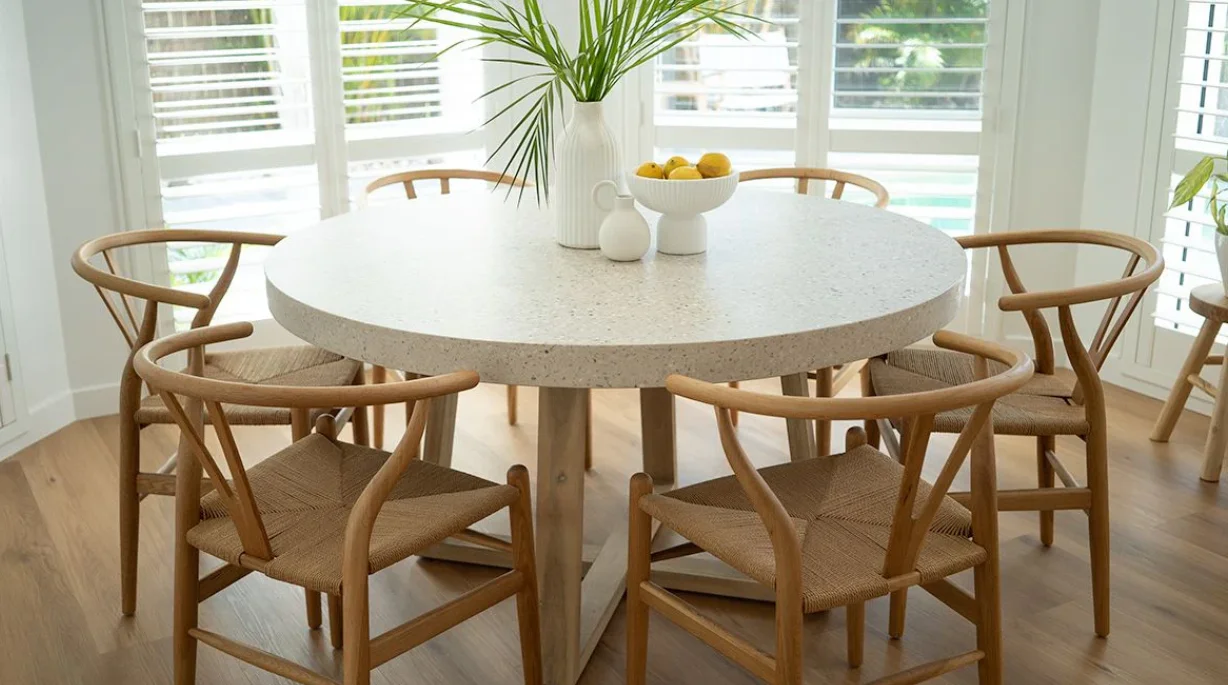
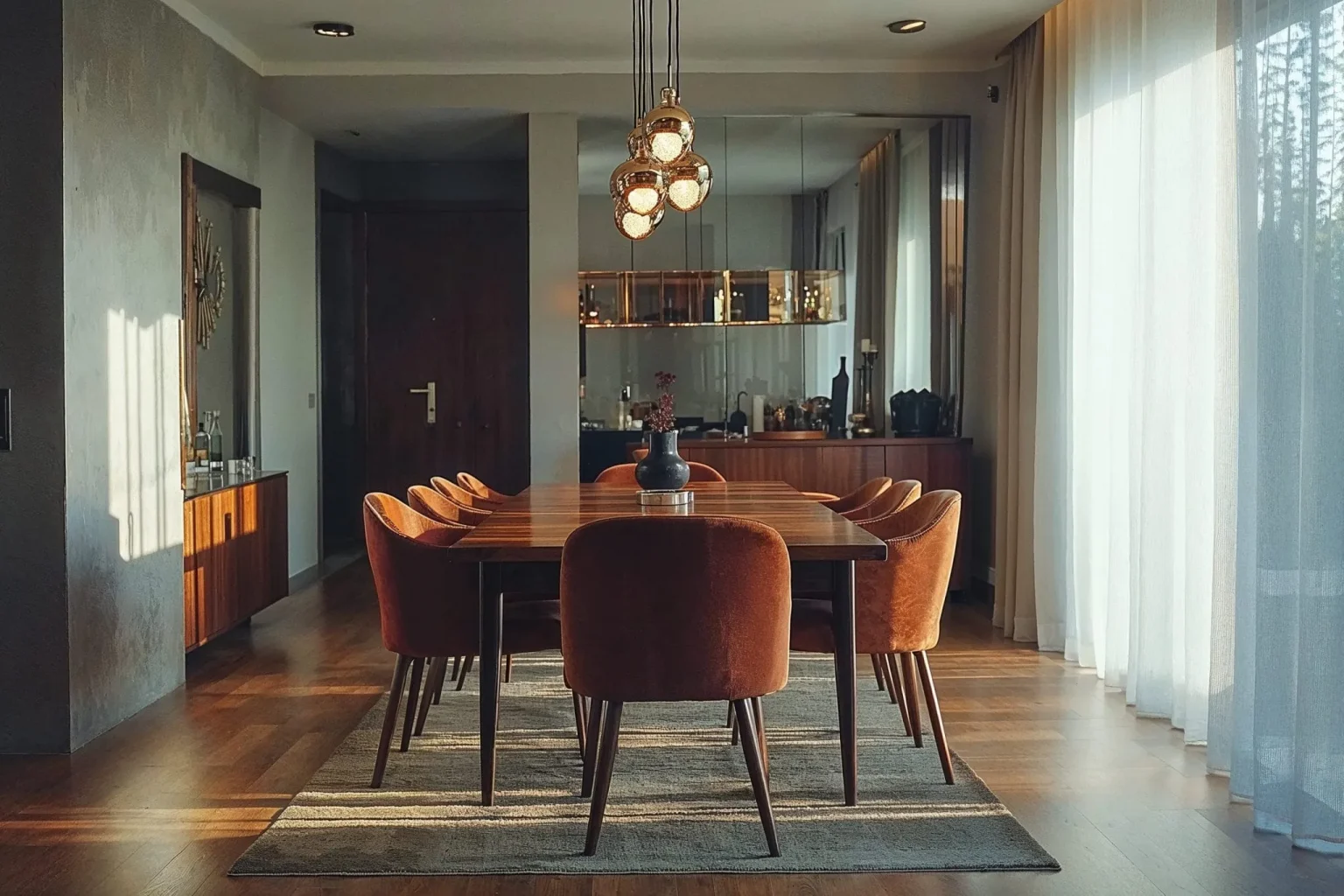
    wooden dining table can become the centerpiece of a modern dining area. Rectangular tables are practical for larger families, while round and oval designs can work well in smaller spaces or open-plan interiors.

    For a modern appearance, choose a table with a clean tabletop and simple legs rather than excessive decorative details. Natural wood grain can provide enough visual character without additional ornamentation.

    When selecting a dining table, consider how many people normally sit at it. A six-seater table, for example, needs sufficient clearance around the chairs so people can comfortably move around the dining area.

    Modern Wooden Sofa Ideas

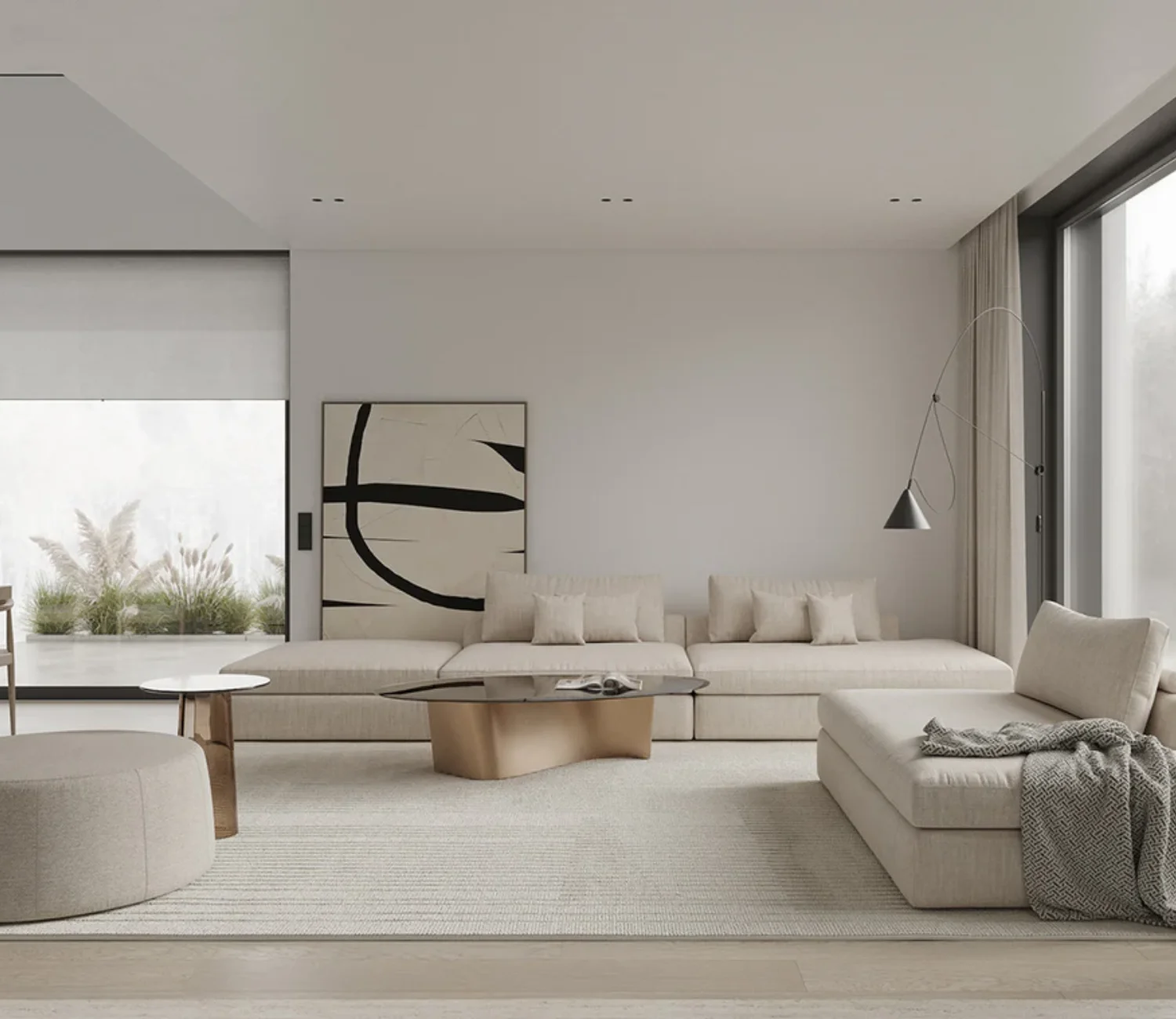
    Modern wooden sofas combine a durable wooden structure with comfortable upholstered seating. Designs with exposed wooden arms or legs can introduce natural warmth while maintaining a contemporary appearance.

    Neutral upholstery such as beige, cream, grey, or brown can work particularly well with wooden frames. You can also use cushions to introduce accent colors without replacing the main sofa.

    For smaller living rooms, choose a sofa with a compact frame and raised legs. This can create more visible floor space and make the room feel less congested.

    Wooden Coffee Tables for Modern Living Rooms

    A wooden coffee table can connect the sofa, rug, television unit, and other elements of a living room. The shape should generally complement the shape of the seating arrangement.

    Round coffee tables can soften rooms dominated by straight lines, while rectangular tables can work well with long sofas. Storage coffee tables are useful when you need space for magazines, remotes, books, or everyday accessories.

    For a modern interior, avoid choosing a coffee table simply because it looks attractive on its own. Its size should leave enough walking space around the sofa and other furniture.

    Modern Wooden TV Units

    A wooden TV unit can combine entertainment storage with interior design. Modern designs often use clean panels, concealed cabinets, open shelves, and cable-management features.Floating TV units are particularly useful in contemporary rooms because they leave some floor area visible. This can create a lighter appearance and make cleaning easier. Choose a TV unit that is proportionate to the television and wall. An oversized unit can dominate a small room, while an undersized unit may look visually unbalanced.

    Wooden Wardrobes for Modern Bedrooms

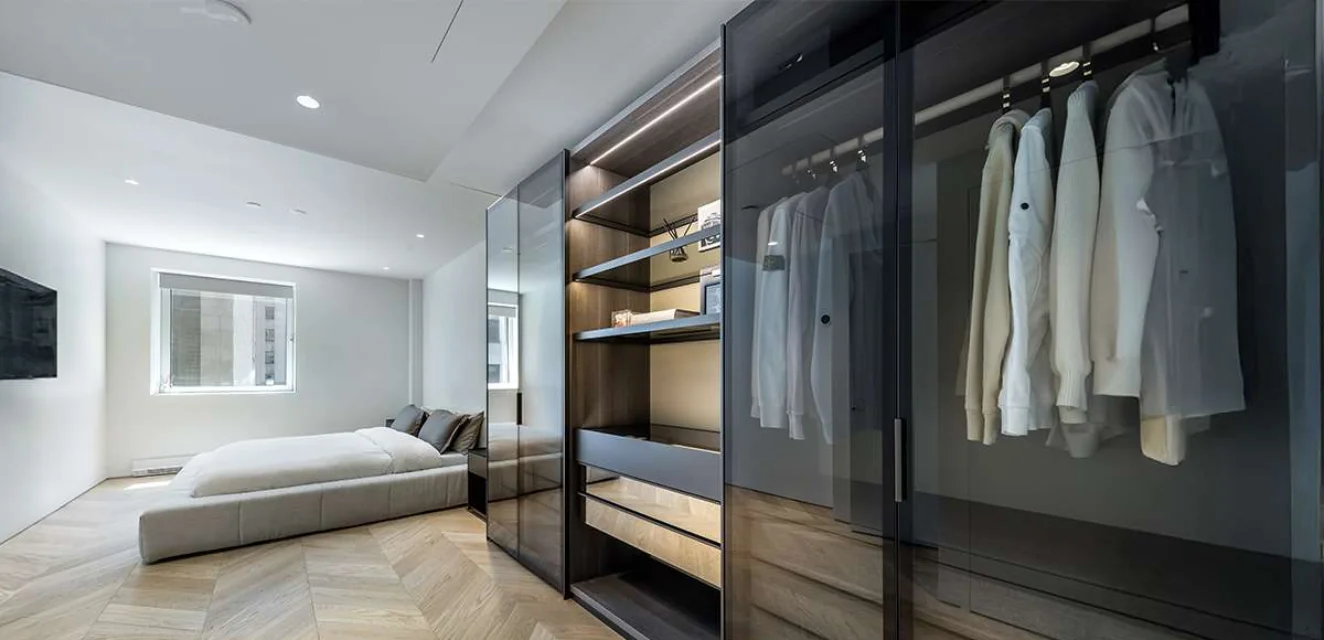
    Modern wooden wardrobes should provide maximum storage without making the bedroom appear heavy. Sliding-door wardrobes are particularly useful when there is limited space in front of the wardrobe.

    A well-designed wardrobe can include hanging sections, shelves, drawers, shoe storage, and dedicated compartments. Built-in designs can make better use of awkward corners or full-height wall space.

    For a modern appearance, choose flat-panel doors, minimal handles, and a finish that complements your bed and other bedroom furniture.

    Wooden Storage Furniture for Small Homes

    Storage is one of the most important considerations in modern homes, particularly apartments and smaller bedrooms. Wooden furniture can provide storage while also serving another purpose.

    Useful options include:

    • Storage beds
    • Bedside tables with drawers
    • TV units with cabinets
    • Storage benches
    • Sideboards
    • Multi-purpose coffee tables
    • Wall-mounted shelves
    • Built-in wardrobes

    Multifunctional furniture reduces clutter because one item can perform several functions.

    Modern Wooden Home Office Furniture

    A wooden desk can make a home office feel warmer and more professional. A simple rectangular desk with drawers or cable-management space can provide everything needed for everyday work.

    For small rooms, a compact desk or wall-mounted workstation can save valuable floor space. Wooden shelves can be installed above the desk to keep books and documents organized.

    Comfort should not be overlooked. Pair the desk with an ergonomic chair and ensure that the desk height is suitable for your working position.

    Which Wood Is Best for Modern Furniture in Pakistan?

    There is no single wood that is best for every furniture application. Sheesham wood is popular for its strength, distinctive grain, and traditional availability in Pakistan. Ashwood is another attractive option for modern furniture because of its relatively light appearance and visible grain.

    Engineered wood and MDF can also be useful for selected furniture components, especially when affordability, consistent finishes, or specific contemporary designs are priorities.

    The right material depends on:

    • Furniture type
    • Expected usage
    • Budget
    • Desired appearance
    • Maintenance requirements
    • Required durability

    For premium, frequently used furniture, material quality and construction should be considered together rather than judging furniture only by its surface finish.

    Sheesham Wood vs Ashwood for Modern Furniture

    FeatureSheesham WoodAshwood
    AppearanceRich, distinctive grainLight, clean grain
    StyleTraditional to modernEspecially suitable for modern designs
    DurabilityHighHigh
    ColorUsually warmer and darkerGenerally lighter
    Modern interior suitabilityExcellentExcellent
    MaintenanceRegular care recommendedRegular care recommended

    Both can work well in modern homes. The better choice depends on the appearance you want and the type of furniture being made.

    How to Choose Wooden Furniture for a Modern Home

    Start with the room dimensions rather than the furniture design. Measure available floor and wall space before purchasing large items such as beds, sofas, wardrobes, and dining tables.

    Next, consider the existing interior. Your furniture does not have to use exactly the same wood finish throughout the house, but excessively different wood tones can make the space feel visually disconnected.

    Finally, consider construction quality. Check joints, hardware, drawers, hinges, surface finishing, frame strength, and overall stability. A modern-looking piece is only a good investment if it performs well in everyday use.

    How to Mix Wooden Furniture With Modern Décor

    Wood works particularly well with neutral colors, natural fabrics, glass, metal, stone, and simple decorative accessories.

    For example, a natural wooden dining table can be paired with upholstered chairs and modern lighting. A wooden bed can be combined with neutral bedding, textured curtains, and minimalist bedside tables.

    Avoid filling every room with identical wooden furniture. Instead, create visual consistency through complementary finishes, shapes, and colors.

    How Much Wooden Furniture Should You Put in a Modern Room?

    There is no fixed number of wooden furniture pieces required for a modern room. The goal should be balance rather than quantity. A bedroom might need a wooden bed, bedside tables, and wardrobe, while a living room could use a wooden sofa frame, coffee table, and TV unit. If every item has a heavy wooden appearance, the room may feel crowded. Mixing wood with fabric, glass, metal, and neutral colors can create a lighter contemporary atmosphere.

    Custom Wooden Furniture vs Ready-Made Furniture

    Custom furniture is useful when your room has unusual dimensions or you need specific storage features. It allows you to choose dimensions, materials, finishes, storage configurations, and design details.

    Ready-made furniture can be more convenient when you need a standard-size product quickly. It may also provide more predictable pricing and simpler purchasing. The better choice depends on your space and requirements. Custom furniture is particularly valuable when maximizing storage or fitting furniture into a difficult layout is important.

    Why Choose Gourmet Furnishers for Modern Wooden Furniture?

    Gourmet Furnishers can be considered when you want furniture that combines modern styling with practical functionality for Pakistani homes. A furniture purchase should consider design, material, construction, comfort, available space, and long-term usability rather than appearance alone.

    Gourmet Furnishers offers furniture options for important areas of the home, including bedrooms, living rooms, dining spaces, and storage requirements. Buyers can explore different designs and select furniture according to their interior style and functional needs.

    Visit Gourmet Furnishers to explore modern furniture collections and find options suitable for your home.

    Best Wooden Furniture Ideas by Room

    RoomRecommended Wooden Furniture
    BedroomWooden bed, wardrobe, bedside tables, storage bench
    Living RoomSofa, coffee table, TV unit, side table
    Dining RoomDining table, chairs, sideboard
    Home OfficeDesk, bookshelf, storage cabinet
    EntranceConsole table, bench, storage unit
    Small ApartmentStorage bed, compact sofa, multifunctional tables

    This room-by-room approach makes it easier to select furniture according to actual household needs.

    Common Mistakes to Avoid When Buying Wooden Furniture

    One common mistake is choosing furniture based only on appearance. Construction quality, dimensions, material, and functionality are equally important. Another mistake is purchasing oversized furniture for a small room. Always measure the available space and consider movement around the furniture. Buyers should also avoid mixing too many unrelated wood finishes. A coordinated combination of wood tones generally produces a more polished modern appearance. Finally, do not ignore maintenance requirements. Different materials and finishes may require different cleaning and care routines.

    Final Verdict: What Is the Best Wooden Furniture for a Modern Home?

    The best wooden furniture for a modern home is simple, durable, functional, appropriately sized, and visually compatible with the rest of the interior. Storage beds, minimalist wooden sofas, solid-wood dining tables, modern TV units, sliding wardrobes, coffee tables, and compact desks are among the most useful choices.

    For Pakistani homes, Sheesham and Ashwood can be excellent options for durable wooden furniture, while engineered materials may be suitable for specific designs and budgets. Instead of choosing furniture solely according to trends, consider your room dimensions, lifestyle, storage requirements, budget, and preferred finish.

    Frequently Asked Questions

    What is the most popular wooden furniture for modern homes?

    Modern beds, dining tables, sofas, TV units, wardrobes, coffee tables, and storage furniture are among the most popular choices.

    Which wood is best for modern furniture in Pakistan?

    Sheesham and Ashwood are strong options, while MDF and other engineered materials can be suitable for specific contemporary furniture designs.

    Is wooden furniture good for small homes?

    Yes. Storage beds, sliding wardrobes, compact sofas, wall-mounted units, and multifunctional tables can make small homes more practical.

    How can wooden furniture make a home look modern?

    Choose clean lines, simple shapes, neutral finishes, minimal decoration, and furniture that combines wood with materials such as fabric, glass, or metal.

    Is custom wooden furniture better than ready-made furniture?

    Custom furniture is better when you need specific dimensions or storage solutions, while ready-made furniture can be more convenient and cost-effective for standard spaces.

  • Sofa Size Guide: 3-Seater, 5-Seater and 7-Seater Dimensions

    Sofa Size Guide: 3-Seater, 5-Seater and 7-Seater Dimensions

    A 3-seater sofa typically measures around 72–90 inches wide, while a 5-seater sofa is usually 110–140 inches wide, and a 7-seater sofa can range from 150–180 inches wide, depending on its design and configuration. Standard sofa depth is generally 32–40 inches, with a seat height of about 17–20 inches. For Pakistani homes, choose the size based on your available room space, seating needs, and layout, leaving enough walking space around the sofa for comfortable movement.

    What Are Standard Sofa Dimensions?

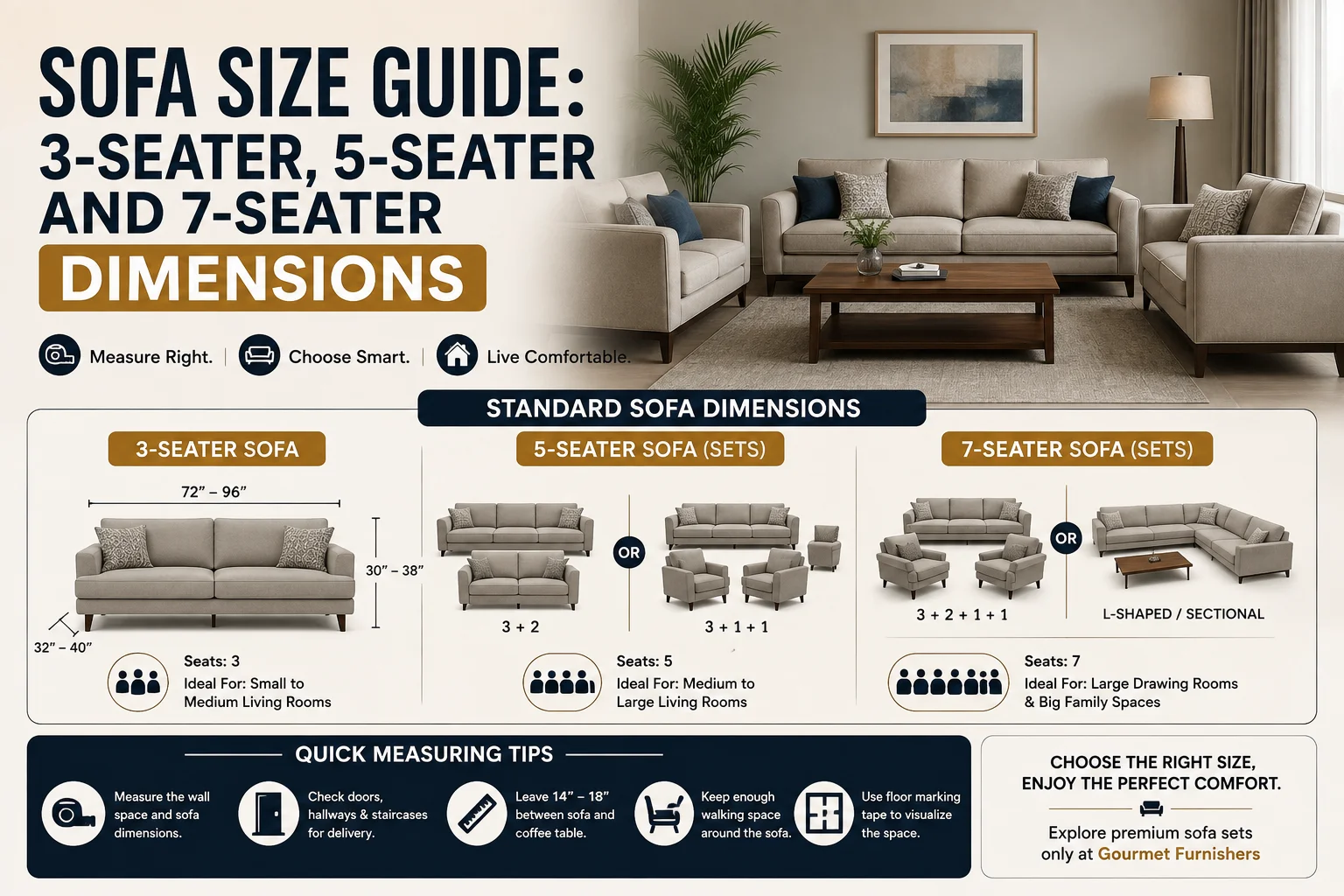
    A standard sofa is generally about 72–96 inches wide, 32–40 inches deep and 30–38 inches high. Exact sofa dimensions vary according to seating capacity, arm thickness, cushioning and design. Unlike mattresses or dining tables, sofas do not follow one universal sizing standard. Manufacturers can make a three-seater considerably wider or narrower depending on the shape of its arms, cushions and frame.

    That means the words “3-seater” or “7-seater” tell you how many people the furniture is designed to accommodate rather than its exact external dimensions.

    Here is a useful starting point:

    Sofa TypeApprox. WidthApprox. DepthApprox. Height
    Single Chair30–40 in30–40 in30–38 in
    2-Seater Sofa48–72 in32–40 in30–38 in
    3-Seater Sofa72–96 in32–40 in30–38 in
    5-Seater Sofa SetDepends on configuration32–40 in per piece30–38 in
    7-Seater Sofa SetDepends on configuration32–40 in per piece30–38 in
    L-Shaped SectionalRoughly 90–168+ inVaries by return/chaise30–38 in

    Sectionals vary especially widely and should always be measured according to their complete footprint rather than seat count alone.

    What Is the Standard 3-Seater Sofa Size?

    A typical 3-seater sofa measures approximately 72–96 inches wide, 32–40 inches deep and 30–38 inches high. Around 84 inches wide is a common reference size for a standard three-person sofa. A three-seater is one of the most versatile sofa sizes because it works in apartments, drawing rooms, TV lounges and medium-sized living rooms.

    Typical dimensions are:

    • Width: 72–96 inches or approximately 183–244 cm
    • Depth: 32–40 inches or approximately 81–102 cm
    • Height: 30–38 inches or approximately 76–97 cm
    • Typical seat depth: around 20–24 inches
    • Typical seat height: around 16–20 inches

    The external width can change considerably even when the seating area remains similar. Thick rolled arms, carved wooden sides and oversized cushioning may add several inches to a sofa’s total footprint.

    For example, Fresco Sofa is listed at 95 inches long, 34 inches wide and 38 inches high, showing how individual sofa designs can differ from generic averages.

    How Much Space Do You Need for a 3-Seater Sofa?

    Allow enough space for the sofa itself plus comfortable walking routes and room for a coffee table. A 3-seater usually works best when the wall is several inches wider than the sofa rather than exactly matching its width.

    A common mistake is measuring only the wall. Imagine your available wall is 90 inches wide and you purchase a 90-inch sofa. Technically it fits but the room may feel cramped because there is no visual breathing space at either end. A better approach is to leave some open space around the furniture whenever the layout allows it.

    You should also consider:

    • Side tables
    • Floor lamps
    • Doors
    • Windows
    • Curtains
    • Electrical outlets
    • Coffee tables
    • TV units
    • Walking paths

    A standard three-seater is particularly useful when you need substantial seating without turning the entire living room into a sofa arrangement.

    What Is the Standard 5-Seater Sofa Size?

    There is no single standard width for a 5-seater sofa set because five seats may be arranged as 3+2, 3+1+1 or as a sectional sofa. The dimensions should therefore be calculated from the individual pieces and their final room arrangement.

    This distinction is important. A 5-seater sofa does not necessarily mean one extremely long sofa with five cushions. In Pakistani homes, a five-seat arrangement may commonly be configured in several ways.

    3+2 Sofa Configuration

    A 3+2 arrangement includes:

    • One 3-seater sofa
    • One 2-seater sofa

    If the three-seater measures approximately 72–96 inches and the two-seater measures roughly 48–72 inches, the furniture provides five seats without requiring one continuous wall. This arrangement works particularly well in rectangular drawing rooms.

    3+1+1 Sofa Configuration

    Another popular configuration includes:

    • One 3-seater sofa
    • Two single chairs

    This setup offers greater layout flexibility because the chairs can be angled toward the central table or moved when guests arrive. It is also useful when doors or windows make it difficult to position a second large sofa.

    5-Seater Sectional Sofa

    A five-person sectional may form an L shape. Sectional dimensions vary substantially because manufacturers can combine corner seats, armless sections, chaise lounges and end pieces. General sectional widths may range from roughly 90 inches to well over 150 inches depending on configuration. This is why sectional buyers should measure both sides of the L rather than relying on seating capacity.

    Which 5-Seater Sofa Configuration Is Best?

    Choose a 3+2 configuration for a balanced traditional layout, 3+1+1 for maximum flexibility and an L-shaped five-seater for modern open living spaces.

    Your ideal configuration depends on how the room is used.

    5-Seater ConfigurationBest ForMain Advantage
    3+2Drawing roomsBalanced arrangement
    3+1+1Flexible living spacesChairs can be moved
    L-shapedModern loungesEfficient corner use
    Modular 5-seaterLarge or changing spacesFlexible configuration

    A traditional 3+2 arrangement often suits formal Pakistani drawing rooms. An L-shaped sofa may be more practical in a family TV lounge where everyone usually faces the same screen. You can compare traditional and contemporary configurations in the sofa collection.

    What Is the Standard 7-Seater Sofa Size?

    A 7-seater sofa set does not have one fixed standard dimension. Common seven-seat configurations include 3+2+1+1, 3+2+2, 3+1+1+1+1 or large sectional arrangements, so total space requirements depend on the individual pieces.

    Seven-seater sets are commonly chosen for larger drawing rooms, family lounges and homes where guests are entertained frequently. Because the seats are normally distributed across multiple pieces, measuring the combined “width” of the set is not particularly useful. Instead, measure the footprint of each individual component.

    Common 7-Seater Sofa Configurations

    ConfigurationPiecesTotal Seats
    3+2+1+14 pieces7
    3+2+23 pieces7
    3+1+1+1+15 pieces7
    Large L-shaped sectionalMultiple modules7
    U-shaped sectionalMultiple modules7

    The 3+2+1+1 combination is particularly flexible because you get one main sofa, one loveseat and two movable chairs. The 3+2+2 configuration creates a more symmetrical arrangement and works well in larger rectangular or square rooms.

    How Much Room Do You Need for a 7-Seater Sofa Set?

    A seven-seater arrangement generally needs a large living or drawing room because several furniture pieces must fit without blocking doors, walkways or tables. Measure the complete usable floor area rather than relying only on room dimensions.

    For example, a room may measure 16 × 20 feet but still have limited usable sofa space because of:

    • Multiple doors
    • Large windows
    • Fireplace or feature walls
    • Stair openings
    • TV wall placement
    • Floor-to-ceiling curtains
    • Built-in cabinets

    For seven seats, the actual furniture layout matters more than the room’s total square footage. A large room with poor wall availability can sometimes accommodate less seating than a smaller room with a clean rectangular layout.

    3-Seater vs 5-Seater vs 7-Seater Sofa: Which Should You Choose?

    Choose a 3-seater for smaller households or compact rooms, a 5-seater for medium living rooms and a 7-seater for larger families or formal entertaining spaces. Room dimensions should always take priority over maximum seating capacity.

    Here is a quick comparison:

    Feature3-Seater5-Seater7-Seater
    Seating Capacity3 people5 people7 people
    Best Room TypeSmall-mediumMedium-largeLarge
    Layout FlexibilityModerateHighHigh
    Number of PiecesUsually 1Usually 2–3Usually 3–5
    Apartment FriendlyYesSometimesRarely
    Formal Drawing RoomPossibleExcellentExcellent
    Family TV LoungeGoodExcellentExcellent
    Space RequirementLowestMediumHighest

    Do not automatically buy the largest sofa your budget allows. The best sofa is the one that leaves enough empty floor space for the room to remain comfortable and functional.

    How Do You Measure a Room for a Sofa?

    Measure the available wall length, room width, doors, hallways and furniture clearances before choosing a sofa. Then mark the proposed sofa footprint on the floor to understand how much space it will actually occupy.

    Follow this process before ordering.

    1. Measure the Sofa Wall

    Measure the wall where the main sofa will sit. Do not ignore radiators, sockets, switches, windows or curtains that may reduce usable space.

    2. Measure Room Depth

    Measure from the sofa wall toward the opposite wall. This shows whether the sofa will leave adequate space for your coffee table, TV unit and walking area.

    3. Mark the Sofa Footprint

    Use masking tape or newspaper to mark the sofa’s exact width and depth on the floor. This simple technique makes the furniture footprint much easier to understand than numbers alone.

    4. Check Your Doors

    Measure the:

    • Main entrance
    • Living-room door
    • Hallway width
    • Staircase
    • Lift
    • Tight corners

    A sofa that fits perfectly inside the room is useless if it cannot get through the entrance.

    5. Measure the Sofa Diagonally

    Large sofas may need to be tilted during delivery. Measure height and depth as well as overall width so you know whether installers can maneuver the furniture through narrow openings.

    What Do Sofa Width, Depth and Height Mean?

    Sofa width measures from one outer arm to the other, depth measures from the frontmost point to the back and height measures from the floor to the highest point of the sofa.

    Understanding these measurements prevents many ordering mistakes.

    Sofa Width

    Width is the sofa’s complete horizontal length from one outside edge to the other.

    This includes the arms.

    Sofa Depth

    Overall sofa depth measures from the front edge of the sofa to its furthest rear point. Do not confuse this with seat depth.

    Seat Depth

    Seat depth is the usable sitting area from the front of the cushion to the back cushion. A deeper seat usually feels better for lounging while a shallower seat may support a more upright posture.

    Sofa Height

    Height is measured from the floor to the sofa’s highest point. This measurement becomes particularly important when placing furniture beneath windows.

    Does Sofa Arm Design Affect Overall Size?

    Yes. Two sofas with identical seating capacity can have very different external dimensions because wide arms, rolled sides and carved frames add considerable width.

    • Consider two three-seater sofas.
    • One has narrow modern arms.
    • The other has thick rolled arms measuring approximately 10 inches on each side.
    • Both may seat three adults comfortably but the traditional sofa could require substantially more floor space.
    • This is particularly relevant for classic furniture.

    Cabriole Sofa Set, for example, uses the characteristic curved legs and arms of Cabriole styling and is available in different seating configurations.

    When shopping, therefore, compare overall dimensions rather than counting cushions.

    What Sofa Size Is Best for a Small Living Room?

    A compact 3-seater or 2+1 seating arrangement is generally more practical for a small living room than a large 5- or 7-seat set.

    Small rooms need negative space.

    Filling every available wall with furniture may provide more seats but it can make the room visually crowded and harder to use.

    For compact spaces, consider:

    • Narrow sofa arms
    • Raised sofa legs
    • Clean straight lines
    • Light or neutral upholstery
    • Compact 3-seater designs
    • One sofa with accent chairs
    • Small L-shaped configurations

    A single well-proportioned sofa often looks more luxurious than several pieces squeezed into a tight room.

    What Sofa Size Is Best for a Medium Living Room?

    Medium rooms commonly work well with either a large 3-seater plus chairs or a 5-seater configuration such as 3+2 or 3+1+1. A five-seat arrangement provides a useful balance between guest seating and open floor space. If you entertain frequently, 3+1+1 gives you more flexibility. If you prefer symmetry, 3+2 usually creates a cleaner formal arrangement.

    For additional seating without adding another full sofa, you can also explore chairs and other furniture categories

    What Sofa Size Is Best for a Large Drawing Room?

    A 7-seater sofa set is usually most suitable for a large drawing room where several guests need comfortable seating and adequate circulation space remains around the furniture. Large Pakistani drawing rooms often need more than one sofa. A 3+2+1+1 configuration allows conversation from several directions and creates a central focus around a coffee table.

    For an especially large room, you could also use:

    • 3+2+2
    • 3+2+1+1
    • Two 3-seaters plus accent chairs
    • Large sectional sofa
    • U-shaped modular seating

    Avoid pushing every furniture piece against the walls. Creating a defined conversation area often makes a large room feel warmer and more intentional.

    Is an L-Shaped Sofa Better Than a 5-Seater Sofa Set?

    An L-shaped sofa is usually better for casual family living and corner utilization while a traditional 5-seater set offers greater flexibility for formal seating and rearrangement. An L-shaped sofa creates one continuous seating zone.

    That makes it especially useful for:

    • TV lounges
    • Open-plan homes
    • Family rooms
    • Corners
    • Casual entertaining

    Traditional sofa sets work better when you want furniture facing inward around a central table. Soho L Shape Sofa is an example of a sectional designed to provide generous seating while using a modern L-shaped configuration.

    How Much Space Should Be Between a Sofa and Coffee Table?

    Around 14–18 inches between a sofa and coffee table is a useful general planning range because it allows access to the table while preserving reasonable leg and walking space.

    • Do not automatically position the table in the middle of the room.
    • Its distance should be based on where people actually sit.
    • If it is too far away, drinks and other items become difficult to reach.
    • If it is too close, getting into and out of the sofa becomes uncomfortable.

    Should You Measure Before Ordering a Custom Sofa?

    Yes. Accurate room measurements are especially important for customized furniture because changing the dimensions after production may be difficult or expensive.

    Customization can be extremely useful when standard furniture dimensions do not suit your room.

    states that customers can select dimensions and other design options for customized furniture in relevant collections.

    Custom sizing is particularly useful when dealing with:

    • Narrow drawing rooms
    • Unusual floor plans
    • Very large lounges
    • Apartment entrances
    • Structural columns
    • Bay windows
    • Built-in media walls

    The key is measuring correctly before production begins.

    How Does Sofa Size Affect Price in Pakistan?

    Larger sofa sets generally cost more because they require additional framing, upholstery, cushions and labour, although material quality and design complexity can affect price just as much as seat count. furniture-cost guide notes that a basic three-seater may fall into a lower price bracket while larger five- to seven-seat sets generally require a higher budget. Fabric quality, frame material and design also affect pricing.

    For a broader comparison, see the Average Furniture Cost in Pakistan 2026 guide. Price should not be the only deciding factor. A well-proportioned five-seater can deliver better value than a seven-seater that makes your room uncomfortable.

    Common Sofa Sizing Mistakes to Avoid

    The most common sofa sizing mistakes include measuring only the wall, ignoring sofa depth, forgetting delivery access and choosing furniture according to seat count rather than actual dimensions.

    Avoid these mistakes:

    1. Buying without measuring the room
      Showroom spaces can make large sofas appear smaller than they really are.
    2. Ignoring the arms
      Sofa dimensions include the full frame rather than just the cushions.
    3. Forgetting depth
      A sofa may fit perfectly along the wall but project too far into the room.
    4. Ignoring walkways
      Leave practical routes between doors and major furniture pieces.
    5. Forgetting doors and stairs
      Always measure the delivery route.
    6. Buying too many seats
      More seating isn’t automatically better if the room becomes overcrowded.
    7. Assuming all 3-seaters are the same
      Actual measurements vary significantly between designs.
    8. Not checking sectional orientation
      Make sure a left- or right-facing chaise fits your intended layout.

    Quick Sofa Size Checklist Before Buying

    Before purchasing a sofa, confirm its overall width, depth, height, seating capacity, room footprint and delivery route.

    Use this checklist:

    • Measure the full room.
    • Measure the available sofa wall.
    • Check all doors and windows.
    • Measure the entry door.
    • Check hallways and stairs.
    • Record sofa width.
    • Record sofa depth.
    • Record sofa height.
    • Check seat depth.
    • Mark the footprint on the floor.
    • Include room for tables.
    • Maintain comfortable walkways.
    • Confirm sectional orientation.
    • Verify final dimensions before ordering.

    Taking ten minutes to measure carefully can prevent a major furniture-buying mistake.

    Which Sofa Size Is Best for Your Home?

    For most homes, a 3-seater is suitable for compact rooms, a 5-seater suits medium-sized family spaces and a 7-seater works best in larger living or drawing rooms. The final choice should always depend on exact dimensions rather than seat count alone.

    A simple rule is:

    • Small room → 3-seater
    • Medium room → 5-seater
    • Large drawing room → 7-seater

    However, those are starting points rather than strict rules.

    A large L-shaped five-seater may occupy more space than some seven-seat sets arranged as separate pieces.Likewise, a deep oversized three-seater can dominate a compact room even though it seats only three people. Measure the furniture and the room before making the final decision.

    For current styles and different configurations, browse the Sofa Sets collection.

    Final Thoughts

    The best sofa size gives your household enough seating without making the room feel crowded. Typical 3-seater sofas are around 72–96 inches wide while 5- and 7-seater sets should be evaluated according to their individual pieces and overall layout.

    Do not rely only on labels such as 3-seater, 5-seater or 7-seater when purchasing furniture.Measure the actual width, depth and height. Then consider doors, tables, traffic routes and the arrangement of the rest of your room.

    A correctly sized sofa can make even a modest living room feel comfortable and well planned while an oversized set can make an expensive interior feel cramped. If you’re planning a living-room upgrade, explore sofa sets or read the 2026 furniture cost guide for Pakistan before setting your budget.

    FAQs About Sofa Sizes

    What is the standard size of a 3-seater sofa?

    A typical three-seater is about 72–96 inches wide, 32–40 inches deep and 30–38 inches high, although dimensions vary by design.

    What is the standard size of a 5-seater sofa?

    There is no fixed dimension. Five seats may be arranged as 3+2, 3+1+1 or an L-shaped sectional.

    What is the standard size of a 7-seater sofa?

    A seven-seater usually combines several pieces such as 3+2+1+1 or 3+2+2. Its total footprint depends on the size and arrangement of each piece.

    Is a 3-seater sofa good for a small living room?

    Yes. Compact three-seaters can provide practical seating without occupying as much floor space as larger sofa sets.

    Which sofa size is best for a family of five?

    A five-seater configuration usually works well because every family member can have a dedicated seat. A 3+2 or L-shaped arrangement is particularly practical.

    How do I know if a sofa will fit through my door?

    Measure the sofa’s width, height, depth and diagonal dimensions. Compare those measurements with the narrowest door, hallway, staircase or lift along the delivery route.

    Is a 7-seater sofa too large for an apartment?

    Often yes, especially in smaller apartments. A compact three- or five-seat arrangement usually gives better traffic flow unless the apartment has a particularly large open living area.

    Which is better, an L-shaped sofa or a normal sofa set?

    An L-shaped sofa is ideal for casual family seating and corner use. Separate sofas and chairs provide more flexibility and generally suit formal drawing-room layouts better.

  • What Is the Best Wood for a Bed Frame in Pakistan?

    What Is the Best Wood for a Bed Frame in Pakistan?

    The best wood for a bed frame in Pakistan is generally Sheesham wood, because it is strong, durable, naturally resistant to wear, and well suited to Pakistan’s climate. It can support heavy mattresses and regular use while offering an attractive natural grain and long-lasting finish. Solid Ashwood is another excellent option for a premium bed frame, while MDF is more affordable but is less durable than solid wood. For the best combination of strength, longevity, and appearance, Sheesham wood is a reliable choice for Pakistani homes.

    What Is the Best Wood for a Bed Frame in Pakistan?

    Sheesham is generally the best wood for a bed frame in Pakistan when you want a balance of durability, strength, appearance and value. Teak can offer better moisture resistance at a significantly higher cost, while oak and walnut suit premium contemporary furniture.

    Sheesham, also called Sissoo or Tahli, is widely used for furniture across Pakistan. It is a dense hardwood capable of handling the repeated structural load placed on bed legs, side rails, headboards and centre supports. Its natural grain also means the frame can look attractive without relying on artificial surface coverings.

    However, wood species should not be your only consideration. A bed made from properly seasoned and correctly joined timber can perform better than one made from expensive wood that was poorly dried or badly constructed. If you’re comparing complete bedroom designs rather than wood alone, explore Gourmet Furnishers’ bed sets collection, which includes different contemporary, traditional and premium bed styles.

    Best Woods for Bed Frames in Pakistan Compared

    Sheesham provides the strongest all-round balance for most households, while teak is suited to buyers prioritising premium durability and moisture resistance. Oak and walnut are excellent aesthetic choices, while engineered boards are mainly attractive for lower-budget furniture.

    Wood TypeStrengthMoisture PerformanceAppearanceBudget LevelBest For
    SheeshamExcellentGood when properly finishedRich natural grainMid to PremiumEveryday long-term bed frames
    TeakExcellentExcellentWarm premium finishPremiumHumid conditions and luxury furniture
    OakExcellentGoodClean visible grainPremiumModern and minimalist beds
    WalnutVery GoodGoodDark luxury grainPremiumStatement bedroom furniture
    DeodarGoodGoodWarm natural appearanceMid-rangeTraditional furniture
    Engineered WoodModerateDepends on constructionHighly customizableBudget to Mid-rangeAffordable modern beds

    There is no universally perfect material. Your bedroom conditions, budget, expected lifespan and preferred style should guide the final decision.

    Why Is Sheesham Wood Good for Bed Frames?

    Sheesham works particularly well for bed frames because it is dense, strong and suitable for joints that must remain stable under repeated weight. Its natural appearance also makes it suitable for both traditional Pakistani furniture and cleaner modern designs. A bed frame experiences considerably more structural pressure than decorative furniture. Every time someone sits, sleeps or moves on the mattress, that force transfers through the slats, side rails, centre support and legs.

    Dense hardwoods such as Sheesham perform well in these areas. Timber references describe Dalbergia sissoo as a heavy hardwood commonly used for furniture and joinery, although correct seasoning remains important to reduce the possibility of movement or distortion.

    Sheesham also responds well to polishing and detailed craftsmanship. That gives furniture manufacturers flexibility to create minimalist beds, traditional carved designs or full bedroom sets from the same general material. Gourmet Furnishers’ guide to the latest bed designs in Pakistan also highlights solid and Sheesham wooden beds among popular bedroom furniture directions in 2026.

    Is Teak Better Than Sheesham for a Bed?

    Teak may be better when moisture resistance and premium longevity are the main priorities, but Sheesham usually gives Pakistani buyers a better balance between performance and cost. For a normal indoor bedroom, paying extra for teak is not always necessary. Teak’s strong reputation comes partly from its ability to perform well around changing moisture conditions. This makes it particularly valuable where humidity is a concern.

    For a standard indoor bed, however, Sheesham’s strength is already sufficient when the frame has been properly seasoned, constructed and protected. Consequently, spending substantially more on teak may deliver limited practical benefit for some households. Buyers should therefore focus on actual construction quality rather than assuming that the most expensive timber automatically creates the best bed.

    Is Oak Wood Good for Bed Frames in Pakistan?

    Yes. Oak is an excellent choice for strong, premium bed frames and works especially well with modern, Scandinavian and minimalist bedroom interiors. Its main limitation in Pakistan is that premium oak furniture may cost more than locally familiar alternatives. Oak has a distinctive visible grain that works particularly well with natural, light and medium-toned finishes. It can create a less traditional appearance than heavily polished dark wooden furniture.

    Gourmet Furnishers also features solid oak among the premium materials used across its furniture aesthetic, describing it as a material valued for natural warmth and timeless grain. For homeowners building a modern bedroom around neutral walls and warm natural finishes, oak can therefore be an excellent option.

    Is Walnut Wood Good for Beds?

    Walnut is ideal when appearance and premium styling are major priorities. It provides rich darker tones and elegant grain, making it especially suitable for luxury bedrooms and statement bed designs. Walnut usually appeals to buyers who want the bed to become a visual centrepiece rather than simply provide structural support. Dark walnut finishes work particularly well with beige, cream, off-white and muted bedroom interiors.

    Gourmet Furnishers identifies walnut with rich dark tones and fine texture while its bedroom colour guide notes that natural wooden browns remain a timeless choice in Pakistani interiors. If you’re choosing between wood tones rather than wood species, the bedroom furniture colour guide can help you coordinate the bed with walls, flooring and surrounding furniture.

    Are MDF and Engineered Wood Good for Bed Frames?

    Engineered wood can work for affordable bed frames when the structure and joints are well designed, but it usually isn’t the first choice for buyers prioritising maximum longevity. Solid hardwood remains preferable for heavily loaded structural areas. MDF, laminated board and other engineered materials make it possible to create modern-looking furniture at lower prices. They also provide smooth surfaces that accept paint, laminates and decorative finishes easily.

    The compromise is usually structural durability and moisture tolerance. Gourmet Furnishers’ furniture-cost guide also distinguishes lower-cost engineered materials from more expensive solid-wood furniture. If your budget requires engineered wood, inspect the internal support system carefully. A bed with a strong centre beam, well-supported slats and reinforced joints can be much more reliable than one selected purely because its headboard looks attractive.

    Does Wood Seasoning Matter for a Bed Frame?

    Yes. Proper seasoning can be just as important as choosing the wood species because timber containing excessive moisture may move, shrink or distort after furniture is built. Buyers should ask whether the structural wood was properly dried and treated.

    Wood naturally reacts to its environment. Changes in moisture and temperature can cause dimensional movement, which becomes noticeable when joints start loosening or components no longer align properly.

    That is particularly important for beds because several large pieces of wood must remain aligned under constant load. Pakistan-focused furniture guidance similarly notes that poorly seasoned timber may crack, warp or loosen regardless of how expensive the species is. A good buying question is therefore not simply, “Is this Sheesham?” Ask about seasoning, treatment, internal framing and joint construction as well.

    Which Wood Is Best for Humid Areas Like Karachi?

    Teak is a strong premium choice where humidity resistance is especially important, while properly seasoned and finished Sheesham can still work well for indoor bedrooms. Protection from direct moisture remains important regardless of the wood species.

    Coastal humidity makes moisture management more important in cities such as Karachi. Engineered boards with poorly sealed edges can be more vulnerable if exposed repeatedly to dampness. A solid bed should also have adequate air circulation around it. Avoid continuously wet floors, leaking walls or placing untreated wood directly against surfaces affected by moisture. The finish matters as well. Proper sealing helps reduce the rate at which humidity reaches the timber.

    What Is the Best Wood for Bed Frames in Lahore and Islamabad?

    Sheesham, oak and other properly seasoned hardwoods are all suitable for Lahore and Islamabad. Construction quality, drying and finishing matter more than choosing a completely different wood for each city. Lahore experiences significant seasonal temperature changes while Islamabad can experience both humid periods and dry conditions. Wood therefore needs enough stability to handle normal seasonal movement. For most households, a well-built Sheesham frame remains a practical option because of its strength and familiarity within Pakistan’s furniture industry. Homeowners seeking a contemporary alternative can consider oak or a mixed-material premium bed depending on their interior style.

    Solid Wood or Engineered Wood: Which Is Better for a Bed?

    Solid wood is generally better when longevity, repairability and structural strength are priorities. Engineered wood is useful when budget, lighter construction or highly uniform modern finishes matter more. Solid wood normally offers more material around screws, joints and structural connections. That becomes important after years of mattress movement and repeated loading.

    Engineered materials can still make sense for non-structural decorative panels, headboard elements and certain bedroom components. A well-designed bed may even combine solid structural sections with other materials. Rather than rejecting mixed construction automatically, ask which material is used in the load-bearing frame.

    How Much Should You Spend on a Wooden Bed in Pakistan?

    Bed prices in Pakistan vary significantly based on wood, size, craftsmanship, upholstery, storage features and whether you’re purchasing a standalone bed or a complete set. Comparing material specifications is more useful than comparing price alone.

    Gourmet Furnishers’ broader 2026 furniture-cost guide notes substantial price variation between basic, mid-range and premium bedroom furniture because material and design have a major effect on cost.

    You can review the average furniture cost in Pakistan guide before setting your bedroom budget. For current designs, the Gourmet Furnishers bed collection provides a useful comparison of different styles and price levels.

    What Should You Check Before Buying a Wooden Bed?

    Check the actual structural wood, seasoning, centre support, joints, slats, finish and frame stability before purchasing. Do not judge bed quality from the headboard or surface polish alone.

    Before choosing a bed frame, check these areas:

    1. Confirm whether the structural frame is solid wood or engineered board.
    2. Ask exactly which wood species has been used.
    3. Confirm that the timber has been properly seasoned.
    4. Check the centre support beneath larger mattresses.
    5. Inspect side-rail connections and corner joints.
    6. Look for movement or squeaking when pressure is applied.
    7. Check that wooden surfaces have been properly sealed and finished.
    8. Ask about treatment against termites and moisture where relevant.
    9. Confirm whether the stated material applies to the entire bed or only visible sections.
    10. Compare warranty, construction and material quality before comparing decorative details.

    These checks are particularly important because two beds with almost identical designs can have very different internal construction.

    Which Bed Style Works Best With Solid Wood?

    Solid wood works with minimalist, traditional, platform, luxury and contemporary bed designs. The best style depends primarily on bedroom size and overall interior design rather than the wood itself.

    For smaller rooms, clean-lined wooden beds can reduce visual clutter. Platform designs also work well where homeowners prefer a modern low-profile appearance.

    Larger master bedrooms can accommodate substantial headboards, carved frames or full coordinated bedroom sets. Natural wood also pairs easily with upholstered headboards when buyers want a softer luxury feel.

    For inspiration, see Gourmet Furnishers’ 2026 Pakistani bed-design guide covering minimalist, wooden, upholstered, storage and luxury bed trends.

    Is the Hemlock Bed Suitable for a Natural-Wood Bedroom?

    The Hemlock Bed is worth considering for homeowners who prefer clean lines and a warm natural-wood appearance. Its understated style can fit both contemporary and more traditional interiors.

    Gourmet Furnishers describes the Hemlock Bed as combining solid hemlock wood with a pared-down design and warm natural styling.

    You can view the Hemlock Bed if you want an example of how natural wood can be used in a cleaner contemporary bed design.

    Which Wood Should You Choose Based on Your Budget?

    Choose Sheesham for the strongest balance between cost and long-term performance, teak for premium moisture resistance, oak or walnut for luxury styling and engineered wood when affordability is the primary concern.

    A homeowner planning to keep the same bedroom furniture for many years will normally benefit from spending more on structural quality. In that situation, Sheesham, oak or another properly seasoned hardwood makes more sense than choosing the cheapest possible board construction.

    For a rental property, guest bedroom or short-term setup, high-quality engineered wood may provide sufficient value without the higher upfront cost.

    For a premium master bedroom, the decision often shifts toward oak, walnut, teak or carefully designed solid-wood combinations where appearance becomes just as important as durability.

    Final Verdict

    For most buyers, Sheesham is the best overall wood for a bed frame in Pakistan because it offers strong structural performance, attractive grain and a practical balance between durability and cost. Teak is a stronger premium choice where moisture resistance matters most, while oak and walnut are excellent for luxury interiors.

    The most important lesson is that the wood name alone does not determine furniture quality. A correctly seasoned Sheesham frame with strong joints and adequate centre support can outperform an expensive bed made from premium timber with poor construction.

    When comparing beds, look beyond the visible headboard. Ask what material is inside the structural frame, how it has been dried, how the rails are connected and what supports the mattress. To compare current bedroom furniture options, browse bed sets in Pakistan or explore the wider furniture collection.

    FAQs About the Best Wood for Beds in Pakistan

    Which wood is best for a bed in Pakistan?

    Sheesham is one of the best overall options because it combines strength, durability and attractive natural grain. Proper seasoning and frame construction remain equally important.

    Is Sheesham better than MDF for a bed?

    For long-term structural use, solid Sheesham generally provides greater strength than MDF. MDF can still be useful for decorative or budget-focused furniture components.

    Which wood is best for a luxury bed?

    Walnut, oak, teak and premium-quality Sheesham can all work for luxury beds. Walnut is especially attractive when dark grain and a sophisticated finish are priorities.

    Which wood is best for Karachi weather?

    Teak performs particularly well where moisture resistance is important. Properly seasoned, sealed solid wood can also work effectively indoors when protected from direct dampness.

    Is solid wood worth buying for a bed frame?

    Yes, especially when the bed will be used daily for many years. Solid hardwood provides strong structural support and can justify its higher upfront cost through longer service life.

  • How to Measure Your Home Before Ordering Furniture Online

    How to Measure Your Home Before Ordering Furniture Online

    Before ordering furniture online, measure your room’s length, width, and height, then measure the exact space where the furniture will be placed, including enough clearance for walking, opening doors, drawers, and chairs. You should also measure all doorways, hallways, staircases, lifts, and tight corners along the delivery route to make sure the furniture can physically reach the room. Finally, compare these measurements with the product’s listed width, depth, and height, and always leave a small extra margin instead of choosing a piece that fits too tightly.

    How Do You Measure a Room for Furniture?

    Minimalist Furniture Trend in Pakistan: Why It’s Growing Fast

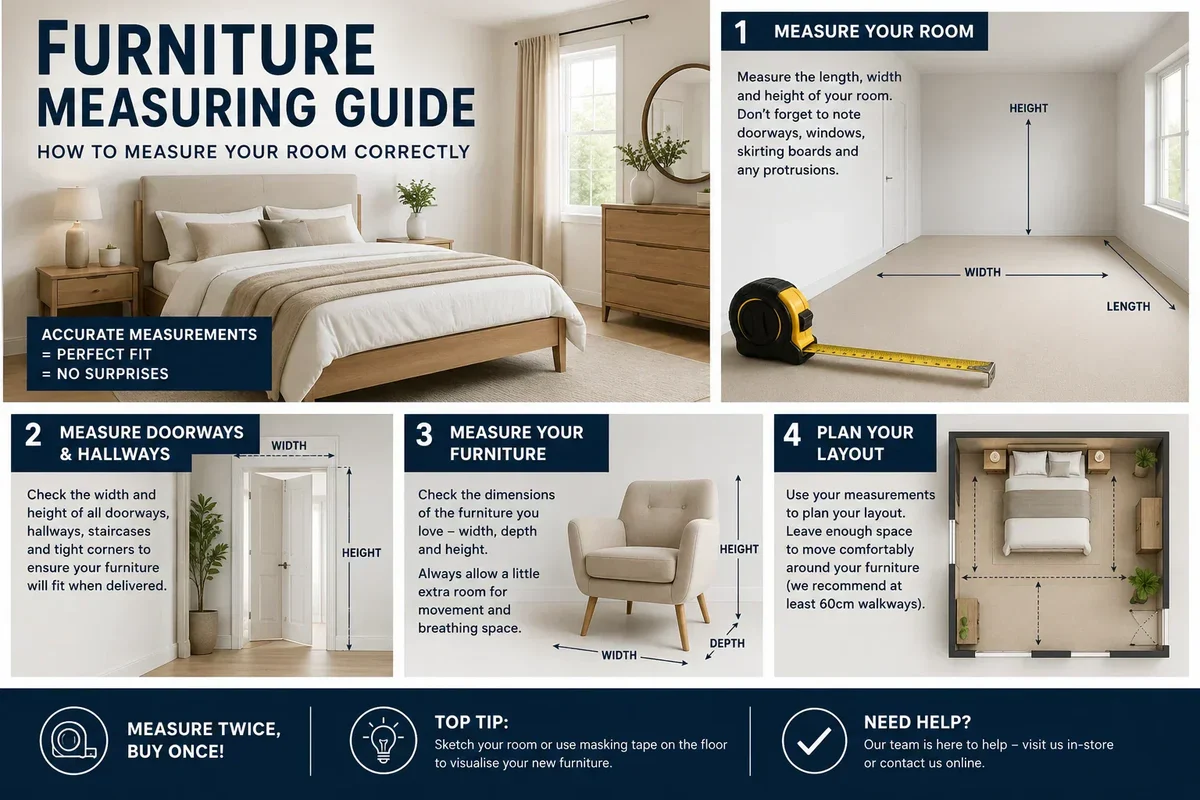
    To measure your home before buying furniture online, record the room’s length, width, and height first. Then measure doors, hallways, stairs, lifts, windows, permanent fixtures, and the exact floor area where the furniture will sit.

    Follow these seven steps:

    1. Measure the room’s total length and width.
    2. Measure ceiling height.
    3. Measure the space available for the furniture.
    4. Measure all doors and entry points.
    5. Check hallways, staircases, lifts, and corners.
    6. Allow enough clearance around the furniture.
    7. Compare every measurement with the online product dimensions before ordering.

    Don’t rely on visual estimates. A sofa that looks perfectly proportioned in a product photograph can feel enormous inside a smaller living room.

    What Measurements Do You Need Before Buying Furniture Online?

    The four most important furniture measurements are width, depth, height, and clearance. You should also measure the entire delivery path because furniture may fit inside a room but still be impossible to move through a doorway or staircase.

    Create a simple measurement sheet before you start shopping.

    What to MeasureWhy It Matters
    Room lengthDetermines overall furniture layout
    Room widthShows how much usable floor space you have
    Ceiling heightImportant for wardrobes, cabinets, mirrors, and tall furniture
    Furniture areaShows the maximum practical furniture size
    Door widthConfirms furniture can enter the room
    Door heightImportant for tall furniture
    Hallway widthPrevents delivery problems
    Staircase widthEssential for upper-floor delivery
    Lift dimensionsImportant for apartment buildings
    Window positionPrevents furniture from blocking light or ventilation
    Walking clearanceKeeps the room comfortable and functional
    Electrical socketsPrevents large pieces from blocking access

    Write everything in both inches and centimetres if the retailer uses different measurement systems.

    Step 1: Measure the Entire Room

    Measure wall-to-wall length and width rather than only measuring the empty area where you think the furniture will go. Full-room measurements help you understand proportion, circulation, and alternative furniture arrangements.

    Start in one corner and measure the full length of each wall.

    Record:

    • Length of Wall A
    • Length of Wall B
    • Length of Wall C
    • Length of Wall D
    • Ceiling height

    Rooms aren’t always perfectly rectangular. Columns, fireplaces, built-in shelves, angled walls, pillars, and recessed spaces can reduce usable floor area.

    Include these features in your measurements.

    A basic room sketch doesn’t need to look professional. Draw the walls on paper, add your measurements, and mark doors, windows, electrical sockets, radiators, air-conditioning units, and permanent cabinets.

    That simple floor plan becomes extremely useful when comparing different pieces online.

    Step 2: Measure the Exact Furniture Placement Area

    Measure the maximum width, depth, and height available where the furniture will actually sit. Do not assume the entire wall or floor area is usable because doors, curtains, windows, switches, and walking routes may require additional clearance.

    Suppose your living-room wall measures 12 feet wide.

    That doesn’t automatically mean you should buy a 12-foot-wide sofa.

    You may need space for:

    • Side tables
    • Curtains
    • Walking paths
    • Floor lamps
    • Electrical outlets
    • Decorative pieces
    • Door movement

    Measure the usable space, not simply the room size.

    When browsing the online furniture shop at Gourmet Furnishers, compare the dimensions of individual products against this usable area rather than relying only on product photographs.

    Step 3: Measure Doors Before Ordering Large Furniture

    Measure the width and height of every doorway the furniture must pass through. The smallest opening on the delivery route can determine whether your furniture can reach its final room.

    For each doorway, record:

    Door width: Measure the narrowest usable opening.

    Door height: Measure from the floor to the lowest point of the frame.

    Diagonal opening: For bulky furniture, the diagonal space can sometimes determine whether the item can be tilted through the doorway.

    Also look for:

    • Fixed handles
    • Door closers
    • Security gates
    • Decorative frames
    • Low ceilings
    • Tight corners immediately after the door

    Measure the front entrance even if the room itself has a much wider door.

    Your furniture has to reach the room first.

    Step 4: Measure Hallways, Corners, Stairs, and Lifts

    Furniture delivery requires enough turning and lifting space, not just a wide doorway. Measure narrow hallways, staircase width and height, landings, sharp corners, and lift interiors before purchasing oversized furniture.

    This step is particularly important when buying:

    • Large sofas
    • L-shaped sofas
    • King-size beds
    • Wardrobes
    • Dining tables
    • Cabinets
    • Dressers
    • Consoles

    For apartment buildings, measure the lift’s:

    • Door width
    • Door height
    • Interior width
    • Interior depth
    • Interior height

    If the item must travel upstairs, check staircase width as well as the ceiling height above the steps.

    A long sofa can sometimes pass through a doorway but become stuck when it reaches a 90-degree hallway turn.

    Step 5: Check Product Width, Depth, and Height

    Never order furniture based only on photographs. Compare the manufacturer’s stated width, depth, and height with both your available room space and delivery-route measurements.

    Furniture measurements commonly appear as:

    Width × Depth × Height

    For example:

    95″ × 34″ × 38″

    means approximately:

    • 95 inches wide
    • 34 inches deep
    • 38 inches high

    A real example is the Fresco Sofa, whose product information lists dimensions of approximately 95 inches long, 34 inches wide, and 38 inches high.

    Knowing those measurements allows you to evaluate the sofa against the room before ordering rather than trying to judge its scale from photographs.

    How to Measure for a Sofa

    To measure for a sofa, check the available wall width, sofa depth, back height, surrounding walking space, and the complete delivery route. For sectional or L-shaped sofas, also confirm which direction the extended section will face.

    Start with the wall where you want the sofa.

    Measure:

    1. Maximum available width.
    2. Maximum practical depth.
    3. Height below windows if applicable.
    4. Space required around side tables.
    5. Walking space in front of the sofa.

    You can temporarily mark the sofa’s dimensions on your floor using painter’s tape.

    This provides a much better sense of scale than numbers alone.

    If you’re considering a larger sectional, look at the shape as carefully as the dimensions. For example, the Soho L Shape Sofa is specifically designed around an L-shaped configuration, so room layout becomes especially important.

    For traditional living areas, you can also compare options such as the Cabriole Sofa Set or explore the complete sofa-set collection.

    How Much Space Should You Leave Around a Sofa?

    Try to maintain a comfortable walking route through the room.

    Around 30–36 inches (76–91 cm) is a useful planning range for major walking routes when space permits. Smaller secondary gaps can sometimes work with less room.

    The important question isn’t simply, “Can the sofa fit?”

    Ask:

    Can people comfortably live around it once it is there?

    How to Measure for a Bed

    How to Choose a Bed Set for Your Master Bedroom in Pakistan?

    Measure the complete outer dimensions of the bed frame rather than relying on mattress size alone. Headboards, side rails, footboards, and attached side tables can make the finished bed considerably larger than the mattress.

    This is one of the most common online furniture measurement mistakes.

    A king-size mattress measurement does not necessarily equal the dimensions of a king-size bed frame.

    Before buying, measure:

    • Bed-frame width
    • Full frame length
    • Headboard height
    • Space for side tables
    • Distance between the bed and wardrobe
    • Walking space at the foot of the bed
    • Door-opening clearance

    For example, the Hemlock Bed includes additional measurements for its headboard, side table, dresser, and mirror, demonstrating why bedroom furniture should be evaluated as a complete arrangement rather than simply by mattress size.

    You can also compare different styles within the bed-set collection.

    Once you know the correct dimensions, you can think about appearance. The guide to bedroom furniture colors in Pakistan can help you coordinate your selected furniture with the room’s walls, flooring, and lighting.

    How to Measure for a Dining Table

    Space need around dining table

    Measure both the dining table and the space required to pull chairs away from it. A table can technically fit inside a room yet still be impractical if guests cannot comfortably move their chairs.

    Measure:

    • Table length
    • Table width
    • Table height
    • Chair depth
    • Space behind occupied chairs
    • Walking routes around the dining area

    As a general planning approach, aim for around 36 inches (91 cm) between the dining-table edge and nearby walls or furniture when space permits.

    If people regularly walk behind seated diners, additional clearance can make the layout more comfortable.

    When evaluating a statement dining piece such as the Burl Brass Dining Table, consider both the visual size of the table and the functional area required once chairs are added.

    The dining table shouldn’t simply fit.

    It should remain usable.

    How to Measure for a Wardrobe

    Wardrobe Design

    Measure wardrobe width, height, and depth, then account for the type of doors. Hinged wardrobe doors require open floor space in front, while sliding doors generally need less front clearance.

    Measure from the floor to the ceiling in several places because ceilings and floors may not be perfectly level.

    You should check:

    • Available wall width
    • Floor-to-ceiling height
    • Wardrobe depth
    • Skirting boards
    • Electrical outlets
    • Door opening
    • Window position
    • Air-conditioning units

    If space is limited, wardrobe-door style becomes especially important.

    Gourmet Furnishers’ guide comparing sliding-door wardrobes vs hinged wardrobes explains how sliding designs can reduce the amount of floor space required for door movement.

    How Much Clearance Should You Leave Around Furniture?

    There is no single clearance measurement for every room, but major walking routes generally need more space than decorative gaps. Always prioritize comfortable movement, opening doors and drawers, and accessing storage.

    Use the following ranges as practical planning guidelines rather than rigid rules.

    Furniture AreaPractical Clearance to Consider
    Main walking routeAbout 30–36 in / 76–91 cm
    Around dining tableAbout 36 in / 91 cm where possible
    Between sofa and coffee tableAbout 14–18 in / 36–46 cm
    Beside a bedAbout 24–30 in / 61–76 cm where possible
    In front of hinged wardrobeEnough room for the door plus comfortable standing space
    Drawers and cabinetsDrawer depth plus standing space

    Smaller homes may require tighter layouts.

    That’s fine.

    The purpose of these measurements is not to force every house into the same design formula. They help you identify where reducing furniture size would make everyday movement easier.

    Use Painter’s Tape to Test Furniture Size Before Ordering

    One of the easiest ways to visualize furniture dimensions is to mark its footprint on the floor with removable painter’s tape. This converts abstract measurements into a visible representation of the space the furniture will occupy.

    Suppose an online sofa is 95 inches wide and 34 inches deep.

    Mark a 95 × 34-inch rectangle on your living-room floor.

    Then walk around it.

    Try opening nearby doors.

    Sit where other furniture will be placed.

    Check whether the route to another room feels restricted.

    This simple test can immediately reveal whether a piece will dominate your room.

    For tall wardrobes, cabinets, and headboards, you can use tape on the wall as well.

    Don’t Forget Furniture Scale

    Furniture can physically fit and still look disproportionately large or small. Compare furniture dimensions with the room, ceiling height, windows, and nearby furnishings before ordering.

    Imagine placing an oversized carved sofa set in a very narrow lounge.

    It might fit between the walls, but the space could feel visually crowded.

    The reverse is also true.

    A small two-seater sofa can look lost in an expansive formal living room.

    Consider:

    • Ceiling height
    • Window size
    • Existing furniture
    • Rug dimensions
    • Wall length
    • Room shape
    • Visual weight of the furniture

    Large carved pieces often appear heavier than minimalist furniture with the same basic dimensions.

    Measure Twice Before You Place the Order

    Recheck critical measurements at least twice, particularly doorways, stairs, furniture placement areas, and large product dimensions. A small measurement error can become a major delivery problem with bulky furniture.

    The old rule “measure twice, cut once” works just as well when buying furniture.

    After completing your first measurements, repeat the most important ones on a different day or ask another person to verify them.

    Double-check:

    • Narrowest doorway
    • Tightest hallway
    • Staircase
    • Lift
    • Furniture area
    • Ceiling height
    • Product width
    • Product depth
    • Product height

    If something is unusually close, don’t assume it will work.

    Allow a reasonable margin.

    Common Furniture Measurement Mistakes

    The most common mistakes are measuring only the room, confusing mattress size with bed-frame size, ignoring furniture depth, forgetting delivery access, and leaving insufficient clearance around doors and drawers.

    Measuring Only Wall Width

    Width alone doesn’t tell you whether the furniture will overwhelm a room.

    Depth matters just as much.

    Forgetting the Delivery Route

    A sofa may fit the lounge perfectly but fail to pass through a staircase.

    Ignoring Headboards and Arms

    Decorative furniture frequently extends beyond its functional core.

    Confusing Mattress Size With Bed Size

    Bed frames can be considerably wider and longer than mattresses.

    Forgetting Chair Movement

    Dining-room measurements must include the chairs when they are pulled out.

    Ignoring Wardrobe Door Clearance

    Hinged wardrobes need room in front of them.

    Trusting Photos Instead of Specifications

    Product photography is designed to show furniture attractively, not provide an accurate sense of scale.

    Always read the measurements.

    A Simple Furniture Measuring Checklist

    Before ordering, confirm the room dimensions, furniture footprint, delivery path, clearance requirements, product dimensions, and orientation. If all six work together, you greatly reduce the risk of ordering furniture that does not fit.

    Before clicking Add to Cart, check:

    •  Room length measured
    •  Room width measured
    •  Ceiling height measured
    •  Intended furniture area measured
    •  Windows marked
    •  Doors measured
    •  Hallways measured
    •  Staircases checked
    •  Lift measured if required
    •  Sharp corners checked
    •  Product width confirmed
    •  Product depth confirmed
    •  Product height confirmed
    •  Walking clearance considered
    •  Drawers and doors can open
    •  Furniture orientation confirmed
    •  Measurements checked twice

    What Should You Check Besides Measurements Before Buying Furniture Online?

    After confirming size, compare the furniture’s material, construction, finish, upholstery, customization options, delivery requirements, warranty, and total cost. Correct dimensions solve only one part of the buying decision. You should also consider whether the product works with your budget and interior style.

    If you’re still planning your furniture budget, read the Gourmet Furnishers guide to average furniture costs in Pakistan in 2026. Families furnishing several rooms together may also find the guide to complete Jahez furniture set prices in Pakistan useful for understanding how bedroom, sofa, dining, and storage furniture can form part of a larger furnishing plan.

    Why Measuring First Makes Online Furniture Shopping Easier

    Measuring before shopping narrows your choices to furniture that can realistically fit, which saves time and makes comparing products easier. Instead of choosing purely by appearance, you can balance design, comfort, size, and functionality.

    Online furniture shopping becomes much simpler once you know your maximum dimensions.

    Instead of asking:

    “Will this look good?”

    you can ask:

    “Will this look good, fit correctly, allow comfortable movement, and reach the room safely?”

    That’s a much better buying question.

    Gourmet Furnishers offers furniture across categories including beds, sofas, dining sets, chairs, tables, wardrobes, consoles, cabinets, ottomans, and other home furnishings.

    You can begin by browsing Gourmet Furnishers and then compare each product’s dimensions with your measurement sheet before making a final selection.

    Final Thoughts

    Measuring your home before ordering furniture online takes only a little extra effort, but it can prevent expensive and inconvenient mistakes. Start with the room. Measure the exact furniture area. Check every doorway and passage. Allow room for walking, chairs, drawers, and doors. Then compare those figures with the product’s complete dimensions.

    Most importantly, don’t ask only whether the furniture can fit inside the room. Ask whether it can reach the room, fit comfortably, and function properly once it is there. Once your measurements are ready, explore online furniture collection to compare beds, sofas, dining furniture, tables, cabinets, chairs, wardrobes, and other pieces for your home. A measuring tape, a simple sketch, and ten minutes of planning can make the difference between furniture that merely fits and furniture that truly belongs in your space.

    FAQs

    How do I measure my house for furniture?

    Measure the room’s length, width, and height first. Then measure the exact furniture area, doors, hallways, stairs, lifts, and any narrow turns the furniture must pass through. Finally, compare those numbers with the product’s width, depth, and height.

    Should furniture be smaller than the available space?

    Usually, yes. Furniture shouldn’t occupy every available inch. Extra space allows for movement, door operation, side tables, curtains, ventilation, and visual balance.

    How do I know whether a sofa will fit through my door?

    Compare the sofa’s width, height, and depth with the narrowest doorway on the delivery route. Also consider whether the sofa can be rotated or tilted and whether there is enough turning space immediately before and after the doorway.

    What measurements are most important when buying furniture online?

    The most important product measurements are width, depth, and height. For the home, room dimensions, available furniture space, doorway width and height, hallway width, stair dimensions, and lift dimensions are equally important.

    How much walking space should I leave around furniture?

    Around 30–36 inches can provide a comfortable main walking route when the room allows it. Smaller homes may require tighter clearances, so treat this as a planning guideline rather than an absolute requirement.

    How do I measure a bedroom before buying a bed?

    Measure the room first, then mark the complete outer dimensions of the bed frame. Include the headboard, footboard, side rails, side tables, wardrobe clearance, and walking areas rather than measuring only for the mattress.

    How do I measure a dining room for a table?

    Measure the available room dimensions and subtract the space needed for chairs and circulation. Around 36 inches behind the table edge is a useful starting point where space permits.

    Is furniture depth important?

    Yes. Depth is one of the most frequently overlooked furniture measurements. A deep sofa, cabinet, or dresser can reduce walking space even when its width fits perfectly against the wall.

    Should I measure doors before buying furniture online?

    Yes. Measure every doorway through which the furniture will travel, including the building entrance and room entrance. The smallest opening on the route may determine whether delivery is possible.

    What should I do if my measurements are very close to the furniture dimensions?

    Avoid relying on an exact fit. Recheck the measurements and allow extra space for handling, frames, skirting, irregular walls, packaging, and movement during installation. If the margin is extremely small, confirm dimensions with the seller before ordering.

  • How to Protect Furniture During a House Move | Complete Guide

    How to Protect Furniture During a House Move | Complete Guide

    The best way to protect furniture during a house move is to clean and prepare each piece before packing, remove detachable parts such as drawers, shelves, and legs, and wrap surfaces with moving blankets, bubble wrap, or thick protective covers. Use cardboard corners and padding on delicate edges, secure drawers and doors so they do not open during transportation, and avoid placing heavy items directly on fragile furniture. For wooden furniture, keep it protected from moisture and excessive heat, while sofas and mattresses should be covered with plastic or specialized furniture covers to prevent dust and stains. Finally, use proper lifting techniques and carefully secure furniture inside the moving vehicle to prevent shifting, scratches, dents, and other damage.

    Why Furniture Protection Is Important During Moving

    Furniture is built for everyday comfort and long-term use, but moving creates situations where damage can happen quickly. Furniture has to pass through narrow spaces, be lifted multiple times, and travel on roads where sudden movements can affect its structure.

    Wooden furniture, especially, needs extra care because scratches, moisture, and impact can damage the finish permanently. Sofas, wardrobes, and dining tables also require proper wrapping to avoid stains, cracks, and surface damage.T aking preventive steps before moving saves money on repairs and helps preserve the original quality of your furniture for many years.

    Prepare Your Furniture Before Moving Day

    Protect Furniture

    Preparation is one of the most important steps for protecting furniture during relocation. Many damages happen because homeowners start packing at the last moment and handle furniture without a proper plan.

    Before moving, inspect each furniture item, remove unnecessary accessories, and prepare the required packing materials. Creating a simple moving plan ensures every item receives the right protection.

    Important preparation steps include:

    • Measuring doorways and pathways
    • Removing drawers and shelves
    • Taking pictures before disassembly
    • Labeling furniture parts
    • Preparing protective covers

    A well-planned move reduces stress and prevents accidental damage.

    Clean Furniture Before Packing

    Clean Sofa

    Cleaning furniture before wrapping prevents dust and small particles from creating scratches during transportation. Dirt trapped between protective layers can damage polished surfaces when furniture moves around.

    For wooden furniture, use a soft microfiber cloth to remove dust and avoid excessive water. For sofas and upholstered furniture, vacuum the fabric and remove cushions before packing. Proper cleaning also makes your furniture easier to arrange after moving into your new home. You can learn more about long-term care through our guide on how to maintain wooden furniture.

    Use Quality Packing Materials for Furniture Protection

    The right packing materials provide a protective barrier against scratches, impact, and environmental damage. Using old sheets or weak covers may not provide enough protection for valuable furniture.

    Furniture blankets, bubble wrap, stretch film, and corner protectors are commonly used because they protect different parts of furniture during transportation. Each material serves a different purpose:

    Furniture Blankets

    Furniture blankets provide cushioning and protect wooden surfaces from scratches and impact. They are especially useful for beds, wardrobes, cabinets, and dining tables.

    Bubble Wrap

    Bubble wrap is ideal for fragile components such as glass panels, mirrors, decorative pieces, and furniture corners. It absorbs impact and reduces the risk of breakage.

    Stretch Wrap

    Stretch wrap keeps protective layers secure and prevents dust from entering furniture surfaces. It works well for sofa cushions and smaller furniture parts.

    Disassemble Large Furniture Before Moving

    Large furniture items are difficult to move safely without proper disassembly. Beds, wardrobes, dining tables, and cabinets should usually be separated into smaller parts before transportation.

    Disassembling furniture reduces weight, makes carrying easier, and lowers the chances of hitting walls, doors, or other objects during movement. Always keep screws, bolts, and fittings in labeled bags so reassembly becomes simple after reaching your new home. For example, understanding furniture structure is helpful when moving bedroom pieces. You can explore different designs through our guide on latest bed designs in Pakistan.

    How to Protect Wooden Furniture During a House Move

    Vintage Bedroom Furniture

    Wooden furniture requires special attention because natural wood and polished surfaces can be affected by scratches, moisture, and rough handling. Before moving wooden furniture, cover all surfaces with soft blankets and secure the protection using stretch wrap. Avoid dragging wooden items because friction can damage the finish and weaken joints.

    Solid wood furniture is known for durability, but proper care is still necessary. Learn more about wood quality and durability in our article about solid wood vs engineered wood.

    Protect Furniture Corners and Edges

    Corners and edges are the most vulnerable areas during a move because they often hit walls, floors, or other furniture pieces. Use foam padding, cardboard protectors, or thick blankets around sharp edges. This is especially important for wooden beds, dining tables, wardrobes, and cabinets. Protecting corners helps prevent chips, dents, and expensive refinishing work after relocation.

    How to Protect Sofas During a House Move

    Sofas require careful handling because fabric, leather, and cushions can easily collect dust, stains, and moisture during transportation. Before moving a sofa, remove cushions, cover the upholstery, and protect the legs. Avoid placing heavy items on top because pressure can damage the frame and shape. Different sofa materials require different care methods. For additional maintenance advice, read our guide on how to clean sofa at home.

    Protect Wardrobes and Cabinets During Relocation

    Wardrobes are large furniture pieces that need careful handling because incorrect movement can affect doors, shelves, and internal structures. Remove clothing, accessories, and removable shelves before moving. Secure doors properly and protect mirrors or glass sections separately. Modern wardrobe designs often include delicate finishes and storage features, making careful transportation important. Explore wardrobe ideas through our article on 15 wardrobe design ideas.

    Move Dining Tables Safely

    Dining tables often have large surfaces that are exposed to scratches and impact during transportation. Proper wrapping and handling help maintain their original appearance. Remove table legs if possible and wrap the tabletop separately with protective material. Never place heavy objects directly on the surface during moving. You can explore different dining furniture options and designs through our guides on top 10 table designs in Pakistan and round vs rectangular dining tables.

    Load Furniture Properly Into the Moving Vehicle

    Correct loading plays an important role in preventing furniture damage. Even well-packed furniture can get damaged if items move around during transportation. Place heavier furniture at the bottom and lighter items on top. Use straps to secure large pieces and fill empty spaces to prevent shifting.

    Careful loading reduces pressure on furniture joints and prevents accidental scratches during the journey.

    Avoid Common Furniture Moving Mistakes

    Many furniture damages happen because of simple mistakes during relocation. Knowing what to avoid can protect your furniture from unnecessary problems.

    Common mistakes include:

    • Dragging furniture instead of lifting it
    • Using poor-quality wrapping materials
    • Moving large furniture without disassembly
    • Leaving furniture exposed to rain
    • Placing heavy items on delicate surfaces

    A careful moving process ensures better protection and reduces repair costs.

    Check Furniture After Moving Into Your New Home

    After reaching your new home, inspect every furniture item before removing all protective covers. Look for scratches, loose fittings, cracks, or moisture issues. Reassemble furniture carefully and tighten all screws properly. Allow wooden furniture to adjust before placing it against damp walls or exposing it to direct sunlight. Proper post-move care helps maintain furniture quality and ensures everything remains comfortable and functional.

    How Gourmet Furnishers Helps You Choose Long-Lasting Furniture

    At Gourmet Furnishers, furniture is designed with quality materials, modern aesthetics, and practical home needs in mind. Well-built furniture is easier to maintain and provides better durability during everyday use.

    From elegant wooden beds and comfortable sofa sets to stylish dining tables and customized furniture solutions, Gourmet Furnishers focuses on creating pieces that add beauty and functionality to your home.

    Customers looking for durable furniture can also explore our guides on:

    Conclusion

    Protecting furniture during a house move requires careful planning, the right packing materials, and proper handling techniques. From wrapping wooden surfaces and securing furniture corners to safely transporting sofas, beds, wardrobes, and dining tables, every step helps prevent unnecessary damage.

    Quality furniture is a long-term investment, and taking extra care during relocation ensures it continues to look beautiful and function properly for years. By following these furniture moving tips, you can reduce the risk of scratches, moisture damage, and structural problems.

    FAQs

    How do I protect furniture during a house move?

    Protect furniture by cleaning it first, using quality packing materials, covering surfaces, protecting corners, and transporting each item carefully to prevent scratches and damage.

    What is the best way to protect wooden furniture while moving?

    The best method is to wrap wooden furniture with blankets, protect corners, avoid dragging, and keep it away from moisture during transportation.

    Should I disassemble furniture before moving?

    Yes, large furniture such as beds, wardrobes, and dining tables should usually be disassembled because it makes transportation safer and reduces damage risks.

    How can I protect my sofa during relocation?

    Remove cushions, cover upholstery with protective sheets, protect sofa legs, and avoid placing heavy items on the sofa during transportation.

    Can moving damage solid wood furniture?

    Yes, even solid wood furniture can suffer scratches, moisture damage, or joint problems if it is not packed and handled correctly during a move.

  • How Long Should a Wooden Bed Last? Lifespan & Durability Guide

    How Long Should a Wooden Bed Last? Lifespan & Durability Guide

    A good-quality wooden bed can last 20 to 50 years or even longer when it is made from durable wood, professionally constructed, and maintained properly. Premium solid wood beds are designed to handle daily use while maintaining their strength, stability, and appearance for decades. 

    Unlike low-cost furniture that may lose its strength after a few years, a well-crafted wooden bed can become a long-term investment for your home. The lifespan depends on several factors, including wood quality, craftsmanship, design, weight support, environmental conditions, and regular care. A wooden bed is not just a place to sleep; it is an important piece of bedroom furniture that contributes to comfort, style, and the overall look of your living space.

    What Is the Average Lifespan of a Wooden Bed?

    The average lifespan of a wooden bed depends mainly on the quality of materials and construction methods used during manufacturing. A basic wooden bed may last around 10 years, while a premium solid wood bed can continue serving your family for several decades.

    Solid hardwood beds usually perform better because natural wood has excellent structural strength and can handle repeated daily pressure. With proper maintenance, high-quality wooden furniture can often be repaired, refinished, and restored instead of replaced. When choosing a bed for long-term use, investing in quality construction is usually more beneficial than choosing the cheapest option available.

    Why Do High-Quality Wooden Beds Last Longer?

    Wooden Bed

    A long-lasting wooden bed is the result of several important factors working together. The quality of the raw material, manufacturing expertise, and finishing process all influence how well the bed performs over time.

    Premium wooden beds are designed with stronger joints, better support systems, and durable finishes that protect the furniture from everyday wear. This combination helps the bed maintain its shape, strength, and appearance for many years. A well-made wooden bed is built to become part of your home for generations rather than being replaced frequently.

    Quality of Wood Material

    The type of wood used in a bed plays one of the biggest roles in determining its lifespan. Hardwoods are naturally denser and stronger, making them ideal for furniture that needs to support weight every day.

    High-quality woods such as sheesham, teak, and oak are popular choices because they offer excellent durability, attractive natural grains, and resistance against regular wear. At Gourmet Furnisher, carefully selected wooden materials are used to create elegant bedroom furniture that combines durability with premium design.

    Solid Wood vs Engineered Wood: Which Bed Lasts Longer?

    Solid wood beds generally have a longer lifespan compared to engineered wood furniture because they maintain their structural strength over time. Solid wood can also be repaired, polished, and restored when minor damage occurs.

    Engineered wood options such as MDF and particle board are often more affordable but may not provide the same level of durability, especially under heavy daily use. For homeowners looking for furniture that provides long-term value, a solid wooden bed is usually the better choice because it offers strength, timeless beauty, and better longevity.

    Construction and Joinery Quality

    Even the best wood will not perform well if the bed is poorly constructed. The way different wooden parts are connected directly affects the stability and durability of the entire structure. Professional craftsmanship ensures that joints remain strong, support beams remain secure, and the bed does not develop unnecessary movement or noise over time. A high-quality wooden bed should feel stable, balanced, and solid from the first day of use.

    Bed Design and Structural Support

    A durable wooden bed requires more than attractive design. The internal structure must provide proper support for the mattress and daily movement.

    Important features include:

    • Strong side panels
    • Reinforced center support
    • Quality wooden slats
    • Proper weight distribution

    A well-designed bed reduces pressure on individual parts and helps prevent early damage.

    If you are exploring different styles and designs, Gourmet Furnisher offers a wide collection of premium wooden bed sets designed for modern bedrooms.

    Weight Capacity and Daily Usage

    The amount of daily pressure placed on a bed affects its lifespan. A wooden bed designed with strong materials and proper engineering can handle regular family use for many years. However, excessive weight, frequent movement, or improper usage can reduce the life of any furniture piece. Choosing a bed with strong construction and suitable support ensures better performance over the long term.

    Maintenance and Care Routine

    Proper maintenance can significantly increase the lifespan of a wooden bed. Even premium furniture requires basic care to maintain its beauty and strength. Regular cleaning, protection from moisture, and occasional polishing help preserve the natural appearance of wood. Small maintenance habits can prevent bigger problems and keep your wooden bed looking new for many years.

    Which Type of Wood Is Best for a Long-Lasting Bed?

    Wooden Bedroom Furniture

    Choosing the right wood is one of the most important decisions when buying a wooden bed. Different wood types offer different levels of durability, appearance, and maintenance requirements. The best choice depends on your budget, design preferences, and how long you want the furniture to last.

    Sheesham Wood Beds

    Sheesham wood is one of the most popular choices for premium furniture because of its strength and beautiful natural grain patterns. It provides excellent durability while offering a warm and luxurious appearance that suits both traditional and modern bedroom designs. Many homeowners prefer sheesham beds because they provide a balance between beauty, reliability, and long-term value.

    Teak Wood Beds

    Teak wood is considered a premium furniture material because of its natural resistance to moisture and environmental changes. Its dense structure allows it to maintain strength for many years, making it suitable for luxury furniture pieces. A teak wooden bed can become a valuable long-term addition to your home when properly maintained.

    Oak Wood Beds

    Oak is known for its strength, durability, and classic appearance. It has been used in furniture manufacturing for generations because of its ability to handle regular use. Oak beds provide a timeless look and can complement different interior styles.

    Signs Your Wooden Bed Needs Repair or Replacement

    Even the highest-quality wooden beds may eventually require maintenance after years of use. Identifying problems early can help prevent further damage.

    Common signs include:

    • Increased squeaking sounds
    • Loose joints
    • Cracks in important wooden areas
    • Uneven mattress support
    • Visible structural weakness

    Many solid wood beds can be repaired instead of completely replaced, which is another advantage of choosing quality furniture.

    How Can You Make Your Wooden Bed Last for Decades?

    A few simple care practices can help extend the life of your wooden bed significantly. Keep the bed away from excessive moisture because humidity can affect wood over time. Regularly clean the surface using soft materials and avoid harsh chemicals that may damage the finish. Checking screws, joints, and support areas occasionally also helps maintain stability and prevents small issues from becoming major repairs.

    Is Investing in a Premium Wooden Bed Worth It?

    A premium wooden bed may require a higher initial investment, but it often provides better value over time. Instead of replacing low-quality furniture every few years, a durable wooden bed can provide decades of comfort and reliability.

    Benefits of investing in a quality wooden bed include:

    • Longer lifespan
    • Better appearance
    • Stronger construction
    • Higher comfort
    • Timeless design

    Quality furniture is not just about appearance; it is about creating a comfortable and durable home environment.

    How to Choose the Right Wooden Bed for Your Home

    Selecting the right wooden bed requires considering your bedroom size, interior style, comfort needs, and durability expectations. Before purchasing, evaluate the wood type, construction quality, design, and support system.

    If you need help selecting the right style and size, read Gourmet Furnisher’s guide on How Do I Choose the Right Bed for My Room?.

    Best Wooden Bed Options from Gourmet Furnisher

    Best Wooden Furniture in Pakistan

    Gourmet Furnisher focuses on creating wooden furniture that combines elegant design with reliable construction.

    Customers looking for durable bedroom solutions can explore options like the Hemlock Bed, designed for homeowners who want a stylish yet long-lasting sleeping solution.

    For complete bedroom upgrades, explore the collection of wooden bed sets created to match different interior styles and preferences.

    Why Choose Gourmet Furnisher for Wooden Beds?

    Choosing the right furniture brand is just as important as choosing the right wood. Gourmet Furnisher focuses on delivering premium-quality wooden furniture designed for modern homes.

    The brand combines thoughtful designs, quality materials, and expert craftsmanship to create beds that provide both beauty and durability.

    Customers choose Gourmet Furnisher because of:

    Premium Quality Materials

    Gourmet Furnisher focuses on selecting reliable materials that provide strength, durability, and long-lasting performance.

    Elegant Designs for Modern Homes

    Each bed design is created to complement contemporary bedroom interiors while maintaining a timeless appearance.

    Attention to Craftsmanship

    Quality construction techniques ensure that every piece delivers stability, comfort, and lasting value.

    Furniture Built for Long-Term Use

    Rather than focusing only on trends, Gourmet Furnisher creates furniture designed to remain functional and attractive for years.

    Space-Saving Wooden Bed Solutions

    Space-Saving Bed Designs

    For smaller homes, choosing the right bed design can improve both comfort and room functionality. Smart furniture designs help maximize available space without compromising durability or style. You can also explore ideas from Gourmet Furnisher’s article on Best Space-Saving Bed Designs for Small Houses in Pakistan.

    Final Thoughts

    A good-quality wooden bed is an investment that can provide comfort, style, and durability for decades. While cheaper furniture may require frequent replacement, a well-built solid wood bed can remain a valuable part of your home for many years.

    Choosing quality wood, expert craftsmanship, and proper maintenance ensures your wooden bed continues to deliver excellent performance and timeless beauty. For homeowners searching for durable bedroom furniture, Gourmet Furnisher offers carefully designed wooden beds that combine traditional craftsmanship with modern style.

    FAQs

    How many years does a wooden bed usually last?

    A high-quality wooden bed can last 20 to 50 years or more depending on the wood type, construction quality, usage, and maintenance.

    Which wood is best for a durable bed?

    Solid hardwood options such as sheesham, teak, and oak are considered excellent choices because of their strength and long lifespan.

    Can a wooden bed last a lifetime?

    Yes, a premium solid wood bed that receives proper care can last a lifetime and may even be passed down through generations.

    Is solid wood better than MDF for beds?

    Yes, solid wood generally provides better durability, strength, and repair options compared with MDF or particle board furniture.

    How can I increase my wooden bed’s lifespan?

    Regular cleaning, protecting the wood from moisture, tightening hardware, and avoiding excessive pressure can help your wooden bed last much longer.

  • Which Sofa Shape Is Best for a Small Living Room?

    Which Sofa Shape Is Best for a Small Living Room?

    For a small living room, a compact L-shaped sofa or a straight 2–3 seater sofa is usually the best choice. A compact L-shaped sofa makes efficient use of corners and provides more seating without taking up too much floor space, while a straight sofa keeps the room open and easier to move around. Choose sofas with slim arms, raised legs, and a simple design to create a more spacious appearance. Avoid oversized, deep, or heavily rounded sofas, as they can make a small room feel crowded. For most small Pakistani living rooms, a compact L-shaped sofa is the best option when you need maximum seating with efficient use of space.

    Why Sofa Shape Matters in a Small Living Room

    The shape of a sofa directly affects how efficiently you can use your living room. A sofa with wide arms or excessive depth can take up valuable floor space and restrict movement around the room. In contrast, a streamlined sofa can provide comfortable seating while maintaining an open layout. The shape also determines where you can position other furniture such as a coffee table, side tables, TV unit, or accent chair. For smaller Pakistani homes and apartments, making efficient use of every available area is particularly important. Therefore, homeowners should consider both the sofa’s dimensions and its overall shape before making a purchase.

    Best Sofa Shapes for Small Living Rooms

    Best Sofa Shape for a Small Living Room

    Compact Straight Sofa

    A compact straight sofa is one of the most practical choices for a small living room because it has a simple and space-efficient design. A two-seater or smaller three-seater can usually be positioned against a wall without occupying too much floor space. Its straight profile also makes it easier to arrange a coffee table, TV unit, or additional seating around it. This design works particularly well in rectangular living rooms where floor space is limited. Choose a model with moderate depth and slim arms to maximize usable space. You can explore different sofa designs and living room furniture at Gourmet Furnishers when planning a compact living room.

    L-Shaped Sofa

    An L-shaped sofa can be an excellent choice for a small living room when it is correctly sized for the available space. Instead of spreading seating across multiple pieces of furniture, an L-shaped design uses a corner and provides several seats within one unit. It can work especially well when placed in the corner of the room, leaving the central area open. However, oversized L-shaped sofas can have the opposite effect and make a compact room feel cramped. Always measure both sections of the sofa before purchasing and compare them with your available wall and floor dimensions. A compact L-shaped design can therefore provide a good balance between seating capacity and efficient space utilization.

    Loveseat Sofa

    A loveseat is designed for smaller seating requirements and can be particularly useful in compact living rooms. Its shorter width allows homeowners to maintain more open floor space while still having comfortable seating for two people. Loveseats can also be combined with a small accent chair or ottoman if additional seating is occasionally required. Their compact size makes them suitable for apartments, bedrooms with sitting areas, and smaller family living rooms. When choosing a loveseat, consider its depth and armrest size rather than looking at width alone. A streamlined loveseat can make a small room feel less crowded while maintaining a comfortable and welcoming appearance.

    Armless Sofa

    An armless sofa can create a lighter and more open appearance because it eliminates the bulky side sections found on many traditional sofas. This design can be useful when the available width is extremely limited or when you want to maximize seating within a specific area. Without large armrests, more of the sofa’s seating surface can be used comfortably. Armless designs can also visually reduce the amount of furniture occupying the room. However, comfort and back support should still be considered before choosing this style. This option works particularly well with modern, minimalist, and contemporary living-room interiors.

    Modular Sofa

    A modular sofa provides flexibility because it is made from separate sections that can be arranged according to your room layout. This can be helpful for homeowners who have unusual room dimensions or frequently change their furniture arrangement. Instead of being restricted to one fixed configuration, individual sections can potentially be rearranged to suit different needs. Smaller modular units can also be selected instead of purchasing an oversized sectional. Before choosing this option, make sure each module fits through your doors, hallways, and stairways. Modular sofas are particularly useful when flexibility is as important as seating capacity.

    Sofa Shapes to Avoid in Small Living Rooms

    Not every attractive sofa design is suitable for a compact room. Large furniture can quickly reduce walking space and make the room feel visually heavy. Deep seats, oversized arms, wide curves, and bulky bases can consume more floor area than expected. This does not mean you must completely avoid these styles, but you should select smaller versions when possible. Always compare the sofa’s actual measurements with your room measurements rather than judging its size from photographs. A sofa that looks comfortable in a showroom may be impractical in a small living room.

    Oversized Deep Sofas

    Oversized deep sofas can take up a significant amount of floor space, particularly when placed in a narrow living room. Their large seating depth can reduce the distance between the sofa and coffee table or TV unit. They may also make it difficult for people to move comfortably around the furniture. While deep sofas can offer excellent lounging comfort, they are not always practical for smaller rooms. If you prefer a deeper seat, look for a moderately sized model that still leaves sufficient walking space. Measuring the available floor area before purchasing is the best way to avoid choosing a sofa that overwhelms the room.

    Large Curved Sofas

    Curved sofas can create an elegant and distinctive appearance, but their rounded shape often requires more surrounding space than a straight sofa. They may leave unused areas between the sofa and walls or other furniture. In a small rectangular room, this can make furniture placement more difficult. A compact curved sofa may still work in certain layouts, especially in open-plan spaces. However, homeowners should carefully measure the sofa’s maximum width and depth before buying. If efficient space utilization is your priority, a straight or compact L-shaped sofa is usually easier to position.

    Bulky Traditional Sofa Sets

    Large traditional sofa sets can quickly fill a small living room because they often include several separate seating pieces. A 3-seater, 2-seater, and single chair arrangement may provide plenty of seating but leave very little open floor area. This can also make cleaning and movement around the furniture more difficult. For compact homes, consider using one main sofa combined with one lightweight chair or ottoman. This approach gives you flexibility without filling every corner of the room. You can also browse living room furniture options from Gourmet Furnishers to find designs that better suit your available space.

    How to Choose the Right Sofa Shape for Your Room

    Best Sofa Shape for a Small Living Room

    Start by measuring the length and width of your living room before looking for a sofa. Next, identify the locations of doors, windows, electrical outlets, TV units, and other permanent fixtures. Consider how much space you need for walking around the sofa and how much seating your household actually requires. A compact straight sofa may be ideal for one layout, while an L-shaped model may work better in a corner-based arrangement. Sofa depth is equally important because two sofas with the same width can occupy very different amounts of floor space. The goal should be to select a sofa that provides enough seating without blocking movement or making the room feel crowded.

    Best Sofa Placement Ideas for Small Living Rooms

    Sofa Against the Wall

    Placing a sofa against the wall is one of the simplest ways to maximize usable floor space in a small living room. This arrangement keeps the center of the room open and creates a clear path for movement. A compact straight sofa is particularly suitable for this type of placement. Make sure the sofa does not block windows, doors, switches, or heating and cooling vents. You can place a small coffee table or ottoman in front while maintaining enough clearance for comfortable movement. This simple layout can make a compact room appear more organized and spacious.

    Sofa in a Corner

    Using a corner can be an effective way to utilize space that might otherwise remain unused. An appropriately sized L-shaped sofa can fit into the corner while providing multiple seats without requiring several separate furniture pieces. This arrangement can also leave the center of the room available for a coffee table or open walking area. However, you should measure both walls before selecting the sofa because an L-shaped design needs sufficient length in both directions. Avoid choosing an oversized sectional simply because the corner appears empty. The sofa should fit the room rather than completely fill it.

    Sofa Facing the TV

    When positioning a sofa opposite a TV, comfort and available floor space should both be considered. The sofa should be far enough away for comfortable viewing while leaving adequate room for movement. A compact straight sofa can work particularly well because it provides a direct viewing position without taking up unnecessary width. Avoid placing a large coffee table between the sofa and TV if the room is already tight. A narrow table or compact ottoman can provide functionality without restricting movement. Proper positioning can make the room feel more comfortable without requiring additional furniture.

    What Sofa Size Is Best for a Small Living Room?

    There is no single sofa size that works for every small living room because room dimensions and layouts vary. In general, compact two-seater and three-seater sofas are easier to accommodate than oversized sectional designs. You should measure the wall where the sofa will be placed and leave enough clearance for doors, windows, and walking paths. Do not forget to measure doorways, staircases, elevators, and corridors through which the sofa will need to pass. Sofa depth should also be checked because a relatively narrow sofa can still occupy considerable space if it is very deep. Choosing based on actual measurements rather than appearance will help you avoid costly sizing mistakes.

    Best Sofa Colors for Small Living Rooms

    Sofa color can influence how spacious or visually heavy a small living room feels. Light neutral shades such as beige, cream, light grey, and soft earthy tones can create a bright and open appearance. Darker shades can still work, especially when the walls and surrounding furniture are lighter. Instead of choosing a very busy pattern, consider a simple upholstery design that complements the room. Cushions and throws can then be used to introduce stronger colors and decorative details. The best choice ultimately depends on your existing interior, lighting, maintenance needs, and personal style.

    Sofa Material and Design Considerations

    Material and construction are important because a small sofa needs to provide comfort without appearing excessively bulky. Designs with slim arms, moderate seat depth, and raised legs can create a lighter visual appearance. Upholstery should be selected according to how frequently the sofa will be used and how easy it is to maintain. Families with children or frequent guests may prefer durable and easy-to-clean upholstery. Wooden details can also complement traditional Pakistani interiors, while simpler upholstery can suit modern spaces. Consider quality, construction, comfort, and maintenance alongside the sofa’s shape when making your final decision.

    Small Living Room Sofa Buying Checklist

    Before purchasing a sofa, measure the room and the exact area where you intend to place it. Check the sofa’s overall width, depth, and height rather than relying only on its listed seating capacity. Measure doorways, hallways, stairs, and elevators to ensure the furniture can actually reach the room. Consider whether you need a two-seater, three-seater, loveseat, or compact L-shaped design. Also evaluate the upholstery, frame, cushioning, color, maintenance requirements, and available budget. Most importantly, make sure the final design leaves enough space for people to walk around comfortably.

    Straight Sofa vs. L-Shaped Sofa for Small Rooms

    A straight sofa is generally easier to position because it can sit against a single wall and works with many different room layouts. An L-shaped sofa can provide more seating while making efficient use of a corner, but it requires sufficient space along two walls. Straight sofas are usually better for rooms where flexibility and easy furniture rearrangement are priorities. L-shaped sofas may be better for families who need more seating but have a suitable corner available. The decision should therefore depend on your room measurements rather than simply choosing the style that looks more attractive. Both can work well when their dimensions are appropriate for the available space.

    How to Make a Small Living Room Look Bigger With the Right Sofa

    Choose a sofa with a streamlined design rather than oversized arms and excessive depth. Raised legs can allow more of the floor to remain visible, which can make the room feel visually lighter. Light or neutral upholstery can also help reflect available light and create a more open appearance. Keep walking paths clear and avoid placing too many tables, chairs, or decorative pieces around the sofa. A compact coffee table or ottoman can provide functionality without taking over the room. Combining the right sofa shape with smart furniture placement can make even a small living room feel more comfortable and spacious.

    Why Choose Gourmet Furnishers for Sofas in Pakistan?

    Gourmet Furnishers is a useful option for homeowners looking for furniture for different rooms and interior styles in Pakistan. When selecting a sofa, customers can consider designs based on room size, seating requirements, comfort, materials, and overall interior style. Gourmet Furnishers also provides a range of furniture options that can help homeowners coordinate their living room with other pieces. Before purchasing, compare sofa dimensions carefully with your available space to select the most suitable design. Visit the Gourmet Furnishers to explore available furniture and sofa options.

    Conclusion

    The best sofa shape for a small living room depends on the room’s dimensions, layout, seating requirements, and existing furniture. Compact straight sofas and loveseats are excellent choices when floor space is extremely limited, while a properly sized L-shaped sofa can make efficient use of an available corner. Avoid oversized and excessively deep designs that restrict movement and make the room feel crowded. Always measure the room, sofa, doorways, and walking paths before making a purchase. With the right shape, size, color, and placement, even a small living room can remain comfortable, functional, and stylish.

    FAQs

    Which sofa shape is best for a very small living room?

    A compact straight sofa or loveseat is usually one of the easiest options for a very small living room. These designs can fit against a wall while leaving more floor space available for movement. A small L-shaped sofa can also work if the room has a suitable corner. The most important factor is not simply the sofa’s shape but its actual width and depth. Always compare the furniture dimensions with your room measurements before purchasing.

    Is an L-shaped sofa good for a small living room?

    Yes, an L-shaped sofa can work well in a small living room when it is compact and properly positioned. Placing it in a corner can use otherwise underutilized space and provide multiple seats. However, a large sectional can make the room feel cramped. Measure both walls before purchasing an L-shaped sofa. Select a size that leaves enough space for walking and other essential furniture.

    Should a small living room have a 2-seater or 3-seater sofa?

    A 2-seater is generally better when floor space is extremely limited, while a compact 3-seater can work when the room has enough wall length. Your decision should depend on how many people regularly use the room and how much additional furniture you need. A smaller sofa may be preferable if you also want an accent chair or coffee table. Measure the available wall before deciding. Comfort and movement should remain priorities alongside seating capacity.

    What sofa depth is best for a small room?

    A moderate or compact sofa depth is generally more suitable for a small living room than an oversized deep design. The exact ideal measurement depends on the room’s dimensions and the amount of walking space required. A shallower sofa can leave more room between the seating area and coffee table or TV unit. However, it should still provide enough seat depth for comfortable use. Always check the manufacturer’s complete dimensions before purchasing.

    What color sofa makes a small room look bigger?

    Light and neutral colors such as beige, cream, light grey, and soft natural tones can make a small living room appear brighter and more spacious. These shades can work especially well when combined with light walls and good natural lighting. Dark colors are not necessarily unsuitable but can create a heavier visual effect if used throughout a compact room. You can add stronger colors through cushions, rugs, curtains, and other accessories. Choose a shade that also suits your lifestyle and maintenance requirements.

  • What Does a Complete Bedroom Set Include in Pakistan?

    What Does a Complete Bedroom Set Include in Pakistan?

    A complete bedroom set in Pakistan typically includes a bed, two bedside tables, a dressing table with mirror, and a wardrobe, while some sets may also include a chest of drawers, stool, bench, or additional storage pieces. The bed is usually the main centerpiece, available in sizes such as single, queen, or king, while bedside tables provide convenient storage and the dressing table adds functionality. A wardrobe offers essential space for clothes, shoes, and personal belongings. Depending on the design and budget, Pakistani bedroom sets can be made from solid wood, Sheesham wood, MDF, or engineered wood, with styles ranging from traditional carved designs to modern minimalist finishes.

    What Is a Complete Bedroom Set?

    A complete bedroom set is a collection of matching or coordinated furniture pieces designed for one bedroom. The main purpose is to give the room a consistent appearance while providing essential sleeping, storage, and dressing functions. Most complete sets are centered around the bed and then include complementary furniture such as side tables, wardrobes, and dressers. The number of pieces can vary depending on whether you choose a basic, standard, or luxury package. In Pakistan, buyers can find bedroom sets made from solid wood, MDF, engineered wood, and combinations of different materials. Before making a purchase, check the product description carefully to understand the exact number of pieces included.

    Basic Bedroom Set

    A basic bedroom set usually contains the essential furniture required for everyday bedroom use. This commonly includes a bed, one or two bedside tables, and a wardrobe for clothing storage. Some sellers may also include a dressing table, while others sell it separately. Basic sets are suitable for buyers who want practical furniture without adding unnecessary pieces. They can also be a good choice for smaller bedrooms where too much furniture can reduce usable floor space. If your budget is limited, prioritize the quality and construction of the bed and wardrobe before spending more on decorative furniture.

    Standard Complete Bedroom Set

    A standard complete bedroom set generally provides more functionality than a basic package. Along with the bed, bedside tables, and wardrobe, it may include a dressing table with mirror and sometimes a chest of drawers. Having these pieces designed in the same style makes it easier to create a coordinated bedroom interior. Standard sets are suitable for master bedrooms and medium-to-large rooms where additional storage is useful. They also provide a better balance between functionality, appearance, and budget. Always ask whether accessories such as mattresses, mirrors, or stools are included because these may be optional.

    Luxury Bedroom Set

    Luxury bedroom sets are designed for homeowners who want a more premium and visually impressive bedroom. These sets can include a large bed, matching nightstands, wardrobe, dressing table, mirror, chest of drawers, bench, or ottoman. Premium materials, detailed craftsmanship, decorative finishes, upholstered elements, and customized designs may increase the overall price. A luxury set works best when the bedroom has enough space to accommodate larger furniture comfortably. The goal is not simply to add more pieces but to create a cohesive and sophisticated interior. Gourmet Furnishers offers multiple bed-set styles, including premium options across its bed-set collection.

    What Furniture Is Included in a Complete Bedroom Set in Pakistan?

    Complete Bedroom Set

    The exact contents of a bedroom set depend on the seller, collection, material, and package selected. However, several furniture pieces are commonly associated with a complete bedroom setup in Pakistan. The bed is normally the central piece, while wardrobes and dressing furniture provide storage and functionality. Bedside tables add convenient storage next to the sleeping area. Some larger sets also include additional drawers, benches, or decorative pieces. When comparing different sets, compare the number of pieces and their dimensions rather than looking at the advertised price alone.

    Bed

    How to Choose a Bed Set for Your Master Bedroom in Pakistan?

    The bed is normally the centerpiece of a complete bedroom set and should be selected according to the room size and sleeping requirements. Common choices include single, double, queen, and king-size beds, with king and larger designs often preferred for spacious master bedrooms. The material and construction of the bed are important because the frame needs to support regular daily use. Buyers can choose from traditional wooden designs, modern minimalist styles, upholstered beds, and storage beds. Current Pakistani furniture trends also show growing interest in minimalist, upholstered, wooden, and storage-focused bed designs.

    Bedside Tables

    Bedside tables, also called nightstands or side tables, are normally positioned on either side of the bed. They provide convenient space for lamps, phones, books, glasses, and other everyday items. Matching bedside tables help create a balanced and symmetrical bedroom appearance. Look for drawers or shelves if you need additional storage space. The height should also be comfortable relative to the mattress so that items can be reached easily. When buying a complete set, confirm whether one or two bedside tables are included.

    Wardrobe

    Best Wardrobe Designs for Pakistani Bedrooms

    A wardrobe provides the primary storage space for clothes, shoes, accessories, and other personal belongings. Depending on the bedroom size, you can choose from two-door, three-door, sliding-door, or larger wardrobe designs. Internal shelves, hanging sections, drawers, and compartments can make a major difference to usability. Gourmet Furnishers currently has wardrobe options including MDF, semi-solid ashwood, solid ashwood, and UV-sheet designs. A wardrobe should therefore be evaluated not only for appearance but also for storage capacity, material quality, hinges, handles, and internal organization.

    Dressing Table and Mirror

    Modern Dressing Table Designs

    dressing table provides a dedicated area for grooming, makeup, accessories, and personal items. It is often paired with a large mirror and may include multiple drawers for organized storage. Matching the dressing table with the bed and wardrobe creates a more unified bedroom design. Buyers should check whether the mirror and stool are included in the quoted price. The size should also be appropriate for the available wall and floor space. For modern bedrooms, a simple dresser with clean lines can create a less crowded appearance.

    Chest of Drawers

    chest of drawers is an additional storage unit that can be included in larger bedroom sets. It is useful for clothing, accessories, linens, and smaller personal items that do not need to be hung. Multiple drawers allow belongings to be separated and organized more efficiently. A chest of drawers can also reduce pressure on the wardrobe when storage requirements are high. Its design should complement the rest of the bedroom furniture. If your room is small, measure the available floor area before adding another storage unit.

    Bedroom Bench or Ottoman

    A bedroom bench or ottoman is usually an optional piece rather than an essential component of every bedroom set. It is often placed at the foot of the bed and can provide seating as well as decorative value. Storage ottomans can offer an additional place to keep blankets, cushions, or other items. They work particularly well in larger master bedrooms where there is enough open floor space. Upholstered benches can also add softness and luxury to wooden bedroom furniture. If space is limited, however, prioritize the bed, wardrobe, side tables, and dressing table first.

    What Is Usually Not Included in a Bedroom Set?

    Items such as mattresses, pillows, bedsheets, blankets, curtains, rugs, lamps, and decorative accessories are not necessarily included in a bedroom furniture set. Some sellers may bundle certain accessories into a promotional package, but this should never be assumed. The same applies to dressing stools, mirrors, or additional storage pieces. Before paying, ask for a written list of every item included in the package. This makes it easier to compare prices between different furniture stores. It also prevents unexpected additional costs after the purchase.

    Complete Bedroom Set vs. Buying Furniture Separately

    Buying a complete bedroom set is convenient because the furniture is already coordinated in terms of design, color, and finish. Purchasing individual pieces, however, gives you more flexibility to select different sizes, materials, and designs. A complete set can be particularly useful for people furnishing a new bedroom or preparing a master bedroom from scratch. Individual purchases may work better when you already own some furniture and only need to replace one or two pieces. Your decision should depend on budget, room dimensions, storage requirements, and personal design preferences.

    Advantages of Buying a Complete Set

    A complete set creates a consistent visual appearance because the furniture is designed to work together. It can save time because you do not need to search for matching pieces individually. Buying multiple pieces together may also provide better value depending on the seller and package. Another advantage is that the materials, finishes, colors, and design details usually complement each other. This makes the overall bedroom easier to style. For buyers furnishing an entire bedroom at once, a complete set can be a practical solution.

    Advantages of Buying Individual Pieces

    Buying individual furniture pieces gives you greater control over the final bedroom design. You can choose a premium bed while selecting a simpler wardrobe or dressing table according to your budget. This approach is also useful when room dimensions make standard sets difficult to fit. You can gradually purchase additional pieces rather than paying for everything at once. It allows greater customization of materials, colors, storage, and dimensions. However, you may need more time to ensure that all the pieces look good together.

    How Much Does a Complete Bedroom Set Cost in Pakistan?

    The price of a complete bedroom set in Pakistan varies significantly according to material, size, design, construction, brand, and number of furniture pieces. Solid wood and customized premium furniture generally cost more than basic engineered-wood or MDF options. Storage features, decorative detailing, premium hardware, and larger wardrobes can also increase the final price. Rather than focusing only on the cheapest package, compare what is actually included and the quality of each component. Gourmet Furnishers’ own furniture content also notes that furniture costs vary considerably depending on materials, designs, and individual product categories.

    Which Material Is Best for Bedroom Furniture in Pakistan?

    The best material depends on your budget, desired durability, design preference, and maintenance expectations. Solid wood is generally chosen for strength, natural appearance, and long-term use. Sheesham and ashwood are popular choices for traditional and premium furniture. MDF and engineered wood can provide attractive modern designs at more accessible price points. The quality of construction, joints, hardware, finishing, and moisture resistance also matters alongside the material itself. Buyers should therefore compare the complete construction rather than judging furniture only by its surface finish.

    Solid Wood

    Solid wood is valued for its strength, natural appearance, and long-term durability. It can work particularly well for beds and wardrobes that receive regular daily use. Different wood species offer different grain patterns, colors, and price points. High-quality solid wood furniture can also develop a distinctive character as it ages. However, it generally requires a larger initial investment than many engineered alternatives. Proper cleaning, protection from excessive moisture, and appropriate maintenance can help extend its useful life.

    Sheesham Wood

    Sheesham wood is a popular choice in Pakistani furniture because of its distinctive grain and strong natural appearance. It is commonly used for beds, wardrobes, tables, and other traditional furniture pieces. Its warm color and natural patterns work particularly well with classic and contemporary designs. High-quality sheesham furniture can provide long-term value when properly constructed and maintained. Buyers should still confirm the actual wood specification rather than relying only on the word “wooden” in a product description.

    MDF

    MDF is widely used for modern bedroom furniture because it provides a smooth surface that works well with paint, laminates, and decorative finishes. It allows manufacturers to create clean lines and contemporary designs at different price points. MDF can be a practical choice for dressing tables, wardrobes, cabinets, and other bedroom pieces. However, buyers should pay attention to board quality, edge finishing, hardware, and protection against moisture. The material should be selected according to the intended use and environment.

    Engineered Wood

    Engineered wood can provide a balance between affordability, design flexibility, and everyday functionality. It is commonly used for modern furniture where a uniform surface and contemporary finish are desired. Different engineered materials have different levels of durability and moisture resistance, so specifications matter. Buyers should ask what type of board has been used rather than accepting a generic material description. A well-designed engineered-wood bedroom set can still provide an attractive and practical solution when selected carefully.

    How to Choose the Right Bedroom Set for Your Room

    Choosing the right bedroom set begins with understanding the room rather than choosing furniture based only on appearance. Measure the room’s length, width, doors, windows, and available walking space before shopping. Consider where the bed, wardrobe, and dressing table will be positioned. Think about how much clothing and storage you actually need. Finally, select a style, material, and finish that fits your existing interior. Good bedroom furniture should make the room more functional without making it feel overcrowded.

    Measure Your Bedroom First

    Accurate measurements help prevent one of the most common furniture-buying problems: purchasing pieces that are too large for the room. Measure the walls, doorways, windows, and available floor space before selecting a set. Remember to leave enough space for opening wardrobe doors and drawers. You should also consider the route through which the furniture will be delivered into the room. A beautiful bedroom set will not be practical if it blocks movement or makes the room difficult to use.

    Choose the Right Bed Size

    The bed should be selected according to both the number of sleepers and the available room space. A king-size bed can look impressive but may overwhelm a small bedroom. Queen and double beds can provide a better balance when floor space is limited. Single beds are suitable for children’s rooms, guest rooms, and individual sleepers. Always consider additional clearance around the bed for walking and cleaning. The mattress dimensions should also be confirmed before ordering the bed frame.

    Consider Storage Needs

    Your storage requirements should influence the wardrobe and other furniture choices. Families with extensive clothing collections may need a large wardrobe with multiple hanging and shelving sections. Smaller bedrooms may benefit from storage beds that use otherwise unused space beneath the mattress. Additional drawers can be useful for accessories, linens, and smaller items. Avoid buying oversized storage furniture simply because it looks impressive. Choose storage that matches your actual needs and the room’s capacity.

    Match the Furniture Style

    Bedroom furniture should complement the overall interior of your home. Modern bedrooms often work well with clean lines, simple finishes, and neutral colors. Traditional interiors can benefit from carved wooden furniture and richer finishes. Upholstered beds can introduce a softer, luxury-inspired appearance. Minimalist furniture can make smaller bedrooms appear more open. For color inspiration, you can internally link to Best Furniture Colors for Bedrooms in Pakistan 2026, which discusses current bedroom furniture color trends.

    Check Material and Construction Quality

    Do not judge bedroom furniture only by its photographs or surface finish. Check the frame, joints, drawers, hinges, handles, legs, and overall stability. For wooden furniture, ask what type of wood has been used and whether the construction is solid or combined with other materials. For wardrobes and cabinets, inspect the quality of doors and internal storage sections. Smooth drawer operation and properly aligned doors are useful indicators of better construction. Taking these details into account can help you make a more informed long-term purchase.

    Common Bedroom Set Styles in Pakistan

    Bedroom sets in Pakistan are available in many styles to suit different interiors and budgets. Modern sets typically emphasize clean shapes and simple finishes. Traditional wooden sets often feature detailed craftsmanship and warm wood tones. Contemporary designs combine practical storage with updated shapes and finishes. Minimalist furniture focuses on reducing visual clutter and maximizing usable space. Luxury sets use premium materials, larger proportions, decorative detailing, or upholstered elements to create a more sophisticated appearance.

    Modern Bedroom Sets

    Modern bedroom sets generally feature clean lines, simple silhouettes, and contemporary finishes. They can include minimalist beds, streamlined wardrobes, simple side tables, and modern dressing tables. Neutral colors make these sets easier to coordinate with different wall colors and flooring. Storage functionality is also important in modern designs. This style works especially well in apartments and newly constructed homes. Modern furniture can create a clean and organized bedroom without excessive decoration.

    Traditional Wooden Bedroom Sets

    Traditional wooden bedroom sets emphasize natural materials, craftsmanship, and classic furniture shapes. They may feature carved headboards, decorative details, rich wood finishes, and substantial furniture proportions. Sheesham and other solid woods are often associated with traditional Pakistani furniture. These sets can create a warm and timeless atmosphere. They are especially suitable for buyers who prefer classic interiors. Proper maintenance can help preserve the appearance of quality wooden furniture for years.

    Contemporary Bedroom Sets

    Contemporary bedroom sets combine current design trends with practical everyday features. They may use combinations of wood, MDF, glass, upholstery, metal hardware, or modern finishes. Storage solutions are often integrated into the furniture without making the pieces look bulky. Contemporary designs can adapt to both medium-sized bedrooms and larger master suites. They are a good choice for homeowners who want something modern without following an extremely minimalist style. The emphasis is usually on comfort, simplicity, and functionality.

    Minimalist Bedroom Sets

    Minimalist bedroom furniture focuses on simplicity, functionality, and visual balance. These sets typically avoid excessive carving and decorative details. Light colors and natural wood finishes can make a room appear more spacious. Storage is often integrated into the furniture to reduce clutter. This approach works especially well in smaller urban bedrooms. The result is a calm and organized space that is easy to maintain.

    Luxury Bedroom Sets

    Luxury bedroom sets are designed to make the bedroom a strong visual focal point. They may feature large upholstered headboards, premium wood, detailed finishes, decorative hardware, and matching storage furniture. These sets are usually more appropriate for spacious master bedrooms. The furniture should be balanced with the room’s lighting, flooring, curtains, and other décor. Quality construction remains just as important as appearance. A luxury bedroom should feel comfortable and functional rather than simply decorative.

    Complete Bedroom Set Checklist for Buyers

    Before purchasing, create a checklist of everything you expect from the bedroom package. Start with the bed and confirm its exact size and construction. Check whether one or two bedside tables are included. Confirm the wardrobe dimensions, storage configuration, and material. Ask whether the dressing table, mirror, stool, chest of drawers, or bench are included. Finally, confirm delivery, installation, warranty, and whether the mattress and accessories are included separately.

    Bedroom furniture checklist:

    • Bed
    • Bedside tables
    • Wardrobe
    • Dressing table
    • Mirror
    • Chest of drawers
    • Bench or ottoman
    • Mattress
    • Lighting
    • Bedding and accessories

    Questions to Ask Before Buying a Bedroom Set in Pakistan

    Before placing an order, ask the seller exactly what is included in the package. Confirm the material used for every major furniture piece rather than assuming the entire set uses the same material. Ask for exact dimensions so you can compare them with your bedroom measurements. You should also ask about delivery, installation, customization, warranty, and maintenance requirements. If the furniture is customized, confirm the final design and specifications before production begins. These questions can help you avoid misunderstandings and unexpected costs.

    What exactly is included in the set?

    Ask for a complete itemized list rather than relying on the phrase “complete bedroom set.” Confirm the bed, side tables, wardrobe, dressing table, mirror, drawers, bench, and any other pieces. If a mattress or stool is shown in product photographs, ask whether it is included. Photographs can sometimes show decorative items that are not part of the package. A written list gives you a clear basis for comparing different offers. This is one of the simplest ways to avoid confusion when buying furniture.

    What material is used?

    Ask whether the furniture is made from solid wood, MDF, engineered wood, or a combination of materials. For wooden furniture, ask about the specific wood type. For MDF or engineered furniture, ask about board quality and finishing. Material specifications can have a major impact on durability and price. You should also ask about hardware such as hinges, drawer runners, handles, and lifting mechanisms. Knowing these details helps you compare furniture based on actual quality rather than appearance alone.

    What are the exact dimensions?

    Furniture dimensions are essential because bedrooms vary considerably in size. Ask for the exact length, width, and height of every major piece. Confirm the bed size separately from the overall bed-frame dimensions. For wardrobes, measure door clearance and the space required to open drawers. Also consider delivery access through stairways, elevators, doors, and hallways. Accurate measurements can prevent expensive and inconvenient fitting problems.

    Is delivery and assembly included?

    Delivery and assembly policies vary between furniture sellers. Ask whether the quoted price includes transportation, installation, and placement inside your home. If there are additional delivery charges, confirm them before ordering. For large bedroom furniture, professional assembly can be particularly useful. You should also ask how the furniture will be handled during transportation. Clear delivery terms make the purchasing process much smoother.

    Is customization available?

    Customization can be valuable when standard bedroom sets do not fit your room or storage requirements. You may be able to adjust dimensions, colors, finishes, materials, storage configurations, or design details. Ask whether customization affects the price or delivery timeline. Confirm the final specifications before production starts. This is particularly useful for bedrooms with unusual layouts or limited space.

    Why Choose Gourmet Furnishers for Bedroom Furniture?

    Gourmet Furnishers offers a broad furniture collection covering bedroom essentials such as bed sets, wardrobes, dressers, mirrors, benches, and other home furniture categories. Its online shop currently lists dedicated categories for Bed Sets, Dresser & Mirror, Wardrobes, Benches, Cabinets, and other furniture, making it possible to build a coordinated bedroom setup.

    The brand also provides multiple bed-set designs across different styles and price ranges, giving buyers more options when selecting a bedroom centerpiece. Its current bed-set collection includes designs such as Antique Victorian, Athens, Blossom, Calavidon, Callisto, Claudia, Cresta, Luna, and others.

    For storage, Gourmet Furnishers offers wardrobe options ranging from MDF designs to semi-solid and solid ashwood wardrobes, allowing customers to consider different materials and finishes. The brand positions itself around luxury furniture, timeless design, bespoke design, and modern living solutions.

    If you’re looking for a complete bedroom setup, you can explore Gourmet Furnishers’ complete furniture collection and compare bed sets, wardrobes, dressers, mirrors, and other furniture pieces.

    Related Bedroom Furniture You Can Explore

    Explore Bed Sets — Browse different bedroom centerpiece options from modern to luxury designs.

    Explore Wardrobes — Find wardrobe options in MDF, ashwood, UV sheet, and different finishes.

    Explore All Furniture — Browse bedroom, living room, dining, storage, and other furniture categories.

    Explore Orther Helpful Guides Also

    Final Thoughts

    A complete bedroom set in Pakistan usually revolves around four essential furniture pieces: a bed, bedside tables, a wardrobe, and a dressing table with a mirror. Larger packages may add a chest of drawers, bench, ottoman, or other storage furniture. The exact contents vary by seller, so buyers should always confirm what is included before comparing prices. Material quality, dimensions, storage capacity, construction, finishing, and warranty are also important factors. Gourmet Furnishers provides multiple bedroom furniture categories and bed-set options, allowing buyers to create a coordinated bedroom according to their space and style.

    FAQs

    What is included in a complete bedroom set in Pakistan?

    A complete bedroom set commonly includes a bed, two bedside tables, a wardrobe, and a dressing table with mirror. Larger packages may include a chest of drawers, bench, or ottoman. The exact contents vary by seller and collection. Always check the product description before purchasing. Mattresses and accessories may be sold separately.

    Does a bedroom set include a mattress?

    Not necessarily. Many furniture sets focus only on the furniture and do not include the mattress, pillows, bedding, or other accessories. Some sellers may offer mattresses as part of a special package. Always confirm this before placing an order. The mattress size should also match the exact bed dimensions.

    How many pieces are in a bedroom set?

    There is no fixed number of pieces in a complete bedroom set. A basic set may contain three or four main furniture pieces, while larger packages can contain six or more. The most common pieces are the bed, bedside tables, wardrobe, and dressing table. Premium sets may add drawers, benches, mirrors, and ottomans. Always count the individual pieces before comparing two packages.

    What is the best material for bedroom furniture in Pakistan?

    The best material depends on your budget, preferred style, and durability requirements. Solid wood is a popular choice for buyers seeking strength and long-term use. Sheesham and ashwood are common choices for premium wooden furniture, while MDF and engineered wood can offer modern designs at different price points. Construction and finishing quality are also important. Buyers should compare the complete specifications rather than material names alone.

    How much does a complete bedroom set cost in Pakistan?

    There is no single price because bedroom sets vary by material, size, design, number of pieces, and brand. Basic sets are generally more affordable, while solid-wood and customized luxury sets can cost substantially more. Storage features and premium finishes can also increase the price. Comparing the exact items included is more useful than comparing headline prices.

  • How Much Space Do You Need Around a Dining Table?

    How Much Space Do You Need Around a Dining Table?

    You should leave at least 36 inches or 91 centimetres of clear space around a dining table, measured from the table’s edge to the nearest wall, cabinet or furniture item. While 36 inches is the practical minimum, 42 to 48 inches or 107 to 122 centimetres creates a more comfortable dining area. This wider clearance allows people to pull out chairs, sit down and walk behind seated guests without disturbing them.

    The right amount of space depends on your room size, table shape, chair depth and whether the area also serves as a walkway. Before choosing a table, explore the Dining Room Sets collection and compare each design with your available floor measurements.

    Dining Table Clearance at a Glance

    Space need around dining table
    Dining-area situationRecommended clearance
    Absolute minimum around the table36 inches or 91 cm
    Comfortable everyday clearance42 inches or 107 cm
    Busy walkway behind chairs48 inches or 122 cm
    Table edge to frequently used sideboard42–48 inches
    Personal table-edge space per diner24–30 inches
    Rug extension beyond the tableAt least 24 inches

    The clearance should be measured from the edge of the tabletop, not from the chair. The chair occupies part of this space when someone is seated.

    Is 36 Inches Enough Around a Dining Table?

    A 36-inch clearance is usually enough for someone to pull out a standard dining chair and sit comfortably. It may also allow another person to pass behind the chair, although movement can feel restricted when the chair is occupied.

    Therefore, 36 inches works best when:

    • The dining room is compact.
    • People rarely walk behind seated diners.
    • The chairs have slim frames.
    • There are no cabinets or drawers opening into the same area.
    • The dining space does not form a main route to another room.

    For a dining room used every day, 42 inches is a better target. In open-plan homes or dining areas connected to a kitchen, hallway or living room, 48 inches provides smoother movement.

    The Simple Formula for Choosing a Dining Table Size

    You can estimate the maximum table size by subtracting the desired clearance from both sides of the room.

    Minimum-clearance formula

    Room length minus 72 inches = maximum table length

    Room width minus 72 inches = maximum table width

    The 72 inches represents 36 inches of clearance on each side.

    For example, if your dining room measures 12 feet by 10 feet:

    • Room length: 144 inches
    • Room width: 120 inches
    • Maximum table length: 144 − 72 = 72 inches
    • Maximum table width: 120 − 72 = 48 inches

    A table measuring approximately 72 by 48 inches could fit with minimum clearance.

    Comfortable-clearance formula

    For 42 inches of space on every side, subtract 84 inches from each room measurement.

    Using the same 12-by-10-foot room:

    • Comfortable table length: 144 − 84 = 60 inches
    • Comfortable table width: 120 − 84 = 36 inches

    A table measuring approximately 60 by 36 inches would create a more relaxed layout.

    Remember to account for skirting boards, radiators, door swings, display cabinets and other permanent features before ordering furniture.

    Recommended Table Sizes for Common Room Dimensions

    Space need around dining table

    These examples assume that the room does not contain a large sideboard or another major furniture piece.

    Dining room sizeSuggested table sizeSuitable seating
    9 × 9 feet36-inch round table2–4 people
    10 × 10 feet42–48-inch round or square table4 people
    10 × 12 feet60–72 × 36–42-inch rectangular table4–6 people
    11 × 14 feet72–84 × 40–44-inch rectangular table6–8 people
    12 × 15 feet or larger84–96-inch rectangular or oval table8–10 people

    These are planning estimates rather than fixed rules. Chair size, table legs, pedestal bases and room traffic can change how spacious the final arrangement feels.

    How Much Space Do You Need Behind Dining Chairs?

    Leave approximately 36 inches from the table edge to the wall for basic chair movement. Increase this to 42 inches when people need to walk behind occupied chairs.

    Use 48 inches when the space behind the chair is:

    • A main household walkway.
    • An entrance to the kitchen.
    • A route to an outdoor area.
    • Positioned near frequently opened doors.
    • Used while food is being served.

    Large upholstered or armchairs may require more room than slim wooden dining chairs. Browse the Chairs collection and check the depth of your preferred chair before finalising the table position.

    Place the chair at the table and pull it out as though someone were sitting down. Then measure from the back of the pulled-out chair to the nearest obstruction. This simple test provides a more realistic result than measuring the empty room alone.

    How Table Shape Affects the Space You Need

    Rectangular dining tables

    Rectangular tables work particularly well in long dining rooms and open-plan layouts. They provide generous seating capacity but require adequate clearance at both ends.

    Allow extra space around end chairs, especially when they have arms or wider frames. Rectangular tables also need careful placement so they do not block doorways or create narrow walkways.

    Read our guide to the top table designs in Pakistan to compare rectangular, round and modern statement-table styles.

    Round dining tables

    Round tables can make compact or square rooms feel easier to navigate because they do not have sharp corners. A pedestal base may also improve legroom and allow chairs to fit more flexibly.

    A 36- to 42-inch round table generally works for up to four diners. A 48- to 54-inch round table may accommodate four to six people, depending on chair width and the table base.

    Round tables become less space-efficient at very large sizes because diners sitting opposite one another may be too far apart.

    Square dining tables

    Square tables suit square rooms and small households. However, larger square tables can consume considerable floor space because they require equal clearance in every direction.

    A square table is usually best for four diners. For larger households, a rectangular or extendable design often uses space more effectively.

    Oval dining tables

    Oval tables provide much of the seating capacity of a rectangular table while creating softer circulation around curved ends. This shape can be useful in narrow dining areas where sharp corners would interrupt movement.

    For a traditional statement design, consider the Oval Back Dining Set. Measure the complete table and chair footprint before ordering so its detailed chairs have enough room to be used comfortably.

    How Much Room Does a Six-Seater Dining Table Need?

    A typical six-seater rectangular dining table may measure approximately 60 to 72 inches long and 36 to 42 inches wide.

    With a minimum 36-inch clearance, a 72-by-40-inch table would require a room measuring roughly:

    • 144 inches long, or 12 feet.
    • 112 inches wide, or about 9 feet 4 inches.

    For a comfortable 42-inch clearance, the same table would need approximately:

    • 156 inches long, or 13 feet.
    • 124 inches wide, or about 10 feet 4 inches.

    The final requirement may be greater when the chairs are oversized, the table has a wide base or the dining room contains storage furniture.

    How Much Room Does an Eight-Seater Dining Table Need?

    An eight-seater rectangular table commonly requires a length of approximately 84 to 96 inches.

    A 96-by-44-inch table with 36 inches of clearance needs a room measuring at least:

    • 168 inches long, or 14 feet.
    • 116 inches wide, or about 9 feet 8 inches.

    For more comfortable 42-inch circulation, aim for a room around:

    • 180 inches long, or 15 feet.
    • 128 inches wide, or about 10 feet 8 inches.

    Large statement pieces such as the Burl Brass Dining Table are designed to become a focal point. They look more balanced when sufficient empty space remains around them rather than being placed tightly between walls and cabinets.

    How Much Space Should Be Between a Dining Table and Sideboard?

    Leave at least 36 inches between the table edge and a sideboard. Increase the distance to 42 or 48 inches when the sideboard’s drawers and doors are opened regularly during meals.

    The measurement must provide space for:

    1. A diner sitting at the table.
    2. The dining chair being pulled out.
    3. A person opening the sideboard.
    4. Someone passing through the remaining walkway.

    A sideboard can improve dining-room storage, but an oversized piece may make the space feel crowded. Explore the Sideboards and Cabinets collection and compare product widths and depths before selecting one.

    The Fluted Sideboard offers enclosed storage with a clean profile, making it suitable for dining areas where organisation and visual balance are both important.

    How Much Space Should a Dining Rug Have?

    A dining-room rug should extend at least 24 inches beyond every edge of the table. This allows the chair legs to remain on the rug when diners pull their chairs out.

    For large chairs, an extension of 30 inches may work better.

    To calculate the minimum rug size:

    • Add 48 inches to the table’s length.
    • Add 48 inches to the table’s width.

    For example, a table measuring 72 by 40 inches would need a rug measuring at least 120 by 88 inches. A standard rug close to 8 by 10 feet may therefore be suitable, depending on the exact table and chair dimensions.

    Avoid rugs that end directly behind the chair legs. Chairs can catch on the rug edge whenever someone sits down or stands up.

    Choosing the Right Dining Table for a Small Room

    Small dining rooms require careful decisions about shape, chairs and storage.

    Consider the following options:

    • Choose a round or oval table to soften traffic flow.
    • Select slim dining chairs without wide arms.
    • Use a pedestal table to improve legroom.
    • Consider a bench that can be pushed under the table.
    • Avoid placing unnecessary cabinets in the dining area.
    • Choose an extendable table for occasional guests.
    • Keep at least one main walkway completely clear.

    You can also review our budget-friendly furniture picks for every room for practical ideas suitable for smaller homes and controlled furnishing budgets.

    Does the Table Material Affect Space Planning?

    The material does not directly change the required clearance, but it can influence how large the table appears visually.

    A transparent glass top allows more light to pass through the room and may make a compact dining area feel more open. Marble tops create a stronger visual presence and often suit larger or more formal spaces.

    Our comparison of marble and tempered glass tabletops explains the differences in appearance, durability and maintenance.

    Wooden tables can work in both compact and spacious rooms. However, dark finishes, heavy carved bases and thick tabletops may appear visually larger than simple, light-finished designs.

    Before deciding, read solid wood vs engineered wood to understand how construction, appearance and long-term use differ.

    Common Dining-Table Spacing Mistakes

    Measuring from the chair instead of the table

    The standard clearance is measured from the table edge. The chair moves within this area.

    Ignoring the chair’s depth

    Upholstered chairs and armchairs often require more room than slim wooden chairs.

    Forgetting sideboard doors

    A cabinet may fit physically but become difficult to use when chairs are occupied.

    Blocking a natural walkway

    The shortest route between the kitchen, living room and doorway should not pass through a narrow gap behind dining chairs.

    Buying for occasional guests

    A table that seats ten may make daily life uncomfortable when only four people normally use it. An extendable table is often a more practical solution.

    Measuring only once

    Measure the room, table, chairs, doors and surrounding furniture. Mark the proposed table outline on the floor with painter’s tape and walk around it before buying.

    Dining Table Measurement Checklist

    6 Seater Dining Set for Pakistani

    Before ordering your dining furniture, confirm the following:

    • Complete room length and width.
    • Table length, width and height.
    • Chair width and depth.
    • Table-leg or pedestal position.
    • Distance to every wall.
    • Distance to cabinets and sideboards.
    • Door and drawer opening space.
    • Main walking routes.
    • Rug dimensions.
    • Table size when extension leaves are open.
    • Number of regular and occasional diners.

    You should also compare your preferred design with the available Dining Room Sets and Tables collection.

    For budgeting guidance, see our detailed breakdown of the average furniture cost in Pakistan in 2026.

    Final Thoughts

    The most important dining-room measurement is the space between the table and everything around it. Use 36 inches as the minimum42 inches for everyday comfort and 48 inches for active walkways. Measure your table and chairs together rather than considering the table alone.

    A dining table should provide enough seating without dominating the room or restricting movement. When the proportions are right, the space feels more comfortable, balanced and welcoming. Explore Gourmet Furnishers’ complete Dining Room Sets collection to find a design that matches your room dimensions, seating needs and interior style.

    Frequently Asked Questions

    How much space do you need around a dining table?

    Leave at least 36 inches or 91 centimetres between the table edge and the nearest wall or furniture. A clearance of 42 to 48 inches provides more comfortable chair movement and allows people to pass behind seated diners.

    Is 30 inches enough space around a dining table?

    Thirty inches may allow a chair to be pulled out in a very compact room, but it usually does not provide a comfortable walkway. Aim for 36 inches whenever possible and avoid placing a main traffic route within a 30-inch gap.

    How much space should be behind a dining chair?

    Plan for approximately 36 inches from the table edge to the wall for basic use. Use 42 inches when someone needs to pass behind a seated diner and 48 inches for busy household walkways.

    How far should a dining table be from a wall?

    The dining table should normally be at least 36 inches from the wall. Increase the distance to 42 or 48 inches when the area receives regular foot traffic.

    Does a round dining table save space?

    A round table can improve movement in a compact or square room because it has no sharp corners. However, the same 36-inch minimum clearance should still be maintained around its widest point.

    What size room is needed for a six-person dining table?

    A six-person table generally fits in a room measuring approximately 10 by 12 feet, although the exact requirement depends on the table dimensions, chair depth and surrounding furniture.

    How do I know whether my dining table is too large?

    The table is probably too large when chairs cannot be pulled out comfortably, people cannot pass behind occupied seats or doors and cabinets become difficult to open. Less than 36 inches of clearance is a strong sign that the room needs a smaller table.