
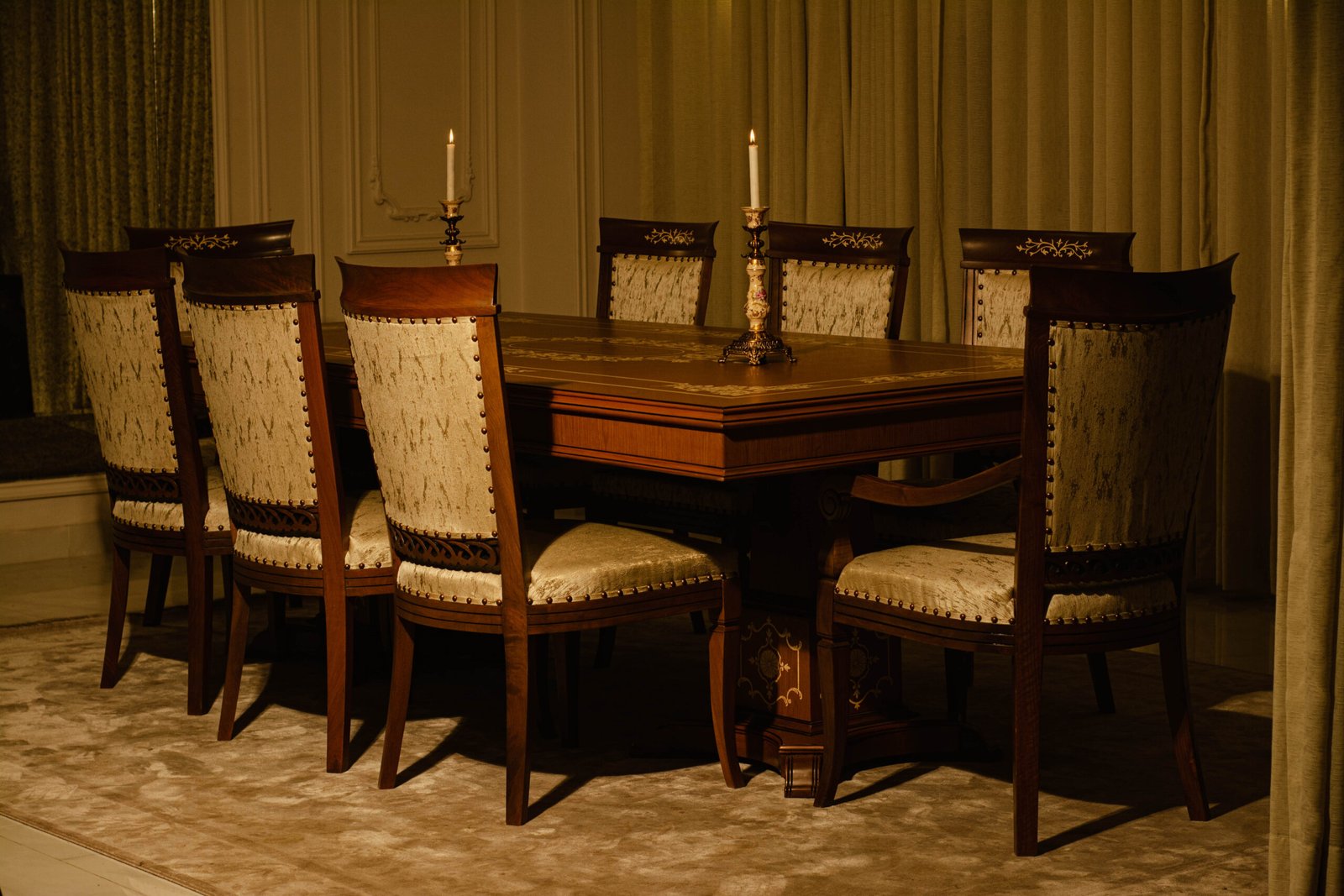
The best dining room set for Pakistani homes depends on your family size, available space, and preferred interior style, but a solid wood dining set is generally the best long-term investment due to its durability, timeless appearance, and resistance to daily wear. A 4-seater set is ideal for apartments and small families, while 6-seater and 8-seater dining sets are better suited for larger homes and frequent gatherings. Choose high-quality materials such as Sheesham or oak with a durable finish, comfortable upholstered chairs, and a design that complements your home’s décor. Before buying, measure your dining area, compare craftsmanship, check the warranty, and select a trusted furniture brand like Gourmet Furnishers to ensure lasting quality, comfort, and value for your investment.
Best Dining Room Set for Pakistani Homes: The Full Guide
What is the best dining room set for a Pakistani home? It is a question worth asking carefully, because the answer depends on far more than aesthetics. A dining table in a Pakistani home is never just a table. It is where the family gathers after Isha, where guests appear without warning on a Friday afternoon, and where Eid dinners stretch across three generations. The table you choose has to hold up against all of that, week after week, for years. Picking the wrong one is an expensive lesson that far too many households learn the hard way, when the finish begins peeling or the chairs start wobbling after only a few months of real use.
At Gourmet Furnishers, we have spent years manufacturing dining sets specifically for Pakistani family life at our Lahore factory. We have seen what fails and what holds. This guide is built on that experience. By the time you finish reading, you will know exactly which size fits your space, which material suits your household, and what price range genuinely makes sense for the long run.
How to pick the right size for your space and family
Most Pakistani families underestimate how many seats they actually need. Day to day, a family of four manages fine with a 4-seater. But the reality of weekly family visits, Eid gatherings and the chai-and-biscuit tradition of unannounced guests tells a different story. Think about the largest meal you host regularly, not the smallest, and size from there.
Standard dimensions for 4, 6, and 8-seater sets
A 4-seater rectangular table runs 120 to 140 cm long and fits comfortably in a room of roughly 10 by 9 feet. A 6-seater needs approximately 183 cm of table length and a minimum room size of 12 by 10 feet. An 8-seater stretches to around 244 cm and demands at least 14 by 12 feet of room to function properly. If your dining room sits in that 12 by 10 foot range, a 6-seater is your ceiling, not your starting point.
What is the best dining room set for a Pakistani home when space is tight?
Start with the 36-inch clearance rule
A table that technically fits in a room but leaves no space to pull back a chair is a daily frustration. The rule is straightforward: allow 3 feet of clearance on every side of the table to determine the minimum room size you need. In smaller townhouses and apartments, a common situation across Lahore, Karachi and Islamabad, this clearance calculation is often the deciding factor between a 6-seater and an 8-seater. A 42-inch clearance is even better in high-traffic dining areas, particularly if the room doubles as a thoroughfare between the kitchen and the sitting room.
If your room simply cannot accommodate a full-sized set with adequate clearance, consider space-saving alternatives: extendable tables that seat four day-to-day and expand to six for guests, drop-leaf designs that fold back against a wall, or a round 4-seater which allows tighter clearance than a rectangular equivalent. These options are worth exploring before compromising on a table that is either too cramped or too small for how you actually host.
Which material actually suits a Pakistani household
The material decision is the most consequential choice you will make. It determines how the table handles turmeric spills, whether it warps in July’s humidity, and whether it still looks respectable in ten years. There are four main options worth understanding: solid wood, marble, glass and engineered wood. Each has a genuinely different performance profile in Pakistani conditions.
Solid wood: the practical long-term choice
Solid Sheesham, oak and walnut handle the rough reality of daily Pakistani family dining better than any other material. They absorb impact without cracking, can be refinished if scratched, and age in a way that looks intentional rather than worn. Yes, oil penetration is a real risk if the surface is left unfinished or poorly sealed, but a properly finished solid wood table managed with a basic care routine is far more forgiving than marble in a household where the cooking regularly involves turmeric, lemon and hot curries. Solid wood is the default recommendation for any family that uses the dining table daily.
Marble: beautiful but more demanding than most buyers expect
Marble is porous, and in a Pakistani kitchen context, where acidic spills from lemon, vinegar and tomato are routine, unsealed marble etches permanently. Even sealed marble requires annual resealing with a stone-specific sealant, pH-neutral cleaners only, and immediate blotting of every acidic spill. For buyers who love the look, the message is not “avoid marble” but “go in with a clear maintenance plan.” Premium sealed marble in a formal dining room that is used selectively is a valid choice, particularly for families who entertain rather than use the space for every meal. Used casually and maintained poorly, it is likely to show damage relatively quickly.
Glass and engineered wood: where they make sense
Glass is completely non-porous, making it genuinely immune to turmeric and oil stains, it wipes clean in seconds. The trade-off is vulnerability to shattering impacts and constant fingerprinting, which makes it high-maintenance in a different way. Engineered wood sits at the budget end: it performs reasonably well in dry, climate-controlled spaces, but swells and splits in Pakistan’s summer humidity and rarely holds up beyond five to seven years of real family use. For a primary family dining set, neither material is the strongest choice; solid wood or properly sealed marble will serve most households far better across the full range of daily use.
What dining sets cost across Pakistan in 2026
Pricing for dining sets in Pakistan spans an enormous range, which makes comparison genuinely difficult without a clear framework. A set listed at PKR 34,999 on an e-commerce platform and a set priced at PKR 600,000 from a Lahore manufacturer are not competing for the same buyer. Knowing which tier you are shopping in clarifies everything else.
Budget and mid-range options: PKR 25,000 to 175,000
Budget sets in the PKR 25,000 to 60,000 range are almost always 4-seater engineered wood constructions with basic Rexine upholstery. Mid-range (PKR 60,000 to 175,000) gets you into basic solid Sheesham, better upholstery options and more size variety. A 6-seater in this tier runs PKR 85,000 to 165,000 depending on the brand and finish. Be honest with yourself about what you are sacrificing at these price points: longevity, material consistency and finish quality are all compromises. A mid-range set will serve a couple or a small family reasonably well before showing its age, research suggests engineered wood sets typically show wear within three to seven years, while better mid-range solid wood sets may last five to eight years before requiring replacement.
Premium tier: PKR 175,000 to 620,000+
Premium sets bring solid oak, walnut, properly sealed real marble, velvet upholstery and bespoke finish options. An 8-seater in this range starts around PKR 220,000 and climbs well past PKR 600,000 for custom hardwood or marble-top configurations. The economic case for spending at this level is straightforward: a premium set that lasts considerably longer can make far better economic sense than multiple mid-range replacements and the inconvenience that comes with each one. For any family furnishing a permanent home, the premium tier is the smarter long-term investment.
The craftsmanship details that separate a good set from a cheap one
This is where the emotional investment of buying furniture meets practical evaluation. You do not need an expert beside you to assess quality in a showroom. You need to know where to look and what to feel for.
What to check before you commit: joints, finish and chair build
Start with the table joints. Traditional joinery, mortise-and-tenon or dovetail construction, is generally more durable than basic glued or bracket-only assembly, which can loosen under years of daily use. Next, run a hand across the entire surface: the finish should feel even with no rough patches, and the colour grain should be consistent rather than blotchy. Finally, sit in every chair before agreeing to buy. The leg-to-seat connection should feel completely solid, and the seat cushion should use high-density foam. Buyers often report that low-quality foam in mid-range chairs flattens surprisingly quickly, testing the chairs in person before paying is the simplest way to avoid that disappointment entirely.
What to expect from Gourmet Furnishers
Gourmet Furnishers manufactures its dining sets at its Lahore factory, and customers are welcome to arrange a visit before delivery, a level of transparency that is worth taking advantage of when you are spending seriously on a piece of furniture. Seeing the joinery, touching the materials and assessing the finish in person removes uncertainty in a way that photographs simply cannot. Materials include solid oak, walnut and properly sealed marble, with full-grain leather and velvet chair options across the range. Before committing to any purchase, confirm the specific warranty terms, return policy and factory-visit availability directly with the team, so you know exactly what is covered. For anyone shopping at the premium tier, making that enquiry early is time well spent.
Caring for your dining set in Pakistan’s climate
Even a PKR 500,000 set deteriorates quickly without the right care routine. Pakistan’s climate creates two distinct seasonal challenges: high humidity from July to September that swells and warps wood, and dry winters that crack unsealed surfaces. Both are manageable with the right habits.
Marble top routine: the steps that prevent permanent damage
Use only a pH-neutral cleaner and a microfibre cloth for daily cleaning, and dry the surface immediately after every wipe-down. Blot acidic spills, whether from lemon, vinegar or curry, within minutes. Never rub them; rubbing spreads the acid across more surface area. Reseal the marble every 6 to 12 months with a stone-specific sealant, and use placemats and trivets consistently. This is not optional upkeep. It is the ongoing cost of owning marble, and buyers who understand that upfront are far happier with their purchase long-term.
Wood and upholstery care through humidity swings
For solid wood tables: dust regularly with a dry cloth, avoid wet cloths entirely, and keep indoor humidity between 40 and 50% during summer months. A dehumidifier in the dining room is a worthwhile investment for any household with solid wood furniture. Never place hot dishes directly on the surface without a trivet. For upholstered chairs: vacuum weekly with a soft brush attachment, blot spills immediately and ensure the dining area is well-ventilated during the humid months from July to September to prevent mould developing on fabric. Leather chairs need periodic conditioning with a proper leather product to prevent cracking through the dry winter months.
Where to buy and what to ask before you sign off
The buying channel matters almost as much as the product itself. A well-made dining set from a brand with no after-sales support becomes a problem the first time a chair leg cracks or the finish chips, and in Pakistan, after-sales follow-through from furniture retailers varies significantly.
Showroom vs online: the honest trade-off
For any dining set above PKR 100,000, a showroom visit is strongly recommended. Photographs do not capture finish quality, joint strength or the actual proportion of a set in a real room. Online purchases make more sense for established brands with clear return policies and verified customer reviews. Always confirm whether delivery and installation are included in the purchase price, as some retailers quote the furniture price separately from a significant delivery charge that only appears at checkout.
The questions every buyer should ask before paying
Ask these before you commit to any brand:
- Does the warranty cover structural defects and craftsmanship, or only surface finish?
- What is the return window and who bears the delivery cost on returns?
- Is the set in stock or custom-made, and what is the realistic lead time?
- Can you visit the factory or warehouse to inspect the actual piece before delivery?
Brands that answer these questions confidently and in writing are worth trusting. Those that deflect or offer vague reassurances are telling you something important about their after-sales culture before the purchase is even made.
Choosing with confidence: what is the best dining room set for a Pakistani home?
The decision framework is straightforward once you have the right information. Start with size, driven by your actual room dimensions and honest hosting habits. Move to material: solid wood for everyday family use, sealed marble for formal dining with a genuine maintenance commitment. Then consider price, knowing that the premium tier makes better economic sense over a ten-year horizon. Finally, evaluate brand trust through warranty terms, factory access and after-sales clarity.
Choosing the right dining room set for a Pakistani home is not about finding the most expensive option on the market. It is about matching the right size, material and craftsmanship to the way your household actually lives and hosts, whether that is daily family meals in a compact Karachi apartment or formal entertaining in a larger Lahore or Islamabad dining room. Get that match right and the table you buy becomes a fixture of family life for years, not a regret you are replacing before the decade is out.
If you are ready to shop at the premium end, Gourmet Furnishers is a strong starting point. Contact the team to enquire about a factory visit in Lahore and see the full dining collection in person before making any decision. You will leave knowing exactly what you are buying and why it will hold up.
FAQs
What is the best material for a dining room set in Pakistan?
Solid wood, especially Sheesham and oak, is the best choice because it is durable, attractive, and long-lasting.
Which dining table size is best for a small home?
A 4-seater dining set is ideal for apartments and small dining areas, offering comfort without taking up too much space.
How do I choose the right dining room set?
Consider your room size, family members, seating capacity, material quality, design, and budget before making a purchase.
Are wooden dining room sets worth the investment?
Yes, high-quality wooden dining sets last for many years, are easy to maintain, and add value to your home’s interior.
Why should I buy a dining room set from Gourmet Furnishers?
Gourmet Furnishers offers premium-quality dining room sets crafted with durable materials, elegant designs, expert craftsmanship, customization options, competitive pricing, and reliable after-sales support to suit modern Pakistani homes.
Leave a Reply
You must be logged in to post a comment.