
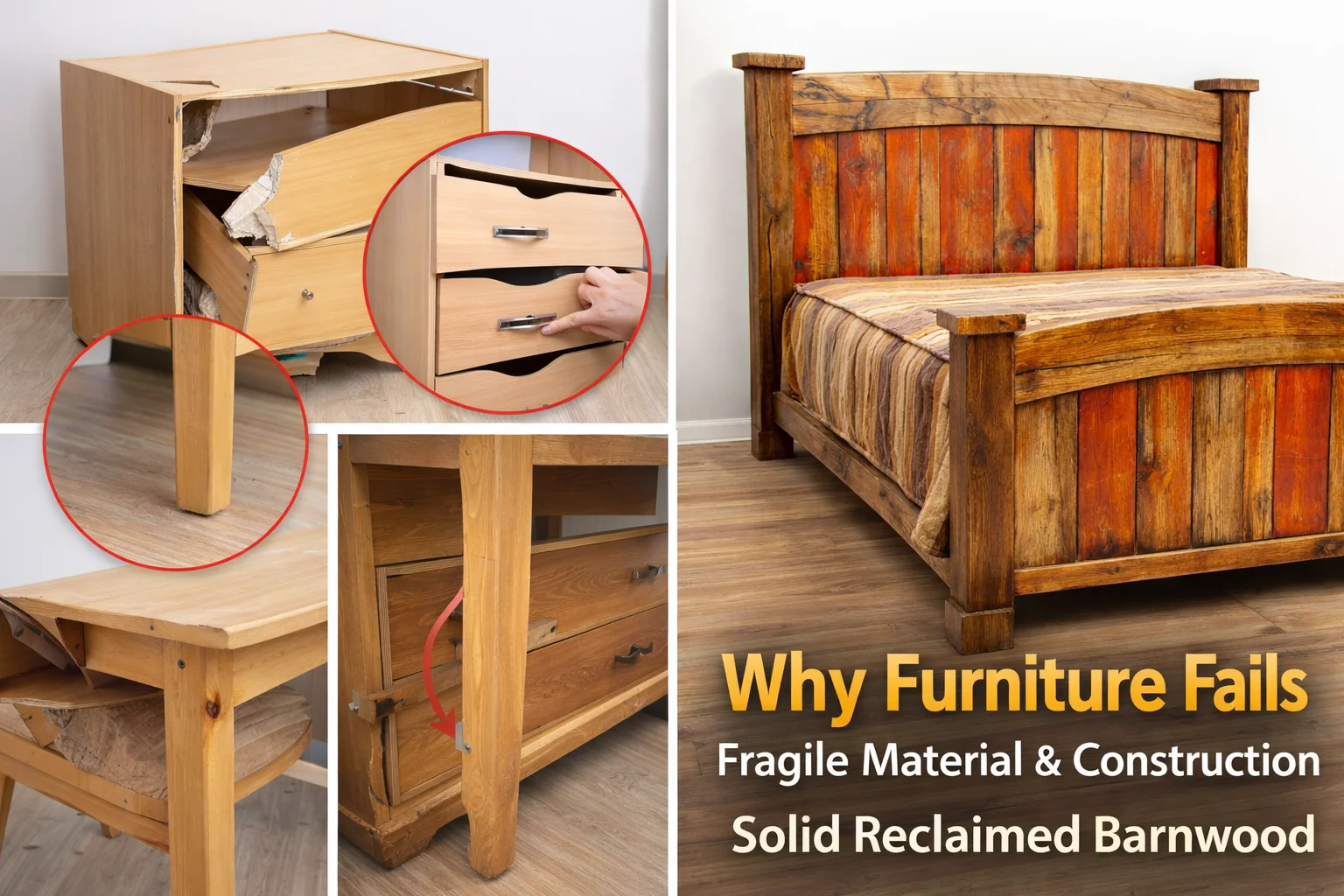
Cheap furniture breaks quickly mainly because it is made from low-quality materials like thin particle board, weak adhesives, and low-grade metal or plastic fittings that cannot handle regular weight or daily use, and manufacturers often reduce durability to cut costs, resulting in poor joints, weak screws, and minimal structural support. It also lacks proper finishing and moisture resistance, which causes swelling, cracking, or loosening over time. To avoid this, always check for solid wood or high-density engineered wood, strong joinery (like screws and dowels instead of glue-only assembly), good hardware quality, and proper weight capacity ratings before buying. Investing a little more in well-built furniture from trusted makers ensures long-term durability, better stability, and lower replacement costs in the future.
Why Does Cheap Furniture Break Quickly?
Many low-cost furniture pieces are manufactured with the primary goal of reducing production expenses. This often leads to compromises in material quality, construction methods, and finishing standards. While these products may look attractive in showrooms, they may not withstand everyday use. Weak structures and low-grade components make them more susceptible to damage. Knowing the reasons behind premature wear can help buyers avoid costly mistakes. Investing in durable furniture provides better performance and greater value over time.
Low-Quality Materials
One of the biggest reasons cheap furniture breaks quickly is the use of low-quality materials. Manufacturers often use particle board, thin MDF, or weak plywood instead of solid wood. These materials are less durable and can crack or bend under pressure. Low-grade laminates and veneers may peel off after prolonged use. Moisture and temperature changes can also affect these materials more severely. Choosing furniture made from premium wood or high-quality engineered boards increases durability significantly.
Poor Construction and Workmanship
Even attractive furniture can fail quickly if it is poorly constructed. Weak joints, inadequate screws, and poor adhesives reduce structural stability. Furniture made with shortcuts during manufacturing often becomes loose over time. Wobbly legs and unstable frames are common signs of poor workmanship. Lack of reinforcement in key areas causes stress-related damage. High-quality craftsmanship ensures strength and extends the life of furniture.
Inferior Hardware and Accessories
Furniture hardware plays an essential role in functionality and durability. Cheap hinges, handles, and drawer channels wear out quickly with regular use. Doors may stop closing properly, and drawers may become difficult to open. Weak fittings can loosen and require frequent maintenance. Inferior accessories negatively affect the overall performance of furniture. Premium hardware provides smooth operation and long-lasting reliability.
Thin Upholstery and Foam
Low-quality sofas and chairs often contain thin foam and poor fabric materials. These materials lose their shape quickly and become uncomfortable after regular use. Sagging cushions and torn upholstery reduce both comfort and appearance. Inferior foam lacks resilience and cannot support daily usage effectively. Cheap fabrics may fade or wear out prematurely. Investing in quality upholstery ensures lasting comfort and elegance.
Lack of Moisture and Termite Protection
Furniture without proper protection is vulnerable to environmental damage. Humidity can cause swelling, warping, and cracking in weak materials. Termites and insects may also attack untreated wooden furniture. Exposure to moisture shortens the lifespan of cabinets, beds, and wardrobes. Protective coatings and treated wood improve resistance against such issues. Quality furniture manufacturers prioritize moisture and termite resistance for long-term durability.
Mass Production Over Quality
Many inexpensive furniture products are mass-produced to minimize manufacturing costs. Speed often becomes more important than quality control during production. As a result, inconsistencies in finishing and structural integrity are common. Low attention to detail affects overall strength and appearance. Mass-produced furniture may look appealing initially but often lacks durability. Choosing reputable brands helps ensure better craftsmanship and quality standards.
Signs That Furniture Is Made Cheaply
Buyers can identify low-quality furniture by paying attention to certain signs. Lightweight construction often indicates weak materials and poor support. Uneven surfaces and rough edges suggest inadequate finishing processes. Loose joints and unstable frames point toward weak workmanship. Thin panels and poor-quality veneers are also warning signs. Examining furniture carefully before purchase helps prevent expensive disappointments. Quality furniture generally feels sturdy, balanced, and professionally finished.
Lightweight and Unstable Construction
Furniture that feels excessively light may lack the structural strength needed for long-term use. Weak frames and thin materials contribute to instability. Wobbling tables and chairs indicate poor support systems. Lightweight pieces are more prone to damage during regular use. Strong furniture should feel solid and balanced. Stability is a key indicator of durability and quality.
Uneven Finishes and Rough Edges
Poor finishing reflects inadequate manufacturing standards. Uneven paint, chipped surfaces, and rough corners affect both appearance and durability. Low-quality finishes may peel or fade with time. Imperfections are signs of limited quality control. Smooth surfaces and precise detailing indicate superior craftsmanship. Proper finishing enhances both beauty and longevity.
Loose Joints and Wobbly Legs
Weak joints reduce the structural integrity of furniture. Loose screws and unstable legs often become worse with regular use. Wobbly furniture creates safety concerns and discomfort. Properly reinforced joints improve stability and strength. High-quality furniture uses advanced joinery techniques for added durability. Strong construction ensures long-term performance.
Thin Panels and Weak Frames
Thin boards and weak frames cannot handle daily stress effectively. They are more likely to bend, crack, or break over time. Weak structures compromise overall functionality and safety. Furniture frames should provide solid support to maintain stability. Thick panels and reinforced frames increase durability significantly. Quality materials contribute to a longer lifespan.
Low-Quality Fabric or Veneer
Cheap upholstery fabrics wear out quickly and lose their appearance. Thin veneers may peel or crack after prolonged use. Poor materials reduce the visual appeal of furniture. High-quality fabrics provide better comfort and durability. Premium veneers maintain their finish for years. Investing in superior materials enhances long-term satisfaction.
Cheap Hardware and Fittings
Low-grade fittings are among the first components to fail. Drawer slides and hinges may become loose or malfunction. Poor hardware affects daily convenience and usability. Durable accessories improve furniture performance significantly. Strong fittings reduce maintenance costs over time. Premium hardware ensures smooth and reliable operation.
Hidden Costs of Buying Cheap Furniture
While cheap furniture appears affordable initially, it often leads to higher expenses later. Frequent repairs and replacements increase overall costs. Poor durability means furniture may need replacement within a few years. Inferior quality also affects comfort and aesthetics. Investing in quality products reduces long-term expenses and improves satisfaction. Durable furniture provides better value for money over its lifespan.
How to Avoid Buying Furniture That Breaks Easily
Making informed decisions can help buyers avoid low-quality furniture. Always inspect materials, construction, and hardware carefully. Test the stability and comfort of furniture before purchasing. Research reputable brands and customer reviews for better assurance. Consider warranties and after-sales services as indicators of quality. Taking these precautions helps ensure long-lasting satisfaction.
Check the Material Quality
Materials determine the strength and durability of furniture. Solid wood and premium engineered boards offer better performance. High-quality finishes improve resistance against wear and moisture. Strong materials maintain their appearance over time. Investing in superior materials reduces repair costs. Quality construction starts with quality raw materials.
Inspect the Frame and Construction
The frame acts as the foundation of furniture durability. Strong joints and reinforced corners provide better support. Proper construction techniques prevent loosening and instability. A sturdy frame increases safety and lifespan. Buyers should examine structural strength before making a purchase. Quality craftsmanship ensures long-lasting performance.
Examine Hardware and Accessories
Hardware quality directly affects furniture functionality. Smooth drawer channels and durable hinges enhance user experience. Strong fittings reduce wear and tear over time. Premium accessories require less maintenance and replacement. Buyers should inspect handles and mechanisms carefully. High-quality hardware contributes to overall durability.
Test Comfort and Stability
Comfort is as important as durability when choosing furniture. Sofas and chairs should provide proper support and cushioning. Tables and beds should feel stable and balanced. Testing furniture before purchase helps identify weaknesses. Stable furniture performs better over the years. Comfort and strength should always go hand in hand.
Buy From Trusted Furniture Brands
Reputable brands maintain higher manufacturing standards. They use quality materials and experienced craftsmanship. Established companies also provide warranties and after-sales support. Positive customer reviews indicate reliability and trust. Trusted brands focus on long-term customer satisfaction. Buying from reputable manufacturers reduces the risk of poor-quality products.
Best Materials for Long-Lasting Furniture
The choice of material greatly influences furniture durability. Solid Ashwood and Sheesham wood are known for their strength and elegance. High-quality MDF with deco paint provides modern appeal and resistance. UV sheet furniture with aluminum and glass offers durability and contemporary style. Premium upholstery materials enhance comfort and longevity. Selecting quality materials ensures years of dependable performance.
Is Expensive Furniture Always Better?
Higher prices do not always guarantee superior quality. Buyers should focus on materials, craftsmanship, and durability rather than cost alone. Some affordable furniture options provide excellent value and longevity. Understanding construction and quality indicators helps make better decisions. Value should always take precedence over price. Smart purchases deliver long-term satisfaction and savings.
Why Investing in Quality Furniture Saves Money
Quality furniture lasts longer and requires fewer repairs. Durable products maintain their appearance and functionality for years. Better materials provide enhanced comfort and support. Long-lasting furniture reduces replacement costs significantly. Investing wisely increases overall value and satisfaction. Quality furniture becomes more economical over time.
Why Choose Gourmet Furnishers
Gourmet Furnishers is committed to delivering premium-quality furniture designed for modern Pakistani homes. Every product is crafted using durable materials and superior workmanship to ensure long-lasting performance. Their collection includes stylish bedroom sets, dining furniture, center tables, wardrobes, and living room essentials. Attention to detail, premium finishes, and reliable hardware make each piece both functional and elegant. Customers benefit from exceptional quality, contemporary designs, and excellent value for money. Gourmet Furnishers focuses on creating furniture that combines beauty, comfort, and durability for years of use.
Conclusion
Cheap furniture may save money initially, but its limited lifespan often leads to higher costs in the future. Weak materials, poor construction, and inferior hardware are common reasons behind frequent damage. Understanding quality indicators helps buyers make smarter decisions. Investing in durable furniture ensures comfort, style, and long-term value. Choosing trusted manufacturers reduces maintenance and replacement expenses. Quality furniture remains a worthwhile investment for every home.
FAQs
Why does cheap furniture break easily?
Cheap furniture often uses low-quality materials and weak construction, which reduces durability and lifespan.
How can I identify quality furniture?
Check the materials, frame strength, hardware, and overall finishing before buying.
Is MDF furniture durable?
High-quality MDF with proper finishing can provide excellent durability and long-lasting performance.
Which wood is best for furniture in Pakistan?
Sheesham wood and Ashwood are popular choices because of their strength and elegant appearance.
Why should I buy from Gourmet Furnishers?
Gourmet Furnishers offers premium-quality furniture with stylish designs, durable materials, and reliable craftsmanship.
Leave a Reply
You must be logged in to post a comment.