

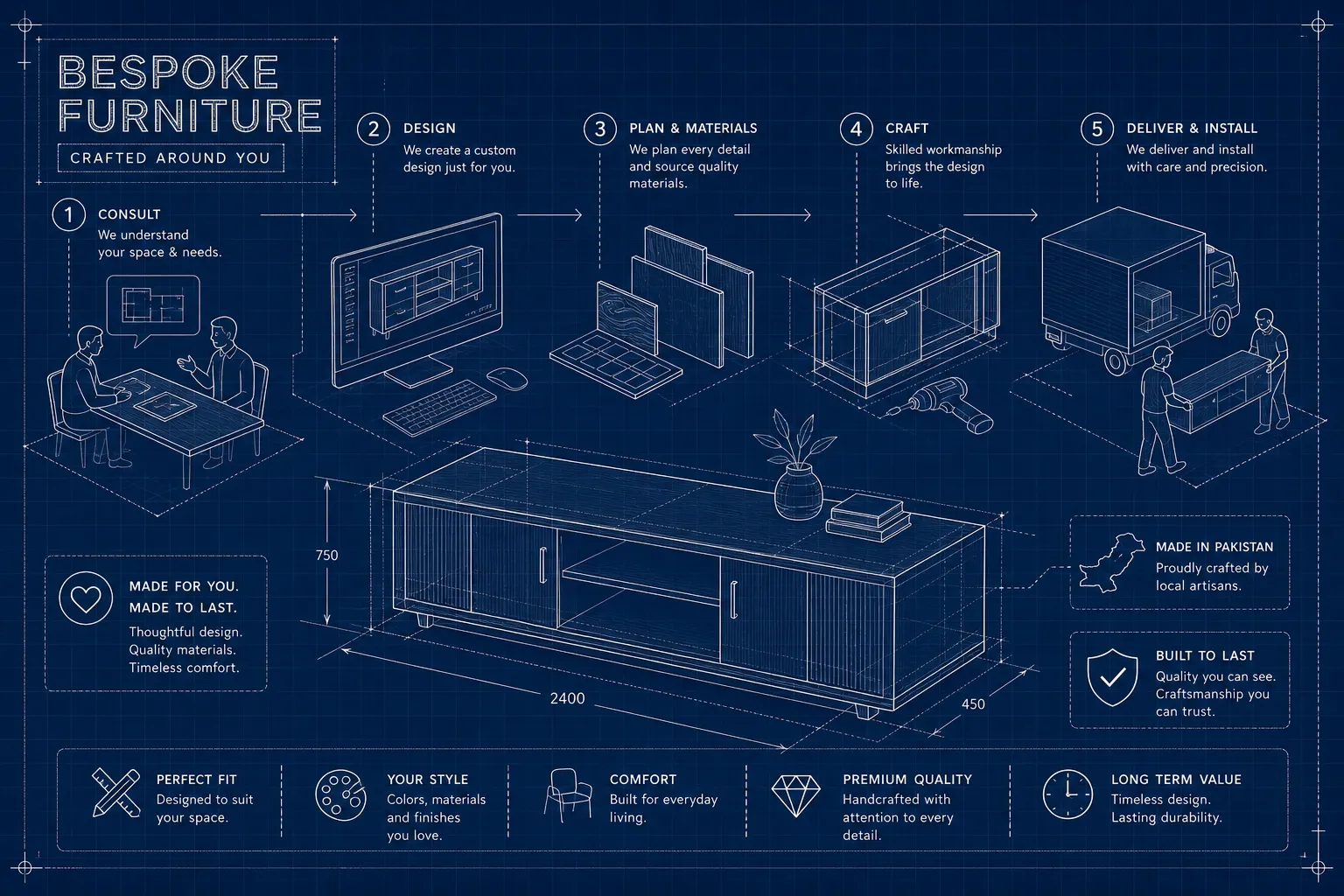
Bespoke furniture in Pakistan works through a personalized process that begins with a consultation to understand your design preferences, space, and budget. After discussing your requirements, the furniture maker creates a custom design, selects the wood, fabric, and finishes, and provides a quotation for approval. Once confirmed, skilled craftsmen build the furniture according to the agreed specifications, with quality checks carried out throughout production. Finally, the completed piece is delivered and installed in your home, ensuring a perfect fit, unique style, and long-lasting craftsmanship tailored to your needs.
How does bespoke furniture work in Pakistan, the consultation stage
The first stage is a consultation. Before any design is sketched or material is selected, a good maker needs to understand your space, your style preferences, the function of the piece, and your budget. This is not an interview. It is a focused conversation, and it works best when you come prepared.
What to bring to your first consultation
Bring the basics: room dimensions (including door swing and ceiling height), a rough idea of your budget range, and a few inspiration images from Instagram or Pinterest. You do not need a formal design brief or architectural drawings. A phone photo of your room and a rough sketch on paper are enough for a skilled maker to start building a picture. If the piece needs to work alongside existing furniture, note down the colours and finishes of what you already own.
How WhatsApp-first consultation removes the barrier
Many makers now handle the opening consultation entirely over WhatsApp. Clients share room photos, dimensions, and style references over chat, and a design conversation begins the same day. This removes the need to schedule a formal appointment and makes the process genuinely accessible, whether you are a first-time buyer in Lahore or an overseas Pakistani furnishing a property back home. Gourmet Furnishers operate this way, and it is a small operational decision that changes everything about how approachable tailor-made furniture feels.
Choosing materials: where the character of your piece is decided
Once the design direction is agreed, the focus shifts to materials. This is the stage where clients feel least prepared, but it is also where custom-made furniture earns its long-term value over anything ready-made off the showroom floor.
Woods that hold up in Pakistan’s climate
Sheesham, also known as Indian rosewood, is the workhorse of bespoke carpentry in Pakistan. It is dense, naturally termite-resistant, and handles the heat and humidity of the subcontinent better than most alternatives. It also holds intricate carving beautifully, which is why it remains the standard for premium custom pieces. Walnut brings a contemporary luxury finish, while solid oak offers exceptional structural strength.
MDF and laminate can lower the upfront cost, but they swell and crack in humid conditions and rarely last beyond three to seven years. Treat the material decision as a long-term investment, not a short-term saving.
The finishing decisions that affect daily use
Beyond the wood, you will need to make practical decisions about polish type, upholstery fabric, and hardware. Matte, glossy, and antique polishes each produce a distinctly different look, and the right choice depends on the room’s existing aesthetic. For sofas and bed sets, fabric or leather selection has as much impact on daily comfort as the frame itself. On wardrobes and kitchen units, the choice between brass and powder-coated metal hardware affects both appearance and durability over time. Moisture-resistant PU polish is worth the slight premium in Pakistan’s climate; it keeps the finish intact through monsoon seasons and humid winters in a way that standard polish simply does not.
What happens on the factory floor
With materials confirmed and a design sign-off in place, production begins. Many clients picture a lone craftsman with a chisel. The reality is a team working through defined stages, each one building on the last with precision and sequence.
From raw timber to finished piece
Wood is cut to precise dimensions, shaped and carved by artisans, then assembled using strong joinery methods. Mortise-and-tenon and dowelled joints are the standard for quality makers; glued and stapled joints are a warning sign, not a construction method. After assembly, the piece is sanded smooth and finished with polish or lacquer. For a standard custom piece, production typically runs one to four weeks. Fitted pieces like kitchen cabinets or wardrobes with internals take longer, often four to eight weeks depending on design complexity.
Why a factory visit changes the entire experience
Factory visits are a recommended but sometimes overlooked way for buyers to verify materials and quality before delivery. Gourmet Furnishers offer customers the option to visit their Lahore factory and inspect work in progress. You can verify the wood species, check the joinery, and approve the finish while the piece is still on the workshop floor. This single step removes most of the anxiety around ordering a custom piece you have never physically seen, and most first-time buyers do not expect to have this level of confidence before delivery day arrives.
What bespoke furniture actually costs in Pakistan, custom furniture cost Pakistan
Made-to-measure furniture in Pakistan typically runs 20 to 40 per cent above comparable ready-made pieces. That gap narrows considerably when you factor in longevity, exact fit, and the fact that you are not paying for a piece designed to satisfy a hundred different buyers at once.
Realistic price ranges for common pieces
Here are approximate ranges for the most commonly ordered custom furniture in Pakistan, reflecting mid-range to premium quality with solid wood construction:
- Sofa set (7-seater, solid wood frame with custom upholstery):
PKR 200,000 to 420,000 for mid-range; PKR 400,000 to 800,000 or above for premium
- Wardrobe (3 to 4 door, custom fit with internals):
PKR 180,000 to 500,000 depending on finish and fittings
- Dining table (6-seater, solid Sheesham or walnut):
PKR 90,000 to 280,000 for mid-range
- Kitchen cabinets:
PKR 30,000 to 60,000 per linear metre for quality solid wood construction
What drives the price up or down
The three biggest cost drivers are material grade, the level of hand-carving, and finish type. Solid Sheesham costs more than MDF but lasts three to four times longer in Pakistani conditions. A carved dining table takes significantly more artisan hours than a plain-panel design, and that labour is reflected in the quote. Always request an itemised breakdown so you can compare like for like between different makers. A quote with no line-item detail is a quote you cannot properly evaluate.
On payment terms, most reputable workshops ask for a 40 to 50 per cent advance at sign-off, with the balance due on completion. Some smaller makers request full payment before delivery. Confirm the payment schedule in writing before production begins.
Lead times: how bespoke furniture works in Pakistan, realistic timelines
Set your expectations before you set your delivery date. A simple bespoke piece, such as a single bed frame or a console table, can be ready in two to four weeks. A full bedroom set with fitted wardrobes runs four to eight weeks. Complex orders with extensive carving, imported hardware, or multiple rooms can stretch to twelve to sixteen weeks.
Factors that speed up or delay your order
The main variables are whether the timber needs sourcing or is already in stock, how quickly you approve the design, and the maker’s current production queue. Seasonal peaks around Eid and the main wedding season consistently stretch lead times across Lahore and Karachi. The single biggest cause of delay is a design change mid-production. Once the timber is cut, revisions cost time and often money. Agree on the design fully, approve it in writing, and let production run without interruption. If your timeline is tight, ask directly about the current queue before you commit to a delivery date.
How to vet a bespoke furniture maker in Pakistan before you commit
Not every workshop that calls itself a custom furniture maker operates to the same standard. This section gives you a practical filter to apply before placing an order, regardless of who you are speaking to.
Five questions to ask upfront
Ask these as part of a natural conversation, not an inspection. A maker who cannot answer them clearly is telling you something important about how they work:
- What species of wood will be used for the primary structure?
- What joinery method is used: mortise-and-tenon, dowelled, or glued and stapled?
- Is the finish water-resistant, and what type of polish is applied?
- Can I see a physical sample of the wood grain or fabric before production begins?
- What warranty do you offer, and how is after-sales support handled?
Red flags that should stop you
A price significantly below market rate almost always signals MDF being marketed as solid wood. A maker who cannot name the core material is either unqualified or being dishonest, and neither outcome serves you. No warranty and no post-delivery contact number means no accountability when something goes wrong. Refusal to allow a workshop visit should end the conversation entirely. Reputable makers typically offer a one to two-year structural warranty; always confirm warranty and return terms in writing before you pay a deposit. Anything less than clear, written accountability is an avoidable risk.
How does bespoke furniture work in Pakistan, putting it all together
Six stages: consultation, design and material sign-off, production, factory inspection, delivery, and installation. That is the full journey from an idea to a finished piece in your home. Made-to-order furniture in Pakistan is not complicated. It requires clear expectations on cost, timeline, and materials, and a maker who backs their craft with genuine transparency.
If you are wondering how does bespoke furniture work in Pakistan and want to take the first step, start with a WhatsApp message to a maker whose portfolio you have already reviewed. Share your room dimensions and a reference image. A serious maker will come back with a design proposal often within days, depending on their current queue and your brief’s complexity. For those based in or near Lahore, Gourmet Furnishers’ factory visit option is worth using before your order goes into production. Seeing your furniture take shape before it arrives at your door is a level of confidence that most first-time buyers do not expect to have, and it changes the experience entirely. The best piece of furniture you own will be the one made exactly for your home.
FAQs
How does bespoke furniture work in Pakistan?
The process runs in six stages: an initial consultation (often over WhatsApp), design and material sign-off, factory production, an optional mid-production inspection, delivery, and installation. Each stage has a defined purpose, and a good maker will walk you through all of them before asking for a deposit.
How long does bespoke furniture take in Pakistan?
Simple pieces such as a console table or single bed frame typically take two to four weeks. Medium-complexity orders, a bedroom set or fitted wardrobes, run four to eight weeks. Large or highly detailed commissions can take twelve to sixteen weeks. Seasonal demand around Eid and wedding season can add time, so plan accordingly.
How much does custom-made furniture cost in Pakistan?
Made-to-measure furniture generally runs 20 to 40 per cent above comparable ready-made pieces. A 7-seater solid wood sofa set starts from around PKR 200,000; a fitted wardrobe from PKR 180,000; a solid wood dining table from PKR 90,000. Material grade, carving detail, and finish type are the biggest cost variables.
What deposit do I need to pay for bespoke furniture in Pakistan?
Most reputable workshops require a 40 to 50 per cent advance at design sign-off, with the balance paid on completion. Some smaller makers ask for full payment before delivery. Always confirm the payment schedule in writing and request an itemised quote before committing.
How do I know if a custom furniture maker in Pakistan is reputable?
Ask about the wood species, joinery method, finish type, and warranty before placing any order. A trustworthy maker will answer these questions clearly, allow a factory visit, and provide written warranty terms. Walk away from any maker who avoids specifics, offers no warranty, or refuses a workshop visit.
Leave a Reply
You must be logged in to post a comment.